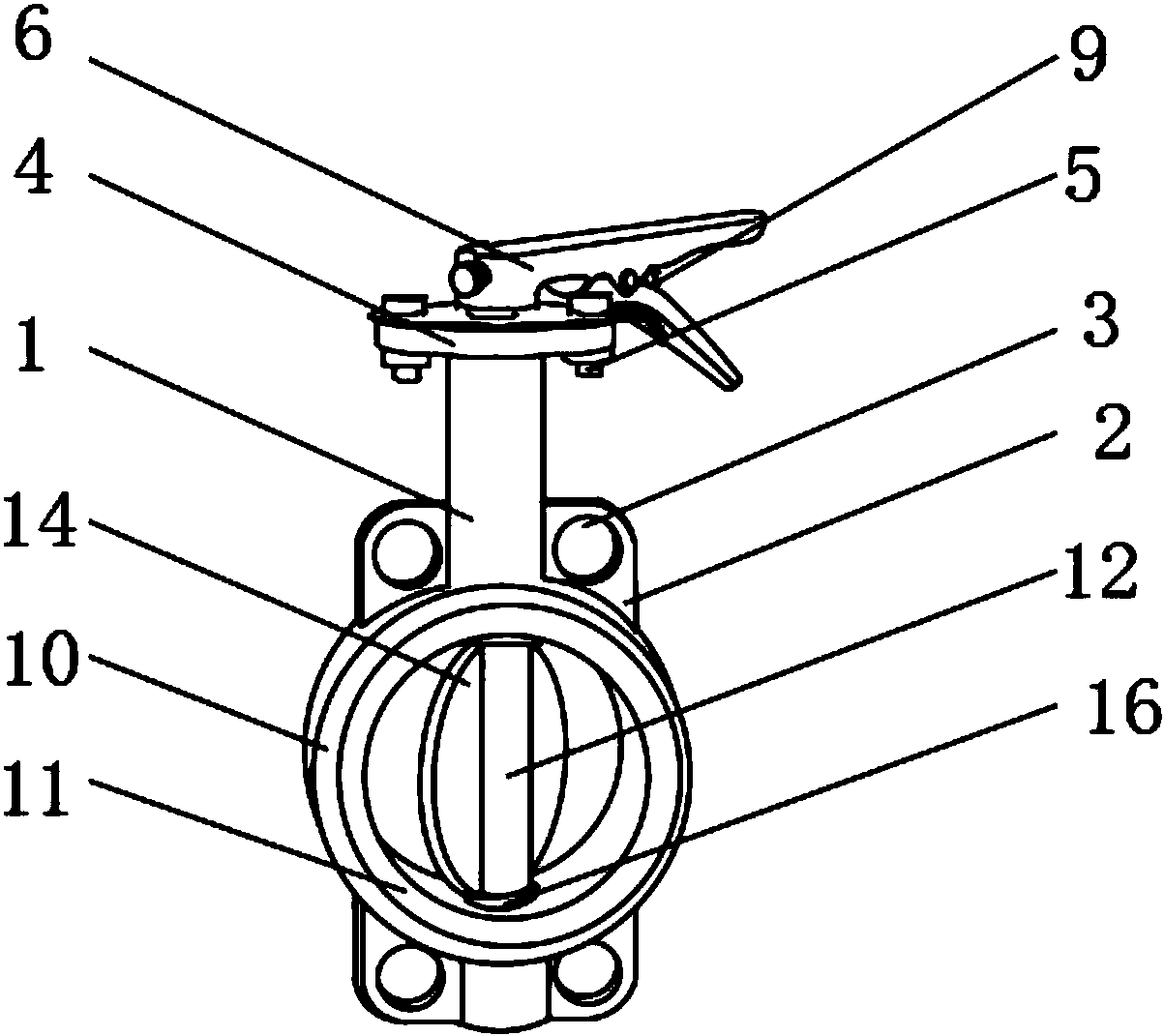
What is a wafer type butterfly valve?
The wafer-type butterfly valve is a common industrial pipeline valve. It is connected between two pipeline flanges by double-ended bolts. It features a compact structure, convenient installation, and rapid opening and closing. It is widely used in petroleum, chemical, metallurgical, power, water supply and drainage, and municipal construction fields.
Structural Features
Compact and Lightweight
The valve body features a thin design, making it small in size and lightweight, suitable for scenarios with limited space or short pipe spacing (such as high-rise buildings and underground pipe corridors).
Simple structure, consisting of only a few parts such as the valve body, butterfly plate, valve stem, and sealing ring, resulting in low installation and maintenance costs.
Connection Method
Directly clamped between two pipe flanges using double-ended bolts, eliminating the need for additional flange gaskets and reducing leakage points.
The lug-type wafer butterfly valve uses a lug structure for fixation, further enhancing connection stability.
Multiple Drive Methods
Supports multiple drive methods including manual (handle, worm gear), pneumatic, and electric, enabling remote control or automated operation.
Sealing Type
Elastic Seal
Sealing ring material: Nitrile rubber (NBR), Ethylene propylene rubber (EPDM), Fluororubber (VITON), Polytetrafluoroethylene (PTFE), etc.
Features: Reliable sealing performance, suitable for low-temperature and low-pressure conditions (such as water, gas, and oil media).
Applications: Water supply and drainage systems, air conditioning ducts, food and pharmaceutical industries.
Metal Hard Seal
Structure: Employs a triple eccentric multi-layer metal sealing structure; the valve seat and butterfly plate sealing surfaces are elliptical cone fits.
Material: The valve seat is made of Cr13 alloy or tungsten-cobalt alloy; the butterfly plate sealing surface is overlaid with cobalt-based hard alloy.
Features: High temperature resistance (≤650℃), high pressure resistance (≤2.5MPa), wear resistance; suitable for harsh conditions such as steam, hot water, and chemical media.
Advantages: Bidirectional sealing, frictionless opening and closing, long service life.
Working Principle
Opening and Closing Control
The butterfly plate rotates 0°~90° around the valve stem axis to achieve media flow or cut-off.
When fully open, the butterfly plate thickness is the only resistance to media flow through the valve body, resulting in low pressure drop and excellent flow control characteristics.
Sealing Mechanism
Elastic Seal: The sealing ring undergoes elastic deformation under the pressure of the media, conforming to the butterfly plate to achieve a seal.
Metal Hard Seal: A triple eccentric structure ensures the valve seat and butterfly plate separate or contact at the moment of opening and closing, eliminating friction and achieving zero leakage.
Application Scenarios
General Operating Conditions
Petroleum and Chemical Industry: Controlling the flow and proportion of chemical materials to prevent media leakage.
Metallurgical Industry: Regulating the flow and pressure of blast furnace gas and steam pipelines.
Water Supply and Drainage Systems: Regulating water level and volume in urban water supply, sewage treatment, and fire-fighting pipelines.
Special Operating Conditions
High Temperature and High Pressure: Boiler steam pipelines in the power industry; smelting equipment pipelines in the metallurgical industry.
Corrosive Media: Acid and alkali pipelines in the chemical industry; seawater pipelines on offshore platforms (requires corrosion-resistant materials such as stainless steel or fluoropolymer lining).
Two-Way Sealing Requirements: Pump outlet check valves; scenarios requiring prevention of media backflow.
Maintenance Points
Regular Inspection
Sealing Performance: Check for signs of leakage monthly when the valve is closed, using leak detection agents or observing for bubbles.
Operational Flexibility: Manually open and close the valve fully every six months to monitor resistance changes and troubleshoot any jamming or blockages.
Lubrication and Corrosion Prevention
Lubrication: Apply lithium-based grease or graphite powder to moving parts such as valve stems and bearings quarterly.
Corrosion Prevention: Inspect the anti-corrosion coating annually, repair damaged areas, and apply hot-dip galvanizing or painting protection.
Sealing Ring Replacement
Elastic sealing rings generally have a lifespan of 2-3 years. Replace them promptly if aging, cracking, or leakage occurs.
Weared metal hard-seal valve seats require welding repair or replacement of the valve seat assembly.
wafer type butterfly valve drawning