

Established in 2008 with a registered capital of RMB 5 million, GNEE Group is a leading international supplier specialising in the manufacture and distribution of high quality valves and fittings for a wide range of industrial applications including water supply, sewage systems, oil and gas, and marine treatment.
Why choose us
Our Products
GNEE Group specializing in the manufacture and distribution of high quality valves and fittings for a wide range of industrial applications including water supply, sewage systems, oil and gas, and marine treatment.
Sales Market
GNEE valves have been exported to more than 160 countries around the world, and every year more than 50 customers visit the GNEE Group and order more than 30,000 pieces of valves.
Our Team
Established in 2008 with a registered capital of RMB 5 million, GNEE Group At present, the company has a total investment of 30 million yuan, a plant area of more than 35,000 square meters and more than 200 employees.
Customer Service
GNEE Group always puts product quality and customer needs first, and strives to provide better services to each of our customers. We follow the latest standards and focus on management, technology and process innovation. With a mature sales service system, GNEE Group insists on providing one-stop service to every customer.


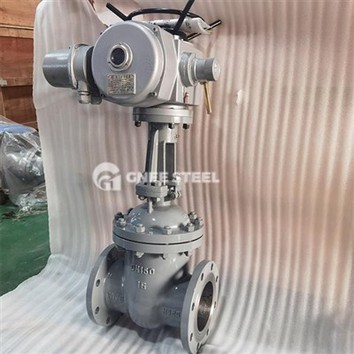
The Advantages of Using Gate Valves
Durability and Longevity: Gate valves are built to last, with a robust construction that withstands harsh environments and repeated use. This durability ensures a longer lifespan, reducing the need for frequent replacements.
Low Pressure Drop: When fully open, gate valves provide a clear, unobstructed passage for fluid flow. This design minimises pressure drop across the valve, maintaining system efficiency and reducing energy consumption.
Bi-Directional Functionality: Gate valves can handle flow from both directions, offering flexibility in system design and installation. This feature is particularly beneficial in complex piping networks where flow direction may vary.
Versatility: Suitable for a wide range of fluids, including liquids and gases, gate valves are used in a huge range of industries. Their ability to operate effectively in high-pressure and high-temperature environments means they can be used anywhere in the world, indoors or outdoors.
Cost-Effectiveness: Gate valves are cost-effective over the lifespan of your system. Their durability and low maintenance requirements lead to lower operating costs over time.
Effective Sealing: Gate valves provide a tight seal when closed, preventing leaks and ensuring system integrity. This effective sealing is vital in applications where fluid containment is critical.
Gate valve actuation method
There are three main types of gate valve actuation methods:
Manual gate valve
A manual gate valve has a manually spun handwheel to open or close the valve, as shown in Figure 2. This requires a user on-site to spin the wheel. A manual gate valve is the most economical, especially since the usage of gate valves, once installed, is typically low.
Pneumatic gate valve
A pneumatic gate valve uses a pneumatic actuator instead of a handwheel. By utilizing compressed air, the actuator can spin the stem to raise or lower the gate. This allows it to be operated remotely with no user on-site but requires a pneumatic system on site.
Electric gate valve
An electric gate valve uses an electric motor instead of a handwheel. By utilizing electrical power, the actuator spins the stem to raise or lower the gate. This allows it to be operated remotely with no user on-site but requires electrical power on-site. These are also referred to as motorized gate valves.
Knife Gate Valve
A knife gate valve typically has a flat gate that has a sealing edge shaped like a knife blade, that moves back and forth to allow or prevent fluid flow. This type of gate valve is designed to cut through thick fluids and slurries, making it ideal for applications that involve handling waste, mining, and food processing.
Parallel Slide Gate Valves
Parallel slide gate valves comprise either a single or two flat gates that move perpendicular to the pipe’s flow direction, allowing for a full, unobstructed flow. They rely on the line pressure to hold the gate against the corresponding seat in the valve body, providing positive shut off without leakage. They are often used in applications that require low-pressure drops.


Wedge Gate Valves
Wedge gate valves feature a gate that has a wedge shape, providing a tighter seal when closed. These valves are found in water distribution systems due to their reliable sealing performance. The gate, when fully open, provides a full unobstructed flow. When closed, it creates a tight seal against the valve seat. Wedge gate valves come in two types: single and double discs. The double disc wedge gate valve provides an even tighter seal when closed by having two gates that move in opposite directions.
Non-rising Stem Gate Valve
Non-rising stem gate valves have a gate connected to the valve stem, but the stem will rotate and does not rise or lower when the valve is opened or closed. This feature makes them ideal for applications where overhead space is limited.
Rising Stem Gate Valve
In a rising stem gate valve, the stem moves up and down as the valve opens and closes, providing a visual indication of the valve’s open or closed position. These valves are commonly used in applications requiring the thread on the stem to be isolated from the fluid.
Gate Valve Design Essentials
Core Design Principles
Gate valves are distinct for their simplicity and effectiveness. The design principle is straightforward: a barrier moves up and down within the valve body, regulating the flow of materials.
Think of this barrier as a simple gate within a fort. When raised, the gate allows substances to pass through. When lowered, it blocks the path entirely. This design is beneficial when you need either full flow or no flow.
Customizing Components for Peak Performance
Each component of a gate valve plays a crucial role in its function.
The body provides the framework. The seat ensures a secure closure. The stem offers a connection to the actuation mechanism.
Manufacturers might customize these components to enhance performance. For example, the body of a valve intended for the oil industry might be thicker to handle higher pressures.
Valves for Varying Conditions
A valve’s design must consider the environmental conditions it will face. For high-temperature applications, a gate valve might include components that are heat resistant. In contrast, valves used in sub-zero conditions are built with materials that can withstand freezing temperatures.
Industry-Specific Design
In industries where hygiene is paramount, like food and beverage, non-toxic and non-reactive materials are essential. Here, gate valves ensure that the product remains uncontaminated by preventing the leaching of harmful substances.
In contrast, the chemical industry often deals with aggressive substances. Gate valves used here must resist chemical corrosion. This is where plastic-bodied valves, or those with specialized coatings, come into play.
Durability and Longevity
Durability is another critical factor in gate valve design. These valves often operate in environments where they must perform for long periods without fail. The choice of material and design directly influences their lifespan and reliability.
Attention to Detail
Every gate valve has a purpose, and attention to detail in its design is what sets high-quality valves apart from the rest. A well-designed gate valve should work effortlessly, without leaks or failure, under the conditions it’s meant for.
Common Industrial Applications of Gate Valves
Gate valves are used across various industries due to their versatility and reliability. Here are some of the common applications where gate valves play a critical role:
Oil and Gas Industry
In the oil and gas industry, gate valves are used in pipelines to isolate flow, control oil and gas transportation, and ensure safety during high-pressure operations. They are often employed in drilling rigs, refineries, and distribution networks.
Water Treatment Plants
Gate valves are used extensively in water treatment facilities to control the flow of water and chemicals. They provide reliable isolation of pipelines and tanks, ensuring that processes run smoothly and efficiently.
Power Generation
Power plants use gate valves to control the flow of steam, water, and other fluids in their systems. These valves are critical for maintaining the pressure and flow rates needed for efficient power generation.
Chemical Processing
In chemical processing plants, gate valves handle corrosive fluids, high temperatures, and high pressures. They are used to isolate different parts of the system during production, maintenance, and emergency shutdown.
Material Selection of Gate Valve
|
TRIM |
RECOMMENDED SERVICE |
|
13% Cr, Type 410 Stainless Steel |
For oil and oil vapors and general services with heat treated seats and wedges. |
|
13% Cr, Type 410 plus Hardfacing |
Universal trim for general service requiring long service life up to 1100°F (593°C).* |
|
Type 316 Stainless |
For liquids and gases which are corrosive to 410 Stainless Steel, up to 1000°F (537°C).* |
|
Monel |
For corrosive service to 842°F (450°C) such as acids, alkalies, salt solutions, etc. |
|
Alloy 20 |
For corrosive service such as hot acids -49°F to 608oF (-45°C to 320°C). |
|
NACE |
Specially treated 316 or 410 trim combined optionally with B7M Bolts and, 2HM nuts to meet NACE MR-01-75 requirements. |
|
Full Stellite |
Full hard faced trim, suitable for abrasive & severe services up to 1200°F (650°C). |
Applicable Codes and Standards
Below are codes and standards that are used in the design and selection of gate valves:
Pressure Testing
API 598
Pressure Temperature Rating
API B16.34
Face to Face
ANSI B16.10
Socket Weld End
ANSI B16.25 and B16.11
Screwed End
ANSI B 1.20.1 (BSP/NPT)
Our Honor


FAQ
As one of the most professional gate valve manufacturers and suppliers in China, we're featured by quality products and competitive price. Please rest assured to wholesale discount gate valve in stock here and get free sample from our factory. For customized service, contact us now.
gate valve temperature rating, gate valve energy saving, gate valve closing