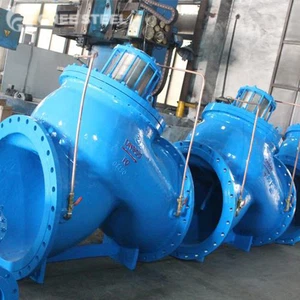
Control valves use various types of actuators to control the flow of fluid. These actuators generate the force needed to move the valve stem and resize the flow path. The most common types of actuators control valves are pneumatic, electric, hydraulic and electro-hydraulic.
- Pneumatic actuators: use compressed air as a power source to move the valve stem and regulate fluid flow. They are typically used for small to medium sized valves and are cost effective and simple to use. On the other hand, electric actuators use electricity to move the valve stem and control fluid flow. They are more precise than pneumatic actuators and are typically used for larger valves that require precise control.
- Hydraulic Actuators: Use hydraulic fluid as a power source to move the valve stem and control fluid flow. They are typically used in high pressure applications or where precise control is required. Electro-hydraulic actuators combine the precision of an electric actuator with the power of a hydraulic actuator. They use an electric motor to drive a hydraulic pump to power the actuator.
- Electric Actuators: These actuators use electricity to move the valve stem and control fluid flow. Electric actuators are more precise than pneumatic actuators and are typically used for larger valves that require precise control.
- Electro-Hydraulic Actuators: These actuators combine the precision of an electric actuator with the power of a hydraulic actuator. They use an electric motor to drive a hydraulic pump to power the actuator.
- Choosing the right actuator for a control valve depends on several factors, such as the size of the valve, the required flow and pressure, and the level of accuracy required. Each type of actuator has its advantages and disadvantages, and selecting the correct actuator is critical to achieving optimum process performance.
GNEE Control Valve for Sale