

EN 593 is a product standard for industrial metal butterfly valves developed by the European Committee for Standardization (CEN). Its full name is "Industrial valves - Metallic butterfly valves". It is mainly used to regulate the design, materials, testing and marking requirements of metal butterfly valves to ensure their safety and interchangeability in industrial fluid systems.
Download the Ultimate EN 593 Valve Data Sheet & EN 558 Series Comparison Chart (PDF).
EN 593 Valve Specifications
| Parameters | Technical Details | Remarks |
| Nominal Size Range | DN 20 - DN 2000 | Larger sizes available upon request. |
| Nominal Pressure (PN) | PN 6, 10, 16, 25, 40, 63, 100 | Covers low to high-pressure industrial applications. |
| Design Standard | EN 593 | The core European standard for metallic butterfly valves. |
| Face-to-Face (FTF) | EN 558 (Series 13, 14, 20, 25, etc.) | Specific Series must be verified for installation. |
| Flange Connections | EN 1092-1 (Steel) / EN 1092-2 (DI) | Compatible with European PN-rated flanges. |
| Top Flange Mounting | ISO 5211 | Standard interface for electric/pneumatic actuators. |
| Sealing Types | Resilient, Metal, High-Performance | Options for soft-seated or metal-to-metal sealing. |
| Working Media | Water, Sewage, Oil, Gas, Chemicals | Suitable for a wide range of industrial fluids. |
EN 593 Materials of Construction
| Component / Part Name | EN Standard Material | ASTM Equivalent (Reference) |
| Body | EN-GJS-400-15 (Ductile Iron) | ASTM A536 65-45-12 |
| GP240GH (Cast Carbon Steel) | ASTM A216 WCB | |
| 1.4408 (Stainless Steel) | ASTM A351 CF8M | |
| Disc | EN-GJS-400-15 (Epoxy/Nickel Coated) | Ductile Iron (Coated) |
| 1.4401 / 1.4408 (SS316) | ASTM A351 CF8M | |
| Aluminium Bronze | ASTM B148 C95800 | |
| Seat / Seal Ring | EPDM / NBR / FKM (Viton) | Resilient sealing materials. |
| Stainless Steel / Stellite | Metal-to-metal sealing (Multi-offset). | |
| Shaft / Stem | 1.4021 (Stainless Steel 420) | ASTM A276 Type 420 |
| 1.4401 (Stainless Steel 316) | ASTM A276 Type 316 |
Design & Sealing Features
| Design Type | Sealing Features | Typical Applications |
| Concentric (Centric) | Disc centerline coincides with the shaft; resilient seat. | Low-pressure water treatment, HVAC, general industry. |
| Double Offset | Shaft is offset from both the seat and pipe centerlines. | High-performance waterworks, chemicals, medium-pressure. |
| Triple Offset | Incorporates a conical sealing geometry for friction-free seal. | High-temp steam, Oil & Gas, extreme high-pressure. |
| Leakage Rate | Rate A (EN 12266-1) | Resilient-seated (Zero-leakage/Bubble-tight). |
| Rate B / C / D (EN 12266-1) | Metal-seated (Permissible minor weeping). |
Face-to-Face Series Reference (EN 558)
| Series (FTF) | Connection Type | Description |
| Series 20 | Wafer / Lug | The most common short-pattern series for butterfly valves. |
| Series 13 | Double Flanged | Short-pattern flanged butterfly valve. |
| Series 14 | Double Flanged | Long-pattern flanged butterfly valve. |
| Series 16 | Double Flanged | Specialized series for specific industrial pump interfaces. |
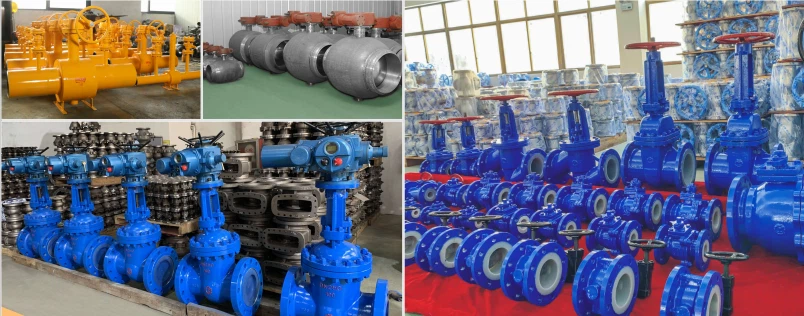
GNEE Valve factory
Need an Urgent Project Submittal? Get Your Technical Quote for EN 593 Valves within 2 Hours.
FAQ
What is the difference between API 609 and EN 593?
API 609 valves use strong materials like C95800 alloy. BS EN 593 valves often use ductile iron or stainless steel. Knowing these differences helps you pick the right valve for your system.
Do butterfly valves need flanges?
Parts Needed to Install a Butterfly Valve
Even wafer style valves require 2 flanges. These should be the same size as your valve and may be one piece or loose ring style flanges. This will allow the surrounding pipe line to connect snugly with the butterfly valve. Most butterfly valves do not require extra gaskets.
What are the three types of butterfly valves?
3 Different Types of Butterfly Valves
Butterfly valves come in different designs tailored to specific applications based on factors like pressure range, connection type and actuation method. The most common types include wafer-style, lug-style and eccentric butterfly valves.