

American Standard (ANSI) stainless steel gate valves are a common type of valve widely used in industrial piping systems, primarily for controlling the flow of fluids. Their design conforms to American standards (ANSI/ASME) and features corrosion resistance, high pressure resistance, and long service life.
GNEE Group specializes in manufacturing corrosion-resistant valves. Get customized valve solutions now to solve your fluid control problems!
ASME Stainless steel gate valve Structure and Working Principle
The core components of an ANSI stainless steel gate valve include the valve body, gate, stem, seat, and seals. The valve body is typically made of stainless steel, such as 304 or 316, to withstand various corrosive environments. The gate is the key component, opening and closing via the up-and-down movement of the stem. When the gate is fully raised, fluid flows smoothly; when the gate is fully lowered, the fluid is blocked.
Gate valves offer good sealing performance, especially when fully closed, effectively preventing leakage. Their simple structure and easy maintenance make them suitable for applications requiring frequent opening and closing.
ASME Stainless steel gate valve specification
Nominal Diameter: DN15~DN1000
Structure Type: Gate type
Nominal Pressure: 150LB~2500LB
Connection Type: Flange
Actuation Method: Manual, Bevel Gear, Electric, Pneumatic, Hydraulic
Valve Body Material: WCB, Cast Steel, Carbon Steel, Stainless Steel, Forged Steel
Manufacturing Standard: GB (Chinese National Standard), DIN (German Standard), API (American Standard), ANSI (American Standard)
Pressure and Temperature Range
Pressure Rating: 150LB~2500LB (US Standard), corresponding to nominal pressure PN1.0~16.0MPa.
Temperature Range:
Stainless Steel: -40℃~500℃ (up to 550℃ in some applications).
Applicable Media: Water, steam, oil, nitric acid, acetic acid, strong oxidizing media, and urea, etc. With material selection, this can be extended to include more corrosive media.
Manufacturing Standards
Design and Manufacturing: API 600, API 6D, ANSI B16.34
Structural Length: ASME B16.10
Flange Connection: ASME B16.5, ASME B16.47
Testing and Inspection: API 598, ISO 10434
ASME Stainless steel gate valve Main Features
- Strong Corrosion Resistance: The stainless steel material makes it resistant to corrosion from various chemical media, suitable for water, steam, oil, and weak acid/alkali environments.
- High Pressure Resistance: ANSI gate valves are typically designed according to ANSI standards, with pressure ratings ranging from 150 LB to 2500 LB, adaptable to different pressure requirements. (3) Low flow resistance: In the fully open state, the gate is almost parallel to the flow channel, resulting in low fluid resistance, making it suitable for high-flow-rate applications.
- Long service life: Due to the wear resistance and corrosion resistance of stainless steel, the gate valve can operate stably for a long time under normal operating conditions.
ASME Stainless steel gate valve Application Areas
American Standard stainless steel gate valves are widely used in industries such as petroleum, chemical, power, water treatment, and food processing. Specific applications include:
(1) Oil and gas pipelines: Used to control the transportation of media such as crude oil and natural gas.
(2) Chemical industry: Suitable for regulating corrosive media such as acids and alkalis.
(3) Water treatment systems: Used in tap water and sewage treatment.
(4) Food and pharmaceutical industries: The stainless steel material meets hygiene standards and can be used for controlling food-grade media.
ASME Stainless steel gate valve Selection Considerations
- When selecting ANSI stainless steel gate valves, the following factors should be considered:
- Media characteristics: including temperature, pressure, and corrosiveness, to determine the appropriate material and sealing material.
- Connection method: Common connection methods include flange connection, threaded connection, and butt weld connection, which should be selected according to the requirements of the piping system.
- Operation method: The choice between manual, electric, or pneumatic operation depends on the automation requirements and operating frequency.
- Pressure rating: Select the valve pressure rating that conforms to ANSI standards based on the system operating pressure.
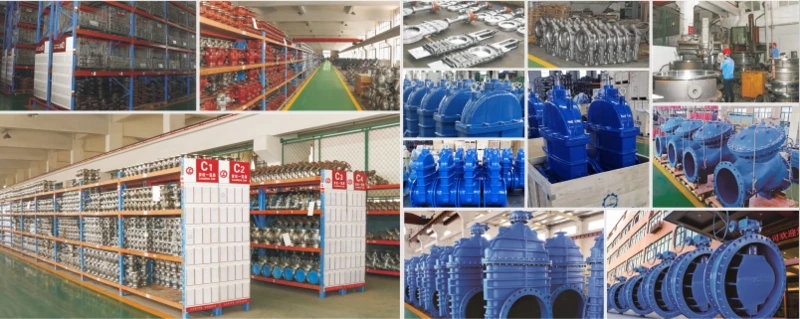
GNEE ASME Stainless steel gate valve Factory
Download the valve selection guide and find the perfect model for you in 3 easy steps!