

A stainless steel globe valve is a linear-motion valve: a disc is driven square onto a seat by a rising stem, inside a bolted bonnet body cast in ASTM A351 CF8, CF8M or CF3M. Standard supply runs NPS 1/2 to 24 in Class 150 to 600 to MSS SP-42, and up to Class 2500 to API 623. The decision that costs buyers most is not the grade - it is the standard, because both documents written for corrosion-resistant valves, API 600 and API 603, cover gate valves only.
Design Standard
| Basic Design | API603/ASME B16.34 |
| Face to Face/End to End | ASME B16.10 |
| End Flange | ASME B16.5 |
| Butt-welding End | ASME B16.25 |
| Pressure-temperature Rating | ASME B16.34 |
| Inspection and Testing | API 598 |
Design Features
1. Conical disc match to the conical surface of the seat for a reliable sealing.
2. Integral metal seat to ensure abrasion-resistance, a reliable sealing and and longer service life.
3. Optional impact handwheel.
4. Short stroke when opening & shut off and compact structure.
5. Fugitive emission qualified packing.
Stainless Steel Globe Valve drawing

Material of Construction
| Part No. | Part Name | Material |
|---|---|---|
| 1 | Body | ASTM A351 GR.CF8M ① |
| 2 | Disc | ASTM A351 GR.CF8M ② |
| 3 | Disc Lock Nut | ASTM A276 Type 316 |
| 4 | Stem | ASTM A182 F316 |
| 5 | Gasket | SS316 + Graphite |
| 6 | Bonnet Stud | ASTM A193 GR.B8 |
| 7 | Bonnet Stud Nut | ASTM A194 GR.8 |
| 8 | Packing Washer | ASTM A276 Type 316 |
| 9 | Eye Bolt Pin | ASTM A276 Type 304 |
| 10 | Packing | Graphite |
| 11 | Gland | ASTM A276 Type 316 |
| 12 | Gland Flange | ASTM A351 GR.CF8 |
| 13 | Bonnet | ASTM A351 GR.CF8M |
| 14 | Stem Nut | ASTM A439 D-2 |
| 15 | Screw | ASTM A276 Type 304 |
| 16 | Eyebolt Nut | ASTM A193 GR.B8 |
| 17 | Eyebolt | ASTM A194 GR.8 |
| 18 | Handwheel | ASTM A47 |
| 19 | Handwheel Nut | ASTM A274 Type 304 |
| 20 | Handwheel Washer | ASTM A274 Type 304 |
Notes
① Integral seat, optional hard-faced with stellite 6 or equivalent (HF).
② Disc, optional hard-faced with stellite 6 or equivalent (HF).
Dimension & Weight

Class 150
| Size | L-RF/BW | L-RTJ | W | H | Approx Weight | ||||||
|---|---|---|---|---|---|---|---|---|---|---|---|
| NPS | DN | mm | in | mm | in | mm | in | mm | in | kg | lb |
| 2 | 50 | 203 | 8.00 | 216 | 8.50 | 200 | 7.87 | 286 | 11.26 | 15 | 32 |
| 3 | 65 | 241 | 9.50 | 254 | 10.00 | 250 | 9.84 | 376 | 14.80 | 25 | 55 |
| 4 | 80 | 292 | 11.50 | 305 | 12.00 | 300 | 11.81 | 433 | 17.05 | 41 | 90 |
| 6 | 150 | 406 | 16.00 | 419 | 16.50 | 350 | 13.78 | 472 | 18.58 | 68 | 149 |
Class 300
| Size | L-RF/BW | L-RTJ | W | H | Approx Weight | ||||||
|---|---|---|---|---|---|---|---|---|---|---|---|
| NPS | DN | mm | in | mm | in | mm | in | mm | in | kg | lb |
| 2 | 50 | 266 | 10.50 | 283 | 11.12 | 200 | 7.87 | 287 | 11.30 | 19 | 41 |
| 3 | 65 | 318 | 12.50 | 333 | 13.12 | 300 | 11.81 | 386 | 15.20 | 36 | 78 |
| 4 | 80 | 356 | 14.00 | 371 | 14.62 | 350 | 13.78 | 458 | 18.03 | 59 | 129 |
| 6 | 150 | 445 | 17.50 | 460 | 18.12 | 450 | 17.72 | 496 | 19.53 | 111 | 245 |
Valve Factory


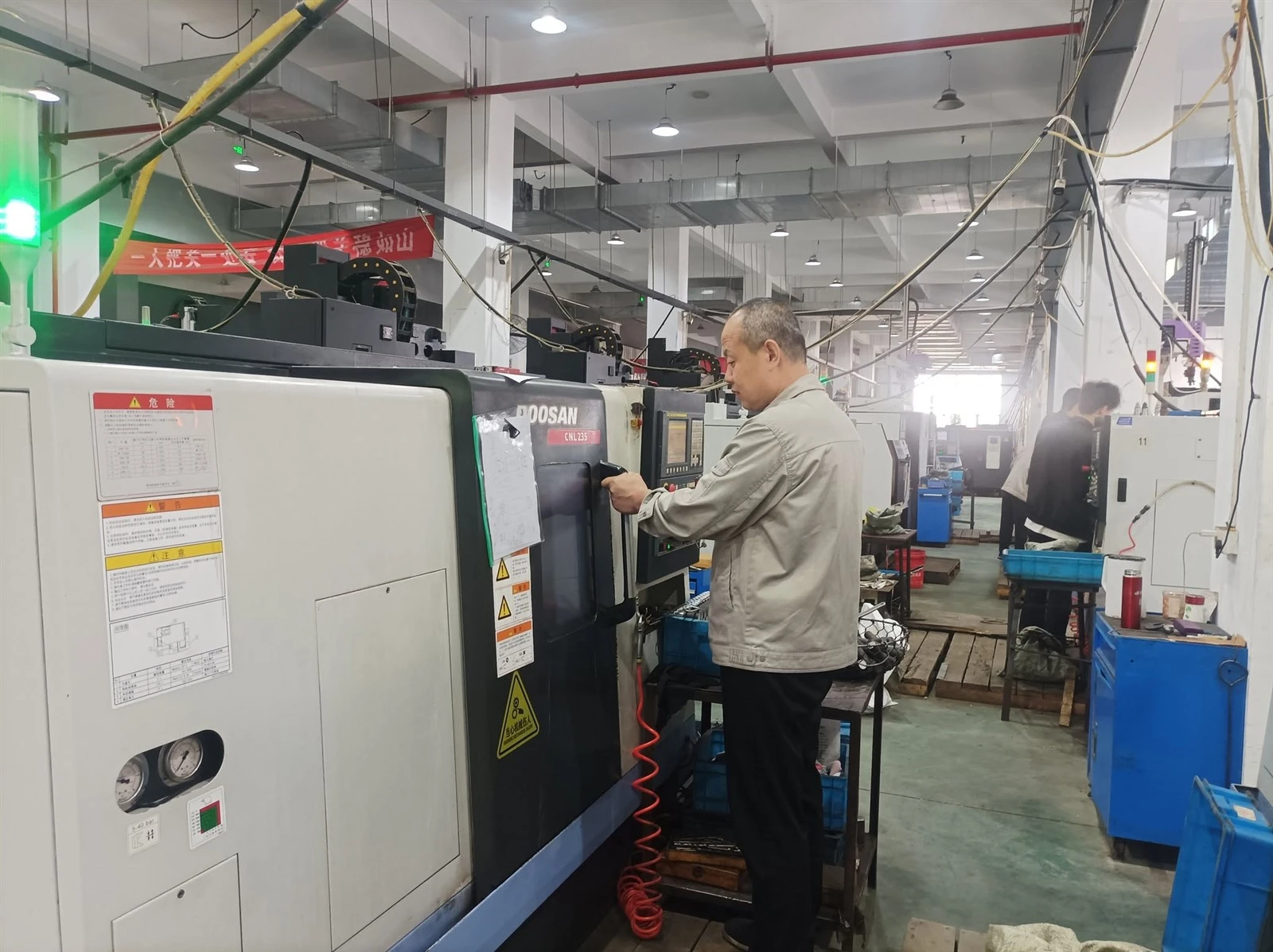

To price a stainless steel globe valve accurately we need six things: size and pressure class, body grade, pattern (T, angle or Y), end connection, seat type and the medium with its operating temperature. Send those and you have a quotation in 24 hours.
FAQ
What is the difference between a stainless steel globe valve and a gate valve?
A globe valve throttles and a gate valve does not. The disc in a globe valve lifts square off a seat and can be held at any position, which is what regulation needs; a gate is designed to be fully open or fully closed, and part-open it erodes its own seats. The cost of that ability is pressure loss: a T-pattern globe valve has an L/D around 340 against 8 for a gate, so it is chosen where control matters more than head loss.
Which standard applies to a stainless steel globe valve?
MSS SP-42 for Class 150, 300 and 600 in NPS 1/2 to 24, which is the standard written for corrosion-resistant alloy gate, globe, angle and check valves. Above Class 600 the route is API 623, the heavy-duty steel globe valve standard, NPS 2 to 24 and Class 150 to 2500. For a forged small-bore valve in NPS 1/4 to 4 the standard is API 602. MSS SP-42 was revised in July 2026, so check that the edition on your data sheet is the 2026 one.
Can a globe valve be built to API 600 or API 603?
Not as a compliant claim. The title of API 600 is Steel Gate Valves and the title of API 603 is Corrosion-resistant, Bolted Bonnet Gate Valves; both are gate valve standards and neither contains globe valve geometry. A supplier can build a globe valve with materials and a wall taken from those documents, but the valve cannot be marked or certified to them. On a data sheet, that combination is a review comment waiting to happen.
CF8, CF8M or CF3M, which body material?
CF8M for anything with chloride in it, which covers most chemical, cooling water and marine service, because its pitting resistance equivalent is about 26 against about 19 for CF8. CF8 for demineralised water, condensate, steam and most organic product. CF3M when the body will be welded or weld-repaired, because the low carbon content keeps the heat affected zone from sensitising. The mechanical trade is real: 450 and 175 MPa for the L grades against 485 and 205 MPa for CF8 and CF8M.
What is the maximum temperature?
It depends which part you mean, and the lowest one governs. The CF8M body is rated in ASME B16.34 Group 2.2 to 538 °C with flanged ends. PTFE packing and a PTFE bonnet gasket hold the valve to about 200 °C whatever the body says. Above 200 °C, order graphite packing and a spiral wound gasket; then the ceiling is the body again, and at 427 °C a Class 150 valve is rated at 5.5 bar, so the class rather than the material becomes the limit.
Can it be used below minus 29 °C or for LNG?
The material can and the valve as normally built cannot. CF8M stays ductile well below minus 29 °C, but ASME B16.34 gives no rating credit below that point, and a standard bonnet puts the packing within freezing distance of the body. Cryogenic service needs an extended bonnet sized to MSS SP-134, low-temperature bolting and a test at temperature. Buy that as a cryogenic globe valve, not as a stainless one with a note.
Why does the stem or the disc seize?
Galling, and a globe valve is more exposed to it than a gate. Two austenitic stainless surfaces sliding under load tear their passive film and cold-weld, and in a globe valve the disc meets the seat on a narrow cone, so closing thrust turns into a high contact stress. It is not corrosion and no grade upgrade prevents it. The cure is a hardness difference: Stellite 6 hardfacing on disc and seat, or a Nitronic 60 stem, or a bronze stem nut.
Metal seat or soft seat?
Soft seat when shutoff has to be absolute, which means a PTFE or PEEK insert and a temperature ceiling around 200 °C. Metal seat when the temperature or the medium rules the insert out, which means accepting the leakage rate in API 598 Table 3 instead of zero. For steam, hot oil and anything erosive, metal with Stellite 6 hardfacing is the normal answer, and API 623 makes hardfacing mandatory from Class 900 upward.
How much pressure drop does it add?
The full-open loss is expressed as L/D against the same bore of pipe: about 340 for a T-pattern globe, 150 for an angle pattern, 55 for a Y-pattern and 8 for a gate valve. Converted to a resistance coefficient through K = L/D times the friction factor, that makes a globe valve roughly forty times as lossy as a gate of the same size. A Y-pattern is the usual compromise where the line cannot afford the loss.
Why is the face-to-face longer than a gate valve?
Because the body has to contain a seat, a disc that lifts clear of it and two changes of direction. At Class 150 the difference is 203 mm against 178 mm at NPS 2 and 406 mm against 267 mm at NPS 6. It matters at replacement: a globe valve will not drop into the gap a gate valve came out of. From Class 600 the two columns of ASME B16.10 coincide, so at that class they do interchange.
What tests does each valve get?
A shell test at 1.5 times the 38 °C rating, a backseat test where a backseat is fitted, and a high-pressure seat test at 1.1 times the rating, which API 598 requires for a globe valve and only makes optional for a wedge gate. The low-pressure air seat test is the optional one here, the reverse of the gate valve rule. A gear-operated globe valve is tested at 110 percent of the differential pressure used to size its operator.
What is the minimum order quantity and lead time?
One piece for a stock size. Standard CF8M sizes in Class 150 and 300 ship in about seven days from stock, and made-to-order valves are 20 to 25 days from drawing approval. Class 600 in CF8M is partly stock and partly made to order, so it is quoted with a firm date rather than a range.
What documents come with the valves?
An EN 10204 3.1 inspection certificate with the heat number traceable to the body casting, a pressure test report per valve with shell and seat pressures and hold times, a dimensional report and a certificate of conformity. EN 10204 3.2 with an independent inspector signing is available, and API 624 fugitive emission qualification can be added. If your specification calls for a third-party witness, book it at production stage.
What is the warranty, and can you supply under our brand?
18 months from shipment against defects in material and workmanship. Wear parts are the packing, the bonnet gasket and the seat insert on a soft-seated valve, all three available as spares with the original heat number. OEM nameplates, your tag numbers and your painting system are all possible. What we will not do is stamp a standard we have not tested to: every valve is designed and tested to MSS SP-42, and we do not claim an API Monogram.