

A pressure seal globe valve is a globe valve whose bonnet is held and sealed by line pressure rather than by stud preload, which is the combination used from Class 600 upward where the valve has to throttle as well as isolate. A compliant build is API 623:2021 for the valve and MSS SP-144-2020 for the bonnet joint, over NPS 2 to 24 at Class 600 to 2500. What most data sheets get wrong is not the seal itself: it is that the bonnet is self-energising and the seat is not, so the two halves of this valve are governed by two different documents and fail for opposite reasons.
design standard
| Basic Design | BS 1873 / ASME B16.34 |
| Face to Face/End to End | ASME B16.10 |
| Flanged End | ASME B16.5 |
| Buttwelding End | ASME B16.25 |
| Pressure–temperature Rating | ASME B16.34 |
| Inspection and Test | API 598 |
Design Feature
1. Segmental thrust ring absorbs the outward thrust along the stem generated by the internal pressure.
2. Thrust rings to prevent deformation of the gaskets.
3. Stainless steel internals to ensure soundness and corrosion-resistance in the vital body sealing zone for carbon and alloy steel valves.
4. Soft steel gasket seal to provide large contact area for a perfect sealing.
5. Anti-blowout with collar design.
6. Compared with the gate valve, globe valve has a simple structure and easy for maintenance.
7. Short stroke, and short time for opening and shutoff.
8. Sealing surface is not easily worn and abraded during opening and shutoff, with good sealing performance and long service life.
9. Disc fully guided reduces the impact of medium onto both disc and stem, with excellent sealing perfomance.
10. By-pass and drain valve are available when required
Pressure Seal Globe Valve drawing

Material of Construction
| Part No. | Part Name | Carbon Steel | Stainless Steel | High Temperature |
|---|---|---|---|---|
| 1 | Body | ASTM A216 Gr.WCB+HF* | ASTM A351 Gr.CF8M+HF* | ASTM A217 Gr.C12A+HF* |
| 2 | Disc | ASTM A105+HF* | ASTM A182 F316+HF* | ASTM A182 F91+HF* |
| 3 | Disc Nut | ASTM A182 F6a | ASTM A276 Type 316 | ASTM A182 F6a |
| 4 | Stem | ASTM A182 F6a | ASTM A182 F316 | ASTM A182 F6a |
| 5 | Bonnet | ASTM A105 | ASTM A182 F316 | ASTM A182 F91 |
| 6 | Seal Ring | ASTM A276 Type 304L | ASTM A182 F316L | ASTM A276 Type 304L |
| 7 | Thrust Ring | ASTM A182 F6a | ASTM A276 Type 316 | ASTM A182 F6a |
| 8 | Segmental Thrust Ring | ASTM A182 F6a | ASTM A276 Type 316 | ASTM A182 F6a |
| 9 | Support Plate | ASTM A182 F6a | ASTM A276 Type 316 | ASTM A182 F6a |
| 10 | Packing Gasket | ASTM A182 F6a | ASTM A276 Type 316 | ASTM A182 F6a |
| 11 | Yoke | ASTM A216 Gr.WCB | ASTM A351 Gr.CF8 | ASTM A217 Gr.C12A |
| 12 | Stud | ASTM A193 Gr.B7 | ASTM A193 Gr.B8 | ASTM A193 Gr.B16 |
| 13 | Nut | ASTM A194 Gr.2H | ASTM A194 Gr.8 | ASTM A194 Gr.7 |
| 14 | Packing | Flexible Graphite + Braided Graphite | Flexible Graphite + Braided Graphite | Flexible Graphite + Braided Graphite |
| 15 | Plate | ASTM A182 F6a | ASTM A276 Type 316 | ASTM A182 F6a |
| 16 | Segmental Thrust Ring | ASTM A182 F6a | ASTM A276 Type 316 | ASTM A182 F6a |
| 17 | Hex Bolt | ASTM A193 Gr.B7 | ASTM A193 Gr.B8 | ASTM A193 Gr.B16 |
| 18 | Packing Gland | ASTM A182 F6a | ASTM A276 Type 316 | ASTM A182 F6a |
| 19 | Gland Flange | ASTM A216 Gr.WCB | ASTM A351 Gr.CF8 | ASTM A216 Gr.WCB |
| 20 | Eye Bolt | ASTM A193 Gr.B7 | ASTM A193 Gr.B8 | ASTM A193 Gr.B16 |
| 21 | Eye Bolt Nut | ASTM A194 Gr.2H | ASTM A194 Gr.8 | ASTM A194 Gr.7 |
| 22 | Anti-rotating Plate | ASTM A29 Gr.1035 | ASTM A276 Type 304 | ASTM A29 Gr.1035 |
| 23 | Screw | Carbon steel | ASTM A276 Type 304 | Carbon steel |
| 24 | Bolt | Carbon Steel | Carbon Steel | Carbon Steel |
| 25 | Washer | Carbon Steel | Carbon Steel | Carbon Steel |
| 26 | Gear Operation | Assembly | Assembly | Assembly |
Dimension &Weight

Gear Operation
| Pressure Rating | Standard | Optional |
|---|---|---|
| CLASS 600 | NPS≥8 | NPS4-6 |
| CLASS 900 | NPS≥8 | NPS4-6 |
| CLASS 1500 | NPS≥4 | NPS2-3 |
| CLASS 2500 | NPS≥3 | NPS2 |
CLASS 600
| Size | L | L1 | L2 | W1 | W2 | H | Approx Weight (BW) | ||||||||
|---|---|---|---|---|---|---|---|---|---|---|---|---|---|---|---|
| DN | NPS | mm | in | mm | in | mm | in | mm | in | mm | in | mm | in | kg | lb |
| 50 | 2 | 178 | 7.01 | 292 | 11.50 | 295 | 11.62 | 250 | 9.80 | 305 | 12.01 | 387 | 15.24 | 21 | 46 |
| 80 | 3 | 254 | 10.00 | 356 | 14.00 | 359 | 14.12 | 508 | 20.00 | 400 | 15.75 | 461 | 18.15 | 48 | 106 |
| 100 | 4 | 305 | 12.00 | 432 | 17.00 | 435 | 17.12 | 640 | 25.20 | 305 | 12.01 | 522 | 20.55 | 60 | 132 |
| 150 | 6 | 457 | 18.00 | 559 | 22.00 | 562 | 22.12 | 450 | 17.70 | 610 | 24.02 | 792 | 31.18 | 188 | 414 |
| 200 | 8 | 584 | 23.00 | 660 | 26.00 | 663 | 26.12 | 610 | 24.00 | 610 | 24.02 | 832 | 32.76 | 289 | 637 |
| 250 | 10 | 711 | 28.00 | 787 | 31.00 | 790 | 31.12 | 610 | 24.00 | 610 | 24.02 | 880 | 34.65 | 406 | 895 |
| 300 | 12 | 813 | 32.00 | 838 | 33.00 | 841 | 33.12 | 800 | 31.50 | 800 | 31.50 | 945 | 37.20 | 549 | 1210 |
| 350 | 14 | / | / | / | / | / | / | 800 | 31.50 | 810 | 31.89 | 985 | 38.78 | 779 | 1717 |
| 400 | 16 | / | / | / | / | / | / | 1000 | 39.40 | 1000 | 39.37 | 1140 | 44.88 | 1089 | 2401 |
CLASS 900
| Size | L | L1 | L2 | W1 | W2 | H | Approx Weight (BW) | ||||||||
|---|---|---|---|---|---|---|---|---|---|---|---|---|---|---|---|
| DN | NPS | mm | in | mm | in | mm | in | mm | in | mm | in | mm | in | kg | lb |
| 50 | 2 | 216 | 8.50 | 368 | 14.50 | 371 | 14.62 | 350 | 13.80 | 305 | 12.01 | 527 | 20.75 | 43 | 96 |
| 80 | 3 | 305 | 12.00 | 381 | 15.00 | 384 | 15.12 | 350 | 13.80 | 400 | 15.75 | 527 | 20.75 | 85 | 187 |
| 100 | 4 | 356 | 14.00 | 457 | 18.00 | 460 | 18.12 | 500 | 19.70 | 460 | 18.11 | 620 | 24.41 | 100 | 220 |
| 150 | 6 | 508 | 20.00 | 610 | 24.00 | 613 | 24.12 | 800 | 31.50 | 610 | 24.02 | 745 | 29.33 | 283 | 624 |
| 200 | 8 | 660 | 26.00 | 737 | 29.00 | 740 | 29.12 | 560 | 22.00 | 610 | 24.02 | 854 | 33.62 | 480 | 1058 |
| 250 | 10 | 787 | 31.00 | 838 | 33.00 | 841 | 33.12 | 560 | 22.00 | 810 | 31.89 | 1051 | 41.38 | 754 | 1662 |
| 300 | 12 | 914 | 36.00 | 965 | 38.00 | 968 | 38.12 | 800 | 31.50 | 810 | 31.89 | 1182 | 46.54 | 1082 | 2385 |
| 350 | 14 | 991 | 39.00 | 1029 | 40.50 | 1038 | 40.88 | 800 | 31.50 | 1000 | 39.37 | 1317 | 51.85 | 1583 | 3490 |
| 400 | 16 | 1092 | 43.00 | 1130 | 44.50 | 1140 | 44.88 | 1000 | 39.40 | 1200 | 47.24 | 1467 | 57.76 | 1962 | 4325 |
CLASS 1500
| Size | L | L1 | L2 | W1 | W2 | H | Approx Weight (BW) | ||||||||
|---|---|---|---|---|---|---|---|---|---|---|---|---|---|---|---|
| DN | NPS | mm | in | mm | in | mm | in | mm | in | mm | in | mm | in | kg | lb |
| 50 | 2 | 216 | 8.50 | 368 | 14.50 | 371 | 14.62 | 350 | 13.80 | 305 | 12.01 | 499 | 19.65 | 68 | 150 |
| 80 | 3 | 305 | 12.00 | 470 | 18.50 | 473 | 18.62 | 450 | 17.70 | 400 | 15.75 | 603 | 23.74 | 90 | 198 |
| 100 | 4 | 406 | 16.00 | 533 | 21.00 | 536 | 21.12 | 450 | 17.70 | 460 | 18.11 | 620 | 24.41 | 195 | 430 |
| 150 | 6 | 559 | 22.00 | 705 | 27.75 | 711 | 28.00 | 710 | 28.00 | 710 | 27.95 | 811 | 31.93 | 418 | 922 |
| 200 | 8 | 711 | 28.00 | 832 | 32.75 | 842 | 33.13 | 800 | 31.50 | 810 | 31.89 | 1010 | 39.76 | 740 | 1631 |
| 250 | 10 | 864 | 34.00 | 991 | 39.00 | 1000 | 39.38 | 800 | 31.50 | 810 | 31.89 | 1175 | 46.26 | 1165 | 2568 |
| 300 | 12 | 991 | 39.00 | 1130 | 44.50 | 1146 | 45.12 | 1000 | 39.40 | 1000 | 39.37 | 1272 | 50.08 | 1960 | 4321 |
| 350 | 14 | 1067 | 42.00 | 1257 | 49.50 | 1276 | 50.25 | 1000 | 39.40 | 1200 | 47.24 | 1380 | 54.33 | 2583 | 5695 |
| 400 | 16 | 1194 | 47.00 | 1384 | 54.50 | 1419 | 55.88 | 1200 | 47.20 | 1000 | 39.37 | 1529 | 60.20 | 2883 | 6356 |
CLASS 2500
| Size | L | L1 | L2 | W1 | W2 | H | Approx Weight (BW) | ||||||||
|---|---|---|---|---|---|---|---|---|---|---|---|---|---|---|---|
| DN | NPS | mm | in | mm | in | mm | in | mm | in | mm | in | mm | in | kg | lb |
| 50 | 2 | 279 | 11.00 | 451 | 17.75 | 454 | 17.87 | 500 | 19.70 | 460 | 18.11 | 505 | 19.88 | 82 | 181 |
| 80 | 3 | 368 | 14.50 | 578 | 22.75 | 584 | 23.00 | 460 | 18.00 | 610 | 24.02 | 588 | 23.15 | 188 | 414 |
| 100 | 4 | 457 | 18.00 | 673 | 26.50 | 683 | 26.88 | 460 | 18.00 | 610 | 24.02 | 717 | 28.23 | 284 | 626 |
| 150 | 6 | 610 | 24.00 | 914 | 36.00 | 927 | 36.50 | 710 | 28.00 | 710 | 27.95 | 798 | 31.42 | 594 | 1310 |
| 200 | 8 | 762 | 30.00 | 1022 | 40.25 | 1038 | 40.87 | 800 | 31.50 | 810 | 31.89 | 1020 | 40.16 | 1225 | 2701 |
| 250 | 10 | 914 | 36.00 | 1270 | 50.00 | 1292 | 50.88 | 1000 | 39.40 | 1000 | 39.37 | 1158 | 45.59 | 2205 | 4861 |
| 300 | 12 | 1041 | 41.00 | 1422 | 56.00 | 1445 | 56.88 | 1000 | 39.40 | 1000 | 39.37 | 1290 | 50.79 | 2376 | 5238 |
| 350 | 14 | 1118 | 44.00 | / | / | / | / | 1000 | 39.40 | 1000 | 39.37 | 1454 | 57.24 | 2793 | 6158 |
| 400 | 16 | / | / | / | / | / | / | 1000 | 39.40 | 1000 | 39.37 | 1556 | 61.26 | 3295 | 7264 |
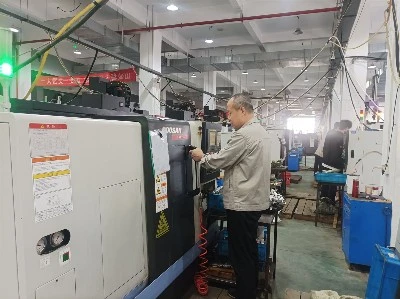
Valve Factory



Send NPS and class, body material, design temperature and the fluid, the end connection, whether the valve will throttle or only isolate, and the certificate level your QA group needs. A quotation comes back within 24 hours with the standard set written out, and a drawing follows for approval before anything is cast. The pressure seal gate valve page covers the same bonnet joint on a gate body if the duty is isolation rather than control.
FAQ
What is the difference between a pressure seal and a bolted bonnet globe valve?
A bolted bonnet globe valve is sealed by stud preload, so the bolting has to out-load the pressure acting on the bonnet area at every operating condition. A pressure seal bonnet is sealed by that pressure instead: the bonnet sits in a tapered bore, line pressure pushes it into a gasket held by a retaining ring, and sealing force rises as pressure rises. The bonnet is therefore self-energising and the bolted form is not. The trade is that the pressure seal joint is weakest at the pressure you test it at, cannot be reused once opened, and needs a new gasket every time the bonnet comes off.
Is a pressure seal globe valve an API 600 valve?
No. The title of API 600 is Steel Gate Valves - Flanged and Butt-welding Ends, Bolted Bonnets, and it covers gate valves only. The globe valve standard is API 623, first published in 2013 and reissued as a second edition in 2021. A pressure seal globe valve is specified as API 623 plus MSS SP-144, not as API 600. The confusion is common because for two decades the industry quoted API 600 wall thicknesses on globe valve data sheets, which is precisely the habit API 623 was written to stop.
Which standard applies: API 623, MSS SP-144 or BS 1873?
API 623:2021 for the valve and MSS SP-144-2020 for the bonnet joint. API 623 is the parent product standard for steel globe valves from NPS 2 to 24 in Class 150 to 2500, and its 2021 scope lists pressure seal bonnet among the features covered. MSS SP-144 adds the construction rules for the pressure seal joint itself. BS 1873 does not apply: it has been withdrawn and replaced by EN 13709, adopted by BSI as BS EN 13709, and that standard stops at Class 600, so it never reached the classes where a pressure seal valve is used.
Does MSS SP-144 Style A apply to a globe valve?
No. MSS SP-144 defines Style A and Style B for one parent standard only, API 600, which is a gate valve standard. For the API 623 parent the standard practice states that the valve must comply with all of the requirements of API 623, and that no Style A or Style B is covered. The same wording applies to the API 603 parent. Written on a globe valve inquiry, Style A and Style B have no meaning, and a supplier is free to interpret them as anything, so state API 623:2021 with a pressure seal bonnet to MSS SP-144-2020 instead.
Why can a pressure seal globe valve not be certified to BS 1873?
For two independent reasons. BS 1873 has been withdrawn and superseded by EN 13709, so a manufacturer cannot issue a current certificate against it. And the replacement, BS EN 13709:2010, covers Class 150, 300 and 600 only for flanged and butt-welding ends, so its class range ends before pressure seal service begins. A data sheet that cites BS 1873 for a Class 900 or Class 1500 valve is outside the scope of both the withdrawn standard and its successor.
What size and pressure class range do you supply?
NPS 2 to 24 in Class 600, 900, 1500 and 2500, which is the overlap between API 623 and MSS SP-144-2020. MSS SP-144 itself runs from NPS 2 to NPS 50 and from Class 600 to Class 4500, but above NPS 24 and above Class 2500 there is no globe valve parent standard, so those sizes are quoted against a drawing rather than against a standard. Class 150 and Class 300 are not offered with a pressure seal bonnet, because the pressure is too low to energise the gasket and MSS SP-144 does not cover them either.
Which body material for 540 °C main steam?
A217 WC6 or A217 WC9, with CoCr-A hardfacing on the seat and disc. A216 WCB stops at 425 °C and is not a main steam material, which is why a WCB pressure seal globe valve belongs on feedwater and drains rather than on the main steam line. Above about 600 °C the choice moves to A217 C12A. At 540 °C the limiting item is not the body but the bonnet and gland bolting: A193 B7 is limited to 538 °C, so the joint needs A193 B16 with A194 grade 4 or 7 nuts.
Why is the high-pressure seat test the one that matters here?
Because API 598 requires it for globe valves at the classes where a pressure seal valve is used, while the low-pressure air test becomes optional above Class 900. A purchase order that says only API 598 therefore buys the high-pressure closure test by default, and the low-pressure air test only if it is asked for. There is a second trap: for gear operated and power operated globe valves, the high-pressure closure test is performed at 110 percent of the design differential pressure used to size the operator, not at 1.1 times the cold rating.
Can a Class 2500 valve carry an API 624 certificate?
No. API 624 excludes valves larger than NPS 24 or above Class 1500, so a Class 2500 valve is outside its scope and no type test report can exist for it. API 623 does require the valve design to be qualified to API 624, but the two documents do not meet at the top of the range. At Class 2500 ask for an API 622 qualified packing set and an ISO 15848-1 type test instead, and treat a supplier who offers an API 624 report at Class 2500 as a document problem rather than a bargain.
Can the seat be repaired in line?
No. The bonnet has to come off to reach the seat, and on a pressure seal valve that means releasing the retaining ring, lifting the bonnet and destroying the gasket. On forged and cast pressure seal bodies the seat is normally integral or welded rather than a renewable ring, so a seat repair is a workshop job with the body stripped. Plan the repair as a valve swap plus a workshop turn, and keep one pressure seal gasket per valve in stores so the swap does not wait on a machined part.
Is the pressure seal gasket reusable?
No. It is a single-use item that is pressed into a plastic set between the body taper and the bonnet and cannot re-seat once disturbed. Every opening of the bonnet needs a new gasket matched to the actual body and bonnet dimensions of that valve rather than to its size and class alone, which is why the drawing or serial number is needed and why lead time can run to weeks. MSS SP-144 limits the gasket material to ductile iron, soft steel, austenitic stainless steel, vermiculite or flexible graphite.
Will it fit the existing pipe spool?
Not automatically. ASME B16.10 tabulates flanged globe and stop-check valves on their own table, separate from the gate valve table, so a globe valve of a given size and class is not interchangeable with a gate valve in the same line. The bonnet style itself does not change the face-to-face dimension, because B16.10 has no column for bonnet construction. One boundary to check early: B16.10 stops at NPS 12 for Class 2500, while API 623 lists globe valves to NPS 24 at that class, so the upper sizes are dimensioned to a drawing.
What is the minimum order quantity and lead time?
One piece is accepted, so a single valve can be bought for a maintenance job or for evaluation before a larger order. Common sizes in A216 WCB and A217 WC6 ship in about 7 days from stock; made-to-order valves in WC9, C12A or non-standard end connections run about 20 to 25 days plus transit from Tianjin. Class 2500 and sizes above NPS 16 should be confirmed against the production schedule before the inquiry closes, and the pressure seal gasket should be ordered with the valve rather than after it.
What documents are supplied with each valve?
EN 10204 3.1 material certificates as standard, with 3.2 when independent witnessing is required; the API 598 test report covering the shell test, the backseat test and the high-pressure closure test; positive material identification results on alloy and stainless bodies; hardness results where NACE MR0175 applies; the post-weld heat treatment chart where PWHT applies; and marking to MSS SP-25. Where the design has been qualified to API 624, the type test report is supplied with it. Third-party inspection is arranged to your ITP and must be scheduled to the production date, not after packing.