

The core difference between wafer check valves and swing check valves lies in their connection method and structural form: wafer check valves are installed by clamping the valve between two flanges, resulting in a compact structure and light weight; while swing check valves are an opening and closing structure that relies on the valve disc rotating around an axis to achieve unidirectional flow, resulting in low flow resistance and suitability for large-diameter pipeline systems.
Swing check valves have a disc-shaped valve disc that rotates around a pivot pin via a hinge mechanism to open and close. When the medium flows forward, it pushes the valve disc open; when flowing backward, the valve disc automatically closes under its own weight or reverse pressure, preventing backflow. Its flow path is nearly straight, resulting in low flow resistance, making it suitable for large-diameter, low-velocity, and stable flow conditions.
Wafer check valves, on the other hand, generally refer to check valves using a wafer connection. Their internal structure can be either swing or lift-type. A typical wafer design only requires bolts to clamp the valve between two pipe flanges, eliminating the need for additional flange connections. Therefore, they are shorter, smaller, and lighter, weighing only 1/4 to 1/8 and 1/4 to 1/20 of traditional flanged check valves, respectively.
Standard Flanged Swing or Compact Wafer? Submit Your Specs for a Quote in 1 Hour!
Structure & Installation Comparison
| Comparison Item | Swing Check Valve | Wafer Check Valve |
| Connection Type | Flanged (Integral flanges at both ends) | Wafer (Clamped between pipe flanges) |
| Face-to-Face (F-F) | Long (Standard length, occupies more space) | Extremely Short (Typically 1/4 to 1/8 of a Swing valve) |
| Weight | Heavy (Full cast body) | Extremely Light (60% – 90% lighter than Swing type) |
| Installation Position | Primarily Horizontal (Limited in vertical lines) | Highly Flexible (Horizontal or Vertical-up) |
| Complexity | High (Includes bonnet, hinge pin, large disc) | Simple (Thin wafer structure, minimal parts) |
Technical Specifications & Performance
| Parameter Category | Swing Check Valve | Wafer Check Valve |
| Flow Resistance / ΔP | Extremely Low (Full bore flow when open) | Moderate (Disc and springs are in the flow path) |
| Water Hammer Prevention | Poor (Heavy disc, slow closure, prone to slamming) | Excellent (Dual-plate with springs, fast closure) |
| Sealing Performance | Mostly metal-to-metal; prone to erosion | Available in soft or metal seats; more uniform pressure |
| Size Range | Full range (But becomes extremely heavy at large sizes) | Full range (Most advantageous at large sizes) |
| Maintenance | Convenient (Bonnet allows in-line repair of internals) | Moderate (Requires removal of the entire valve) |
Application Environment & Economics
| Item | Swing Check Valve | Wafer Check Valve |
| Applicable Media | Clean water, oil, fluids with minor impurities | Clean water, gases, oil products |
| Typical Scenarios | Municipal water/sewage, traditional chemical plants | Compact pump rooms, high-rise buildings, water treatment |
| Support Requirements | Requires heavy supports for its weight | No special support needed; minimal load on piping |
| Price (CAPEX) | Moderate (Depends on material and pressure rating) | Economical (Less material used; high ROI for large sizes) |
| Installation Cost | Higher (Requires more labor and gaskets) | Very Low (Extremely fast installation saves labor) |
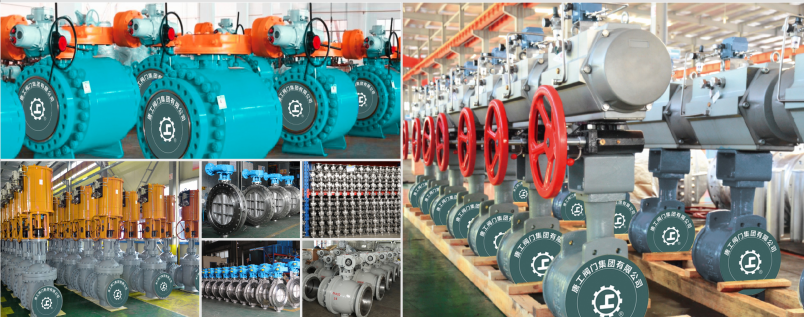
GNEE Valve factory
FAQ
What is the life expectancy of a swing check valve?
On average, check valves can last anywhere from 5 to 20 years. However, this lifespan can be extended or reduced based on the factors mentioned earlier. For instance, check valves made from high-quality materials and operated under ideal conditions may last beyond 20 years.
How should a swing check valve be installed?
Swing check valves are always installed with the HINGE PIN placed horizontally, and above the pipe centerline (as shown in the pictures at the end of this section). Incorrect installation may result in binding, high head loss, and/or sticking in the open position.
Can wafer check valves be installed vertically?
The Flomatic 888 wafer check valve can be installed vertically (flow up) or horizontally. Consult factory for vertical flow down. The valve must be installed with the flow arrow on the tag pointing to the flow of water.