

The core difference between ball check valves and swing check valves lies in their sealing structure and operating method: ball check valves rely on the ball rolling on the slide to open and close, resulting in good sealing performance, low flow resistance, and effective reduction of water hammer; swing check valves, on the other hand, open or close by rotating the valve disc around the shaft, offering strong flow capacity but relatively weak sealing performance, and are suitable for large-diameter pipeline systems.
From the perspective of working principle and opening/closing mechanism, a ball check valve uses a rubber-coated ball as its valve disc. Under the action of medium pressure, the ball rolls back and forth along an arc-shaped slide within the valve body to open and close the valve.
During forward flow, the fluid pushes the ball to roll away from the valve seat, opening the passage; when flow stops or reverses, the ball rolls back to the valve seat under reverse pressure and presses shut, quickly cutting off the flow. This short-stroke rolling design results in fast response, smooth closing, and features noise reduction, vibration damping, and energy saving.
In contrast, a swing check valve has a disc-shaped valve disc connected to the valve body via a hinge mechanism. It relies on medium pressure to push the valve disc to rotate around a pin to achieve opening and closing. During forward flow, the valve disc is pushed open; when the medium flows backward or the pressure drops, the valve disc rotates back to the valve seat under its own weight and reverse flow pressure, completing the closure. Due to the longer valve disc stroke, large-diameter valves are prone to impact when closing, potentially causing water hammer.
Quick RFQ: "From Rubber Ball Sewage Valves to Standard Cast Steel Swing NRVs-Submit Specs for a Factory Quote in 1 Hour!
Mechanism & Operation Comparison
| Comparison Item | Ball Check Valve | Swing Check Valve |
| Closure Element | Spherical Ball (Usually rubber-coated metal) | Circular Disc |
| Motion Type | Ball lifts or rolls up and down in the flow path | Disc rotates in an arc around a hinge pin |
| Sealing Principle | Backflow pushes the ball against the seat via gravity/pressure | Backflow swings the disc back against the seat via weight/pressure |
| Self-Cleaning | Excellent (Ball rotates and wipes away deposits) | Poor (Debris easily accumulates at the disc or hinge) |
| Water Hammer | Low Risk (Short stroke and dampened closure) | Higher Risk (Long stroke; prone to "slamming") |
Technical Specifications & Performance
| Parameter Category | Ball Check Valve | Swing Check Valve |
| Flow Resistance | Moderate to High (Diverted flow path) | Low (Full bore when open; minimal pressure drop) |
| Installation | Horizontal or Vertical (Flow must be upward) | Mainly Horizontal (Vertical installation is limited) |
| Cracking Pressure | Lower (Ball is relatively light) | Lower (But must overcome disc inertia) |
| Sealing Class | Primarily soft-seated; bubble-tight leakage | Primarily metal-seated; slight leakage possible |
| Face-to-Face | Relatively shorter | Relatively longer (especially for large sizes) |
| Pressure Rating | Usually for Low-to-Medium pressure | Wide range from Low to very High pressure |
Media & Application Comparison
| Item | Ball Check Valve | Swing Check Valve |
| Applicable Media | Sewage, Mud, Viscous liquids, Granular media | Clean Water, Oil, Gas, Steam |
| Typical Scenarios | Submersible pump stations, Wastewater, Chemicals | Main water lines, Refineries, Long-distance pipelines |
| Size Limitations | Common in small-to-medium sizes (DN50–DN600) | Unlimited (Available in huge sizes DN2000+) |
| Maintenance | Extremely low (Usually just ball replacement) | High (Requires checking hinge pin, disc, and seat wear) |
| Cost | High cost-performance in wastewater apps | More economical in large-scale general industry |
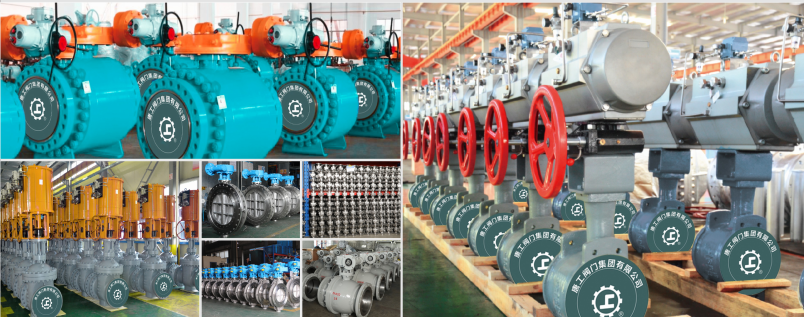
GNEE Valve Factory
FAQ
When to use a swing check valve?
Horizontal Water Lines: Swing check valves prove to be ideal for managing high-volume, consistent-pressure fluid systems, making them the valve of choice in wastewater treatment and water pumping facilities. They help ensure smooth and efficient flow in horizontal water lines.
What is the problem with swing check valves?
Typical swing check valve issues include disc chattering, slamming, tapping against the seat, cavitation, water hammer, wear, erosion etc.