

Safety valves and pressure relief valves are very similar in structure and performance. Both automatically release the internal medium when the opening pressure exceeds the allowable pressure to ensure the safety of the production equipment. Due to this inherent similarity, people often confuse the two in use. Furthermore, some production equipment regulations stipulate that either type can be used. Therefore, the differences between the two are often overlooked, leading to many problems.
According to the definitions in Part I of the ASME Boiler and Pressure Vessel Code:
(1) Safety Valve: An automatic pressure relief device driven by the static pressure of the medium upstream of the valve. Its characteristic is a sudden, full-opening action. Used for gas or steam applications.
(2) Pressure Relief Valve: Also known as an overflow valve, an automatic pressure relief device driven by the static pressure of the medium upstream of the valve. It opens proportionally as the pressure exceeds the opening force. Primarily used for fluid applications.
Factory-Direct Pricing: Sourcing High-Performance Safety and Relief Valves for Your Next Project.
Comparison Table: Safety Valve vs. Relief Valve
| Comparison Dimension | Safety Valve | Relief Valve |
| Definition / Purpose | Disaster Prevention. Designed to release pressure immediately to protect life and property. | Pressure Limitation. Used to regulate or limit pressure to prevent damage to system components. |
| Applicable Media | Compressible Fluids (Gases, Steam, Air, Vapor). | Incompressible Fluids (Water, Oil, Liquid Chemicals). |
| Opening Characteristic | Pop Action / Snap Action. Opens fully and instantaneously once the set pressure is reached. | Proportional Opening. The degree of opening is proportional to the increase in system pressure. |
| Lift / Opening Degree | Full-Lift. Reaches maximum discharge capacity in a very short time. | Low-Lift / Micro-Lift. Lift is usually small; discharge increases as overpressure increases. |
| Reseating Pressure | Reseats at a pressure significantly lower than the set pressure (Blowdown). | Reseats and closes as soon as the pressure drops back to the set point. |
| Operational Logic | Emergency Protection Device. Should not operate under normal conditions. | Control / Regulating Device. May operate frequently in a circulating system (e.g., bypass). |
| Common Standards | ASME Section I (Boilers), Section VIII (Pressure Vessels). | ASME Section VIII (Pressure Vessels). |
| Discharge Location | Usually discharged directly to the Atmosphere (often with a loud noise). | Usually discharged back to a Storage Tank or the pump inlet (closed loop). |
| Typical Applications | Boilers, Gas Cylinders, Natural Gas Pipelines, Pressure Vessels. | Hydraulic Systems, Water Supply Lines, Pump Bypass/Return Lines. |
| Visual Features | Usually equipped with a manual lifting lever for testing and is lead-sealed. | Often simpler in structure; may not have an external test lever. |
GNEE Valve factory
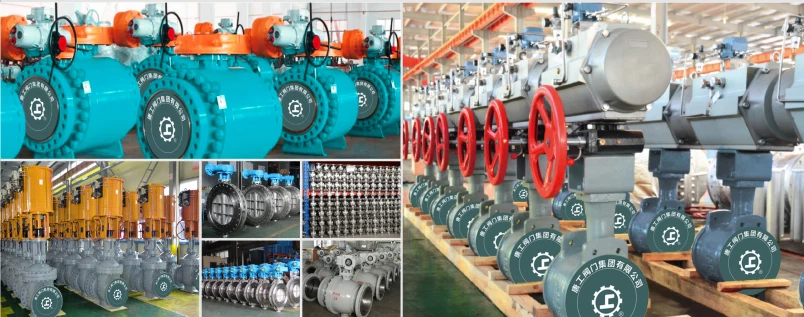
In-Stock & Ready to Ship: All Sizes of Safety and Relief Valves with Full Certification.
FAQ
What is the 3 rule for pressure relief valves?
The 3% rule recommends that the inlet piping between the protected equipment and the inlet flange of the PRV be designed so that the total pressure loss in the line shall be the sum of the inlet loss, line loss, and valve loss and shall not exceed 3% of the set pressure of the valve.
What are the two types of safety valves?
Types of safety Valves
Low lift safety valve - The actual position of the disc determines the discharge area of the valve.
Full lift safety valve - The discharge area is not determined by the position of the disc.
What is the common name for a safety valve?
The terms Pressure Safety Valves (PSV) and Pressure Relief Valves (PRV) are often used interchangeably throughout the industry depending on company standards. Although PSVs and PRVs ultimately serve the same purpose, there are some differences in how they operate, the capacity, and the setpoint.
The operating principle of a safety valve is based on the balance between spring force and fluid pressure. When the fluid pressure in the system exceeds the set pressure limit, the safety valve automatically opens to release some of the pressure to maintain safe operation of the system. Once the pressure drops to within the proper range, the safety valve will automatically close and return to normal operation.