

Regulating valves are used to dynamically regulate the flow rate, pressure, or temperature of a medium to achieve process control; pressure relief valves, on the other hand, are specifically used for system overpressure protection, passively releasing pressure to ensure equipment safety.
Functional positioning
A regulating valve is an actuator in a process control system. By receiving signals from the controller (e.g., 4-20mA), it actively adjusts the valve opening to precisely control process parameters such as flow rate, pressure, and temperature of the medium, ensuring stable and efficient production. It is commonly found in automated systems in chemical, power, and pharmaceutical industries.
A pressure relief valve is a safety protection device. Normally closed, it automatically opens to release pressure only when the system pressure exceeds a set value. It closes again after the pressure returns to normal, preventing equipment damage due to overpressure. It is a passively responding valve.
Control methods and operating logic
The operation of a regulating valve is driven by an external signal, enabling continuous and precise opening adjustment. Examples include pneumatic diaphragm valves and electric regulating valves, emphasizing response speed and control accuracy.
Pressure relief valves open and close automatically based on internal pressure changes, requiring no external control. Their opening degree is usually proportional to the overpressure level (proportional pressure relief), or they open rapidly and fully after reaching a set value (safety relief type), emphasizing reliability and speed of operation.
Sourcing Valves for Your Project? Get Factory-Direct Quotes for Regulating and Relief Valves Now.
Comparison Table: regulating valve vs. Relief Valve
| Feature / Aspect | Regulating Valve | Relief Valve |
| Primary Function | Process Control. Regulates pressure, temperature, level, or flow by varying the flow rate. | Safety Protection. Releases media when system pressure exceeds a preset value to prevent equipment damage. |
| Operational Characteristics | Continuous Modulation. The plug stays at any position between 0–100% (throttling) based on a signal. | Proportional or Snap Opening. Opens at set pressure and reseats once pressure returns to a safe range. |
| Actuation Method | External Power. Usually driven by pneumatic, electric, or hydraulic actuators. | Self-Actuated (Media Powered). Relies on the media pressure to overcome internal spring force. |
| Control System Integration | Closed-Loop Control. Requires sensors (transmitters) and controllers (PLC/DCS). | Independent Operation. Passive response; does not require external signals or control loops. |
| Operating Frequency | Extremely High. Constantly micro-adjusting during system operation. | Extremely Low. Operates only during abnormal conditions or overpressure events. |
| Sealing Standards | Classified by Grades. Allows trace leakage (e.g., ANSI Class IV/VI). | Extremely Strict. Must maintain near-zero leakage until the set pressure is reached. |
| Pressure Drop | Significant. Creates a pressure drop through throttling to achieve regulation. | Minimal. Remains closed during normal operation; causes no pressure drop until it opens. |
| Installation Location | Installed in the core flow path of process piping. | Installed on pressure vessels, pump outlets, or nodes prone to overpressure. |
| Response Speed | Depends on the actuator and positioner (typically seconds). | Extremely Fast. Mechanical response; instantaneous action to protect the system. |
| Typical Applications | Chemical flow control, heat exchanger temp regulation, oil & gas pressure reduction. | Boiler safety discharge, hydraulic system bypass, storage tank breathing protection. |
GNEE Valve workshop
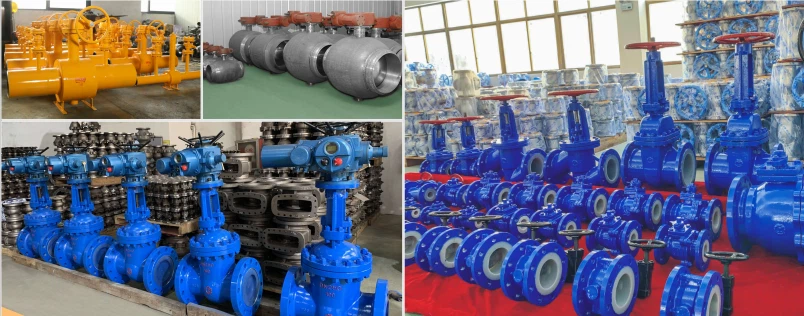
In-Stock & Ready to Ship: High-Precision Regulating Valves and Certified Relief Valves Available.
FAQ
What are two types of relief valves?
There are two basic types of relief valves commonly found in hydraulic systems: direct acting and pilot operated. Selecting the correct one can prevent issues and make your system run better.
What is a regulating valve used for?
The most common application for regulating valves is for reducing the downstream pressure of Steam, Water, as well as other liquids and gases that are flowing thru a pipe or system.
What is Electric regulating valve
Electric regulating valve are core actuators in industrial automation control systems, precisely assembled from an electric actuator and a valve body. Driven by electrical energy, they continuously adjust the valve opening, accurately controlling key parameters such as flow rate, temperature, and pressure of pipeline media. They are widely used in petrochemical, power, metallurgical, and environmental protection industries.