

A182 and A105 are two common forged steel materials used in valves. Their core difference lies in their application and material properties: A105 is a general-purpose carbon steel forging suitable for normal temperature and high-pressure environments; A182, on the other hand, is a series of heat-resistant alloy steel forgings specifically designed for high-temperature and corrosive conditions, offering superior performance but at a higher cost.
A105 is typically used to manufacture main pressure-bearing components such as valve bodies and covers; while A182 is more commonly used to manufacture critical moving or sealing components such as valve stems, seats, and internal parts, as it requires higher strength, wear resistance, and corrosion resistance. For example, in forged steel ball valves, the valve body can be made of A105, while the ball and stem are often made of A182 F304 or F316 to improve sealing life.
"Need Forged Valves Fast? Submit your specs for a factory-direct quote on A105 & A182 in 15 minutes.
A182 VS A105 Valve
| Comparison Item | ASTM A105 | ASTM A182 |
| Material Category | Carbon Steel | Alloy & Stainless Steel |
| Manufacturing Process | Forging | Forging |
| Main Grades | A105 only | F304, F316, F11, F22, F51, F53, etc. |
| Common Applications | Standard pressure & ambient temp systems | High-temp, high-pressure, corrosive systems |
| Cost | Lower (Cost-effective) | Higher (Varies by alloy content) |
A182 VS A105 Valve Technical & Operating Parameters
| Parameter | ASTM A105 | ASTM A182 (e.g., F316 / F11) |
| Operating Temp Range | -29°C to 425°C | -254°C to 815°C+ (Depends on grade) |
| Corrosion Resistance | Moderate (Rusts easily; needs coating/galvanizing) | Very High (Oxidation & acid/alkali resistance) |
| Tensile Strength | ≥ 485 MPa (70 ksi) | ≥ 515 MPa (F316) / ≥ 485 MPa (F11) |
| Yield Strength | ≥ 250 MPa (36 ksi) | ≥ 205 MPa (F316) / ≥ 275 MPa (F11) |
| Elongation | ≥ 22% | ≥ 28% (F316) / ≥ 20% (F11) |
| Hardness (HB) | ≤ 187 | ≤ 187 (F316) / 143–209 (Alloy series) |
A182 VS A105 Valve Chemical Composition (Typical Values %)
| Element (%) | ASTM A105 | ASTM A182 F316 (Stainless) | ASTM A182 F11 (Alloy Steel) |
| Carbon (C) | ≤ 0.35 | ≤ 0.08 | 0.10 – 0.20 |
| Manganese (Mn) | 0.60 – 1.05 | ≤ 2.00 | 0.30 – 0.80 |
| Silicon (Si) | 0.10 – 0.35 | ≤ 1.00 | 0.50 – 1.00 |
| Chromium (Cr) | ≤ 0.40 | 16.0 – 18.0 | 1.00 – 1.50 |
| Nickel (Ni) | ≤ 0.40 | 10.0 – 14.0 | - |
| Molybdenum (Mo) | ≤ 0.12 | 2.00 – 3.00 | 0.44 – 0.65 |
A182 and A105 Valve Common Grades & Applications
| Standard | Common Grades | Typical Application Scenarios |
| ASTM A105 | A105 | Standard oil, gas, water, and steam pipelines (non-corrosive). |
| ASTM A182 | F304 / F316 | Chemical industry, food processing, marine engineering, highly corrosive environments. |
| ASTM A182 | F11 / F22 | High-temp steam systems in power plants (excellent creep resistance). |
| ASTM A182 | F51 / F53 | Duplex stainless steel for desalination and chemical processing. |
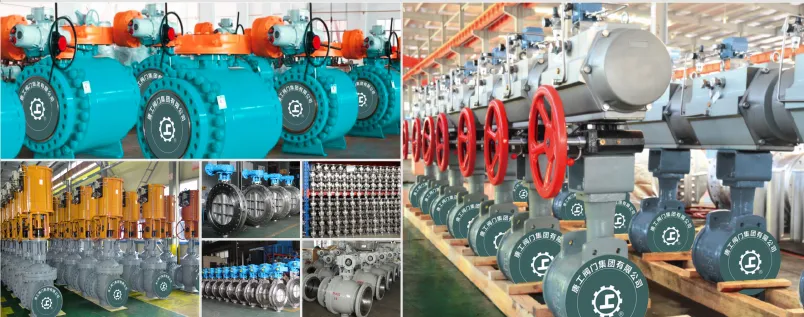
GNEE A182 and A105 Valve factory
FAQ
What material is ASTM A182?
alloy and stainless steel materials
ASTM A182 is a standard specification for forged or rolled alloy and stainless steel materials, used for manufacturing pipe flanges, forged fittings, valves, fasteners and parts for high-temperature service applications.
Is A105 a low-alloy steel?
ASME/ASTM S/A105 is a standard specification for carbon and low-alloy steel forgings components such as flanges and fittings. A105/A105N has a low temperature limit -20°F.
What is an A105?
ASTM A105 is a standard for carbon steel forgings used in piping systems. It applies to flanges, fittings, and valves built for high-pressure and high-temperature applications. This code ensures strength, durability, and performance in industrial settings.