


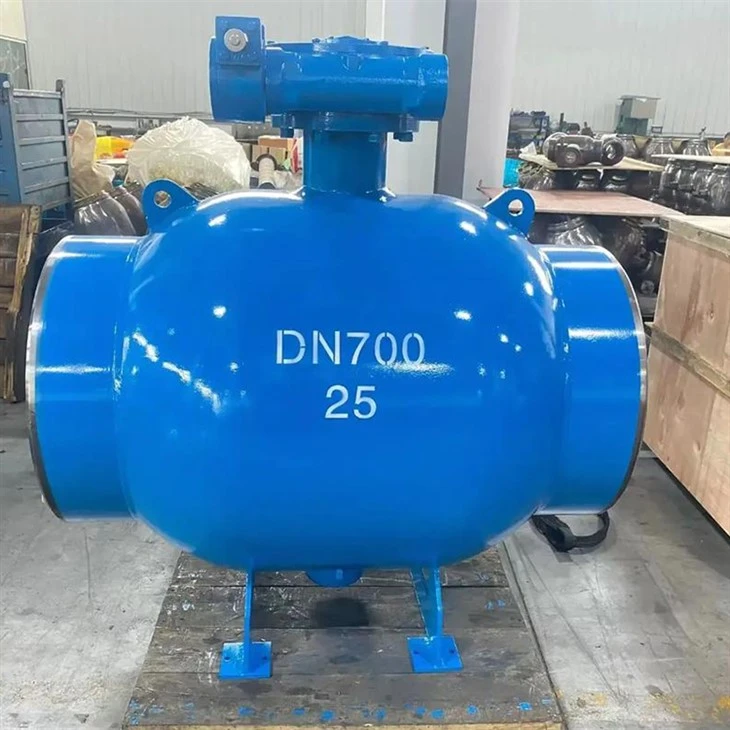

Welded Ball Valves Description
Complete Engineering Guide for Pipeline Engineers, EPC Contractors & Industrial Procurement Specialists
Fully welded ball valves are among the most reliable isolation valves for high-pressure industrial pipeline systems. Their monolithic welded body construction eliminates potential leakage paths associated with conventional bolted body designs, providing exceptional sealing integrity, structural strength and long-term operational reliability.
Compared with traditional split-body or flanged ball valves, fully welded ball valves require minimal maintenance throughout their service life and perform exceptionally well in buried pipelines, LNG facilities, district heating networks, offshore platforms and other demanding industrial environments where leakage prevention and operational safety are critical.
Designed in accordance with internationally recognized standards such as API 6D, ISO 14313, ASME B16.34 and API 607, these valves are widely specified by EPC contractors, pipeline operators and industrial plant owners worldwide.
This engineering guide provides comprehensive technical information covering valve construction, working principles, manufacturing technologies, material selection, international standards, inspection procedures, installation recommendations, maintenance practices and procurement considerations to help engineers and buyers select the most suitable fully welded ball valve for their applications.
Design Features
Fully welded ball valves combine robust construction with advanced sealing technology to ensure safe operation under demanding service conditions.
Integrated Welded Body
The pressure-containing body is permanently welded into a single structure, eliminating body bolts, flanges and gasket leakage points while improving resistance to vibration, thermal stress and fatigue.
Floating & Trunnion Ball Designs
Floating Ball – Suitable for small and medium sizes under moderate pressure.
Trunnion-Mounted Ball – Recommended for large-diameter and high-pressure pipelines, providing lower operating torque and longer seat life.
Advanced Sealing System
Available seat materials include:
Reinforced PTFE
Graphite
PEEK
Metal-to-Metal Seats
Optional features include:
Fire-safe construction
Anti-static device
Blowout-proof stem
Live-loaded stem packing
Double Block & Bleed (DBB)
Extended stem for buried service
Welded Ball Valves specification
| Item | Specification |
|---|---|
| Valve Type | Fully Welded Ball Valve |
| Nominal Size | DN50–DN1400 (2"–56") |
| Pressure Rating | Class 150–2500 / PN16–PN420 |
| Bore | Full Bore / Reduced Bore |
| Body Material | ASTM A105N, A216 WCB, A352 LCB, F304, F316, Duplex Stainless Steel |
| Seat Material | PTFE, RPTFE, PEEK, Metal Seat |
| End Connection | Butt Weld (BW) |
| Operation | Lever, Gear, Pneumatic, Electric, Hydraulic |
| Temperature Range | -196°C to 550°C (depending on material and seat design) |
| Leakage Class | ISO 5208 Rate A / API 598 |
| Optional Coating | FBE, 3LPE |
International Standards
Our fully welded ball valves can be manufactured in accordance with major international standards, including:
API 6D – Pipeline Valves
API 607 / API 6FA – Fire Safe Testing
ISO 14313 – Pipeline Transportation Systems
ASME B16.34 – Valve Design
ASME Section IX – Welding Qualification
ISO 15848 – Fugitive Emission (Optional)
NACE MR0175 / ISO 15156 – Sour Service (Optional)
EN 488 – District Heating Applications
EN 10204 3.1 Material Certification
Key Advantages
Zero Body Leakage
The fully welded body eliminates bolted joints and body gaskets, greatly reducing the risk of external leakage throughout the valve's service life.
Long Service Life
With fewer potential failure points, fully welded valves typically provide over 30 years of reliable operation in buried pipeline applications while requiring minimal maintenance.
Lower Operating Torque
Trunnion-mounted designs significantly reduce operating torque, making large-diameter valves easier to operate and extending seat life.
Excellent Corrosion Resistance
Available carbon steel, stainless steel and duplex stainless steel materials combined with FBE or 3LPE coatings provide excellent protection in buried, offshore and corrosive environments.
Lower Total Cost of Ownership
Although initial investment may be higher than split-body valves, reduced maintenance, fewer shutdowns and longer service life result in significantly lower lifecycle costs.
Typical Applications
Fully welded ball valves are widely used in:
Natural gas transmission pipelines
Crude oil and refined product pipelines
LNG terminals and cryogenic systems
Petrochemical plants
Offshore and subsea pipelines
District heating and cooling networks
Power generation
Hydrogen and future energy infrastructure
Fully Welded vs Split-Body Ball Valves
| Feature | Fully Welded | Split-Body |
|---|---|---|
| Body Construction | One-piece welded body | Bolted split body |
| External Leakage Risk | Extremely Low | Higher |
| Maintenance | Minimal | Periodic gasket and bolt maintenance |
| Underground Installation | Excellent | Limited |
| Service Life | 30+ Years | Typically 10–15 Years |
| Fire Safe Design | Optional | Optional |
| DBB Option | Available | Available |
| Lifecycle Cost | Lower | Higher |
Quality Assurance & Testing
Every fully welded ball valve can undergo comprehensive inspection before shipment, including:
PMI (Positive Material Identification)
Dimensional Inspection
Hydrostatic Shell Test
Seat Leakage Test
Air Leakage Test
Ultrasonic Testing (UT)
Magnetic Particle Testing (MT)
Material Traceability
Third-Party Inspection (SGS, BV, TÜV, DNV) upon request

Welded Ball Valves in stock


Why Are Fully Welded Ball Valves Preferred?
Compared with conventional bolted-body ball valves, fully welded ball valves provide several important engineering advantages:
Eliminate external body leakage paths by removing body bolts and gaskets.
Improve structural integrity under pressure cycling and vibration.
Reduce fugitive emissions through optimized stem sealing systems.
Require little or no routine body maintenance after installation.
Lower total lifecycle cost by minimizing downtime and maintenance expenses.
Improve operational safety in hazardous services involving natural gas, hydrogen, LNG and toxic chemicals.
Provide outstanding long-term reliability for buried and inaccessible pipeline installations.
For these reasons, fully welded ball valves have become the industry standard for critical pipeline isolation applications where safety, reliability and long service life are the primary design objectives.
Frequently Asked Questions
What is the main advantage of a fully welded ball valve?
Its integrated welded body eliminates external body leakage paths, making it ideal for buried and high-pressure pipeline systems requiring long-term reliability.
What is the difference between floating and trunnion-mounted designs?
Floating ball valves are suitable for smaller sizes and moderate pressures, while trunnion-mounted valves are preferred for large-diameter, high-pressure pipelines because they reduce operating torque and improve sealing performance.
Can fully welded ball valves be used underground?
Yes. They are specifically designed for buried pipeline applications and are commonly supplied with FBE or 3LPE external coatings and extended stems for easy operation.
What standards do your valves comply with?
Products can be manufactured according to API 6D, API 607, API 6FA, ISO 14313, ASME B16.34, ISO 15848 and NACE MR0175, depending on project requirements.
What inspection documents can you provide?
Available documentation includes EN 10204 3.1 material certificates, hydrostatic and leakage test reports, NDT reports, PMI records and third-party inspection certificates upon request.
Hot Tags: Fully Welded Ball Valves, China Fully Welded Ball Valves manufacturers, suppliers, factory, ball valve chemical couplings, 3 way valve pneumatic actuator, butt weld ball valve, ball valve for oil, ball valve microwave couplings, ball valve rigid couplings