

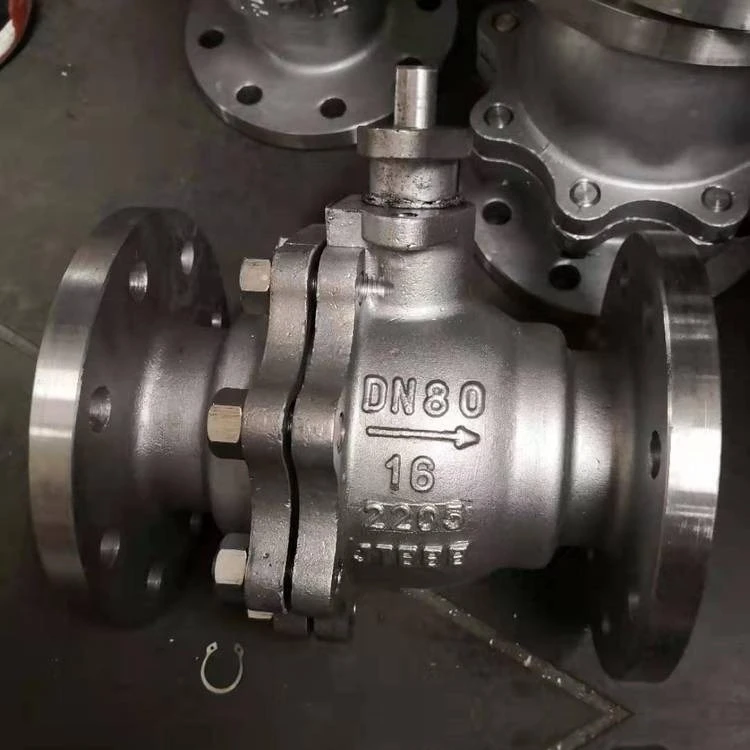


A 2 PC cast steel floating metal seated ball valve seals ball-to-metal-seat instead of relying on a polymer insert, so it serves high-temperature, abrasive, slurry and fire-risk lines that exceed the practical limits of soft-seated valves. The ball and seat faces are hard-faced (Stellite, tungsten carbide or nickel alloy) and precision-lapped, with a spring-energized seat that holds contact through thermal movement. Leakage is verified to ISO 5208 Rate D; the design is inherently fire-safe per API 607. Send your service data for a confirmed quote.
Metal-to-Metal Sealing Principle
In a metal-seated valve the ball and the seat ring are both finished with a hard facing and then precision-lapped to a line contact, so the seal comes from matched metal surfaces rather than elastomer deformation. A spring (typically a Belleville disc spring) pre-loads the seat against the ball, keeping contact at low pressure and compensating for the different thermal expansion of the ball and body as temperature rises. Under line pressure the floating ball shifts and loads the downstream seat, energizing the seal. Because metal-to-metal contact cannot deform to close every path, the accepted leakage is ISO 5208 Rate D - an allowable rate, not bubble-tight shutoff. The ball and seat are paired with dissimilar hard materials to avoid galling (cold welding) during rotation.
Rate D is the correct leakage reference for metal seats. A tighter result may be achieved on well-lapped trim and reported as "Rate D or better" per EN 12266-1; the accepted rate is defined by the purchase order.
Design Standards
| Basic Design | API 608/ASME B16.34/ISO 17292/API 6D |
| Face to Face/End to End | ASME B16.10 |
| Flanged End | ASME B16.5 |
| Buttwelding End | ASME B16.25 |
| Pressure-temperature Rating | ASME B16.34 |
| Inspection and Test | API 598 |
| Firesafe Design | API 607/API 6FA |
Design Features
1. Double sealing system of packing, and firesafe design
2. Wear-resistant and scour resistant sealing design
3. Integral anti-blowout design structure of the stem
4. Optional locking device
5. Independent limit structure design
6. Low torque design
7. Solid ball design
8. Ball and seat surface are coated with super wear-resistant alloy to ensure service life and sealing reliability.
9. Fugitive emission test meets API 624, ISO 15848 and other specifications.
General Assembly Drawing
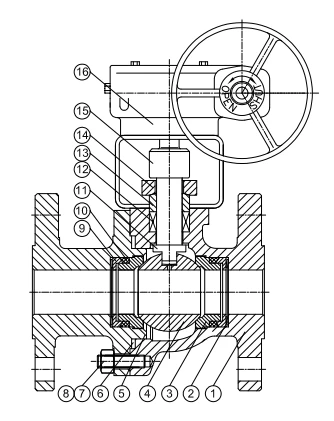
Material of Construction
| Part No. | Part Name | Carbon Steel | Stainless Steel |
|---|---|---|---|
| 1 | Body | ASTM A216 WCB | ASTM A351 CF8/CF8M/CF3/CF3M |
| 2 | Belleville Spring | INCONEL X-750 | INCONEL X-750 |
| 3 | Seat | ASTM A182 F304+WC/HF/Ni55 | ASTM A182 F304+WC/HF/Ni55 |
| 4 | Ball | ASTM A182 F304+WC/HF/Ni60 | ASTM A182 F304+WC/HF/Ni60 |
| 5 | End Connector | ASTM A216 WCB | ASTM A351 CF8/CF8M/CF3/CF3M |
| 6 | Gasket | Stainless Steel + Flexible Graphite | Stainless Steel + Flexible Graphite |
| 7 | Stud | ASTM A193 B7 | ASTM A193 B8/B8M |
| 8 | Nut | ASTM A194 2H | ASTM A194 8/8M |
| 9 | Pressure Ring | ASTM A182 F6a | ASTM A182 F304/F316/F304L/F316L |
| 10 | Seat Insert | Flexible Graphite | Flexible Graphite |
| 11 | Stem | ASTM A182 F6a/17-4PH | ASTM A182 F51/F53/17-4PH |
| 12 | Packing | Graphite | Graphite |
| 13 | Gland | ASTM A276 Type 410 | ASTM A276 Type 316/304 |
| 14 | Gland Flange | ASTM A216 WCB/ASTM A105 | ASTM A351 CF8/A182 F304 |
| 15 | Adapter | ASTM A182 F6a | ASTM A182 F304/F316/17-4PH |
| 16 | Gear Operation | Carbon Steel | Carbon Steel |
Note:
Floating metal seated ball valve can be designed as asymmetric structure according to customer requirements, with the same seat material and sealing surface on both sides.
Materials listed in the table are general. When ordering, please contact SNY sales or technical team to confirm the details.
Dimension & Weight
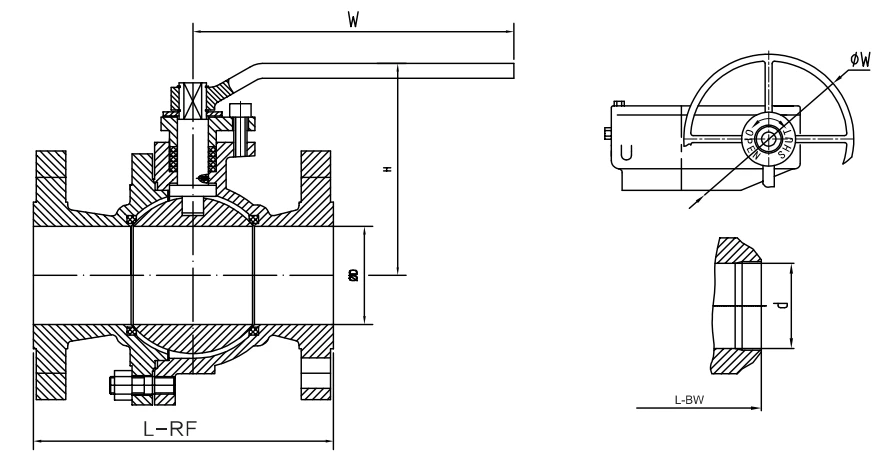
CLASS 150
| Size | L-RF | L-BW | d | D | H | W | Approx Weight | ||||||||
|---|---|---|---|---|---|---|---|---|---|---|---|---|---|---|---|
| NPS | DN | in | mm | in | mm | in | mm | in | mm | in | mm | in | mm | lb | Kg |
| 1/2 | 15 | 4.25 | 108 | 5.51 | 140 | 0.51 | 13 | 3.54 | 90 | 2.56 | 65 | 5.51 | 140 | 6 | 3 |
| 3/4 | 20 | 4.61 | 117 | 5.98 | 152 | 0.75 | 19 | 3.94 | 100 | 2.76 | 70 | 5.51 | 140 | 8 | 4 |
| 1 | 25 | 5.00 | 127 | 6.50 | 165 | 0.98 | 25 | 4.33 | 110 | 3.15 | 80 | 6.69 | 170 | 11 | 5 |
| 1½ | 40 | 6.50 | 165 | 7.48 | 190 | 1.50 | 38 | 4.92 | 125 | 4.02 | 102 | 9.45 | 240 | 18 | 8 |
| 2 | 50 | 7.01 | 178 | 8.50 | 216 | 1.93 | 49 | 5.91 | 150 | 5.59 | 142 | 9.45 | 240 | 24 | 11 |
| 3 | 80 | 7.99 | 203 | 11.10 | 282 | 2.91 | 74 | 7.48 | 190 | 6.50 | 165 | 15.75 | 400 | 46 | 21 |
| 4 | 100 | 9.02 | 229 | 12.01 | 305 | 3.94 | 100 | 9.06 | 230 | 8.66 | 220 | 12.01 | #350 | 75 | 34 |
| 6 | 150 | 15.51 | 394 | 17.99 | 457 | 5.91 | 150 | 11.02 | 280 | 11.42 | 290 | 12.01 | #350 | 205 | 93 |
| 8 | 200 | 17.99 | 457 | 20.51 | 521 | 7.91 | 201 | 13.58 | 345 | 15.35 | 390 | 12.01 | #350 | 353 | 160 |
CLASS 300
| Size | L-RF | L-BW | d | D | H | W | Approx Weight | ||||||||
|---|---|---|---|---|---|---|---|---|---|---|---|---|---|---|---|
| NPS | DN | in | mm | in | mm | in | mm | in | mm | in | mm | in | mm | lb | kg |
| 1/2 | 15 | 5.51 | 140 | 5.51 | 140 | 0.51 | 13 | 3.74 | 95 | 2.56 | 65 | 5.51 | 140 | 7 | 3 |
| 3/4 | 20 | 5.98 | 152 | 5.98 | 152 | 0.75 | 19 | 4.53 | 115 | 2.76 | 70 | 5.51 | 140 | 9 | 4 |
| 1 | 25 | 6.50 | 165 | 6.50 | 165 | 0.98 | 25 | 4.92 | 125 | 3.15 | 80 | 6.69 | 170 | 13 | 6 |
| 1½ | 40 | 7.48 | 190 | 7.48 | 190 | 1.50 | 38 | 6.10 | 155 | 4.02 | 102 | 9.45 | 240 | 23 | 11 |
| 2 | 50 | 8.50 | 216 | 8.50 | 216 | 1.93 | 49 | 6.50 | 165 | 5.59 | 142 | 9.45 | 240 | 33 | 15 |
| 3 | 80 | 11.14 | 283 | 11.14 | 283 | 2.91 | 74 | 8.27 | 210 | 6.50 | 165 | 15.75 | 400 | 64 | 29 |
| 4 | 100 | 12.01 | 305 | 12.01 | 305 | 3.94 | 100 | 10.04 | 255 | 8.66 | 220 | 12.01 | #350 | 121 | 55 |
| 6 | 150 | 15.87 | 403 | 17.99 | 457 | 5.91 | 150 | 12.60 | 320 | 11.42 | 290 | 12.01 | #305 | 254 | 115 |
| 8 | 200 | 19.76 | 502 | 20.51 | 521 | 7.91 | 201 | 14.96 | 380 | 15.35 | 390 | 15.98 | #406 | 441 | 200 |
CLASS 600
| Size | L-RF | L-BW | d | D | H | W | About weight | ||||||||
|---|---|---|---|---|---|---|---|---|---|---|---|---|---|---|---|
| NPS | DN | in | mm | in | mm | in | mm | in | mm | in | mm | in | mm | lb | kg |
| 1/2 | 15 | 6.50 | 165 | 6.50 | 165 | 0.51 | 13 | 3.74 | 95 | 4.13 | 105 | 5.91 | 150 | 9 | 4 |
| 3/4 | 20 | 7.48 | 190 | 7.48 | 190 | 0.75 | 19 | 4.53 | 115 | 4.92 | 125 | 7.09 | 180 | 13 | 6 |
| 1 | 25 | 8.50 | 216 | 8.50 | 216 | 0.98 | 25 | 4.92 | 125 | 5.28 | 134 | 10.24 | 260 | 24 | 11 |
| 1½ | 40 | 9.49 | 241 | 9.49 | 241 | 0.98 | 25 | 6.10 | 155 | 5.28 | 134 | 10.24 | 260 | 55 | 25 |
| 2 | 50 | 11.50 | 292 | 11.61 | 295 | 1.93 | 49 | 6.50 | 165 | 11.61 | 295 | 12.01 | #305 | 110 | 50 |
| 3 | 80 | 14.02 | 356 | 14.13 | 359 | 2.91 | 74 | 8.27 | 210 | 12.40 | 315 | 12.01 | #305 | 121 | 55 |
| 4 | 100 | 17.01 | 432 | 17.01 | 432 | 3.94 | 100 | 10.83 | 275 | 12.99 | 330 | 12.01 | #305 | 408 | 185 |
CLASS 900/1500
| Size | L-RF | L-BW | d | D | H | W | About weight | ||||||||
|---|---|---|---|---|---|---|---|---|---|---|---|---|---|---|---|
| NPS | DN | in | mm | in | mm | in | mm | in | mm | in | mm | in | mm | lb | Kg |
| 1/2 | 15 | 8.50 | 216 | 8.50 | 216 | 0.51 | 13 | 4.72 | 120 | 4.72 | 120 | 7.09 | 180 | 22 | 10 |
| 3/4 | 20 | 9.02 | 229 | 9.02 | 229 | 0.75 | 19 | 5.12 | 130 | 5.04 | 128 | 10.24 | 260 | 29 | 13 |
| 1 | 25 | 10.00 | 254 | 10.00 | 254 | 0.98 | 25 | 5.91 | 150 | 6.50 | 165 | 11.81 | 300 | 33 | 15 |
| 1½ | 40 | 12.01 | 305 | 12.01 | 305 | 1.50 | 38 | 7.09 | 180 | 7.76 | 197 | 15.75 | 400 | 106 | 48 |
| 2 | 50 | 14.49 | 368 | 14.61 | 371 | 1.93 | 49 | 8.46 | 215 | 11.73 | 298 | 15.75 | #400 | 159 | 72 |
Hard-Facing and Seat Coatings
The wear and temperature performance of a metal-seated valve comes from the hard facing on the ball and seat. Coatings are applied by HVOF (high-velocity oxygen fuel) thermal spray or weld overlay, reaching 56–75 HRC. The choice matches the failure mechanism: cobalt-chromium alloys for high temperature and oxidation, tungsten carbide for erosion and slurry, and nickel alloys for chemical resistance.
| Hard facing | Typical use | Hardness |
|---|---|---|
| Stellite 6 / 21 (Co-Cr) | High temperature, refinery, oxidation resistance | ≈ 38–55 HRC |
| Tungsten carbide (WC-Co) | Abrasive slurry, sand-laden, catalyst erosion | ≈ 70+ HRC |
| Chrome carbide (Cr₃C₂-NiCr) | High-temp erosion, mildly acidic/caustic | ≈ 60–70 HRC |
| Nickel alloy (Ni60) | Chemical and abrasion resistance | ≈ 55–60 HRC |
| Hard chrome | General wear, lower-cost duty | ≈ 60–70 HRC |
Ball and seat are paired with dissimilar materials (for example a tungsten-carbide ball against a Stellite or chrome-carbide seat) to prevent galling. The exact pairing is selected by temperature, medium and abrasiveness.
Leakage Class and Fire-Safe Performance
Metal-seated valves are accepted at ISO 5208 Rate D when tested per API 598, ISO 5208 or EN 12266-1 - an allowable metal-to-metal leakage, not zero leakage. Because there is no polymer seat to burn away, the valve maintains isolation through fire exposure and is inherently fire-safe; fire-safe performance is verified to API 607 or ISO 10497, with graphite stem packing and a graphite body gasket. Anti-static continuity between ball, stem and body is provided per API 608, and fugitive-emission stem sealing to ISO 15848 is available where the project requires it.
| Item | Requirement / reference |
|---|---|
| Seat leakage (metal) | ISO 5208 Rate D (allowable); Rate D or better per EN 12266-1 where achieved |
| Shell test | 1.5 × rated pressure (typical) |
| Seat test | 1.1 × rated pressure (typical); ISO 5208 Rate D |
| Fire-safe | API 607 / ISO 10497; graphite packing and gasket |
| Anti-static | Ball–stem–body continuity per API 608 |
| Stem | Blow-out proof per API 608; ISO 5211 actuator pad |
| Fugitive emission | ISO 15848 option |
Temperature and Abrasive-Service Capability
Typical metal-seated service reaches well beyond the ~200 °C soft-seat limit. An indicative range is about −29 °C to +538 °C for a cast steel body with hard-faced trim; the actual upper temperature is governed by the seat hard-facing, coating and body material per ASME B16.34, so it must be confirmed against the ordered configuration. Many designs use a self-cleaning scraper seat that wipes the ball during rotation, letting the valve shear through fibres, small solids and crystallizing media that would destroy a soft seat.
| Criterion | Soft-seated (PTFE/RPTFE) | Metal-seated (this valve) |
|---|---|---|
| Upper temperature | ≈ 200 °C (continuous) | Indicative to +538 °C (trim-limited) |
| Abrasive / slurry | Wears quickly | Hard-faced, resists erosion |
| Fire exposure | Needs metal back-up seat | Inherently fire-safe |
| Leakage class | ISO 5208 Rate A (bubble-tight) | ISO 5208 Rate D (allowable) |
| Self-cleaning | No | Scraper seat option |
Temperature and abrasion limits are indicative and depend on hard facing, coating, body material and medium. Confirm the operating envelope against the data sheet and purchase order.
Applications
Superheated steam and hot-gas lines in power and refinery service.
Thermal oil and heat-transfer fluid systems above soft-seal limits.
Slurry, tailings, mining and mineral-processing lines with abrasive solids.
Coking, coke-drum and catalyst-handling lines where erosion is the failure mode.
Fire-risk hydrocarbon isolation requiring inherent fire-safe performance.
Chemical lines with crystallizing or fibrous media that foul a soft seat.
Suitability depends on medium, temperature, pressure, abrasiveness and project specification. The metal-seated valve is chosen where a soft-seated valve cannot meet the temperature, wear or fire requirement; it is not a substitute where bubble-tight (ISO 5208 Rate A) shutoff is mandatory.
Procurement and Documentation
| Deliverable | Typical content |
|---|---|
| Material & hard-facing cert. | EN 10204 3.1 (3.2 with TPI on request); hardness report |
| Test records | Shell and seat test results per API 598 / ISO 5208 (Rate D) |
| Examination | PMI, NDE and third-party inspection on request |
| Marking | MSS SP-25 with heat / serial identification |
| Protection & packing | End caps, anti-corrosion coating, carton or case |
Standard delivery documents include the material and hard-facing certificate, pressure-test record and marking per MSS SP-25; EN 10204 3.2 with third-party attestation, extra NDE and low-temperature or sour-service verification are added where the purchase order requires them. Each valve carries a heat or serial number for traceability. Export packing, end protection and transport documents are arranged to the destination and schedule agreed in the order.
FAQ
What is a metal-seated ball valve and when is it needed?
A metal-seated ball valve seals ball-to-metal-seat instead of using a polymer insert. It is specified where the service exceeds the practical limits of a soft-seated valve: high temperature above about 200 °C, abrasive or slurry media, fire-risk hydrocarbon lines, or where a long, low-maintenance life in severe duty is required. The ball and seat faces are hard-faced and precision-lapped.
What leakage class applies to a metal-seated ball valve?
Metal-seated valves are verified to ISO 5208 Rate D - an allowable metal-to-metal leakage, not bubble-tight shutoff. Depending on lapping and trim, a tighter result may be achieved and reported as Rate D or better per EN 12266-1. This is the correct leakage reference for metal seats; confirm the accepted rate against the purchase order.
How hot can a metal-seated floating ball valve operate?
Typical metal-seated service reaches well beyond the ~200 °C soft-seat limit; an indicative range is about −29 °C to +538 °C for a cast steel body with hard-faced trim. The actual upper temperature is governed by the seat hard-facing, coating and body material per ASME B16.34, so confirm the operating envelope against the ordered configuration rather than applying a single fixed value.
What hard-facing materials are used on the ball and seat?
Common hard facings are Stellite 6 or 21 (cobalt-chromium), tungsten carbide (WC-Co), chrome carbide (Cr₃C₂-NiCr), nickel alloy (Ni60) and hard chrome, applied by HVOF thermal spray or weld overlay to 56–75 HRC. The ball and seat are paired with dissimilar materials to avoid galling during rotation.
Is a metal-seated ball valve fire-safe?
Yes. Because there is no polymer seat to burn away, a metal-seated valve maintains isolation through fire exposure and is inherently fire-safe. Fire-safe performance is verified to API 607 or ISO 10497, with graphite stem packing and a graphite body gasket; anti-static continuity per API 608 is provided.
Can a metal-seated valve handle slurry or abrasive media?
Yes. Hard-faced seats resist wear from slurries, catalyst particles, sand-laden streams and fibres. Many designs use a self-cleaning scraper seat that wipes the ball during rotation, and a spring-energized seat keeps contact as parts wear. Select the hard facing by the wear mechanism and medium.
Which standards apply to 2-piece cast steel metal-seated floating ball valves?
Design is to API 608, with pressure-temperature limits taken from ASME B16.34 and international references under ISO 17292; pipeline service may follow API 6D. Face-to-face follows ASME B16.10 and testing follows API 598, ISO 5208 or EN 12266-1, with seat leakage to ISO 5208 Rate D. The applicable edition of each standard is defined by the purchase order.
What details are needed to request a quotation?
Provide the nominal size and pressure class, body material, hard-facing and seat material, bore type, end connection, operating temperature and medium (including any solids or abrasives), fire-safe or anti-static requirements, inspection and documentation level, quantity, destination and schedule, plus any drawing or data sheet.
Hot Tags: 2-pc cast steel floating metal seated ball valve, China 2-pc cast steel floating metal seated ball valve manufacturers, suppliers, factory, ball valve bypass valves, ball valve casting, ball valve for steam, ball valve piston actuators, ball valve styles, Trunnion Mounted Ball Valves