

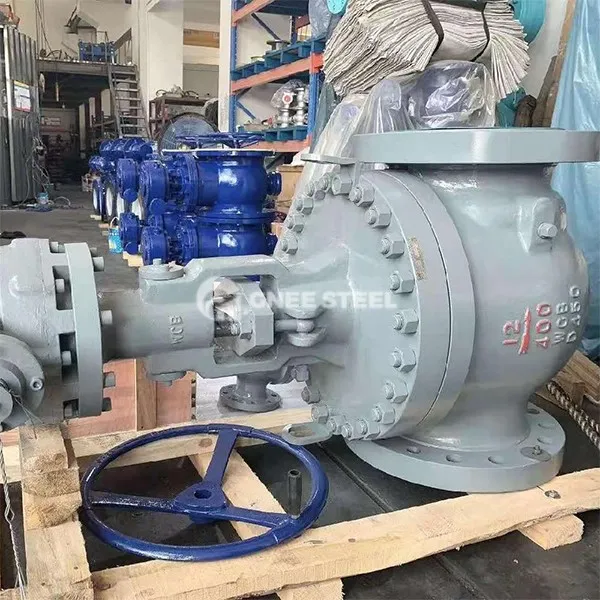
Orbit ball valve is a patented valve developed by ORBIT Corporation (now affiliated with Cameron Valve Group) in the United States. Its core design combines the principle of orbital motion and forced sealing technology, and is designed for high pressure and harsh working conditions. The following is an analysis from four aspects: definition, structure, performance and application:
1. Definition and Origin
Origin: Invented and patented by Mr. Heggem in 1936, it uses an orbital opening and closing structure to solve the friction loss problem of traditional ball valves and has zero leakage characteristics.
Positioning: It is a top-opening, stem-lifting fixed seat shut-off valve that combines the advantages of gate valves, ball valves and stop valves.
2. Structural Features
Orbital motion design
When opening and closing, the ball rotates along the track instead of directly rubbing the valve seat, eliminating wear on the sealing surface and extending the service life.
Mechanical forced seal
A single valve seat structure is adopted to achieve continuous sealing without pipeline pressure assistance through spring preload, avoiding internal pressure accumulation or locking under high/low temperature conditions.
Material and Process
The valve ball and bottom pivot are designed as an integrated whole, with hard alloy sealing surface welded, and strong anti-scouring performance.
The shell is made of forged steel or stainless steel, and the sealing material can be PTFE, metal, etc., which can adapt to extreme temperatures (-29℃~550℃).
3. Performance Advantages
Strong reliability: The zero leakage design is certified by API 598 and is suitable for flammable and explosive media (such as natural gas).
Long life: More than 40 years of actual use cases have verified its durability, and the valves produced in 1945 have been tested to maintain zero leakage.
Multi-function drive: Supports manual, pneumatic, and electric actuators to meet the needs of automated control.
4. Typical applications
Mainly used in harsh working conditions:
Energy industry: natural gas venting and sewage discharge, oil and gas pipelines, compressor systems.
Industrial scenarios: refineries, chemical plants, liquefied petroleum gas storage.
Special needs: Frequent opening and closing or high-cleanliness media (such as auxiliary systems in the food and pharmaceutical industries).
