

Tilting check valves and swing check valves differ significantly in structure, working principle, and application.
Tilting check valves have a simple structure, fewer parts, and are easy to install and maintain. They also have lower fluid resistance and pressure loss, making them suitable for applications requiring guaranteed flow efficiency. Furthermore, slanting check valves are highly adaptable to various fluids and can be used for transporting various liquids and gases.
Swing check valves have a streamlined internal passage, resulting in low flow resistance, making them suitable for large-diameter applications with low flow rates and infrequent flow changes. They also offer relatively good sealing performance, providing reliable backflow protection.
Sourcing Check Valves? Get Factory-Direct Quotes for Swing & Tilting Disc Models Today.
Comparison Table: Swing Check Valve vs. Tilting Disc Check Valve
| Comparison Dimension | Swing Check Valve | Tilting Disc Check Valve |
| Core Structural Design | The disc swings like a door on a hinge pin located above the seat. | The disc rotates on an eccentrically mounted shaft (similar to a seesaw). |
| Disc Stroke (Travel) | Long Stroke. Large opening angle (approx. 60°-90°); the disc fully clears the flow path. | Short Stroke. Small opening angle (approx. 15°-30°); the center of gravity is closer to the center. |
| Flow Resistance (Cv/Kv) | Extremely Low. Near full-port flow path; provides the lowest pressure drop when fully open. | Medium-Low. The disc remains in the flow stream even when open, causing slight turbulence. |
| Closing Speed | Slow. Long travel distance; relies heavily on gravity and backpressure to close. | Very Fast. Extremely short travel; eccentric design utilizes flow dynamics to assist rapid closing. |
| Water Hammer Control | Poor. Vulnerable to slamming as it closes after reverse flow has already gained momentum. | Excellent (Non-Slam). Closes almost before flow reaches zero velocity, effectively suppressing water hammer. |
| Installation Orientation | Primarily Horizontal. Vertical installation is limited to upward flow only (performance is average). | Horizontal or Vertical. Less affected by gravity; performs more stably in vertical lines. |
| Sealing Integrity | Medium. Hinge pins wear over time, which can lead to disc misalignment and leaks. | High. Often features a conical seat design; the pressure is distributed more evenly. |
| Flow Velocity Limits | Suited for Low-Medium Velocity. High velocity may cause disc chattering (vibration). | Suited for High Velocity. Balanced design keeps the disc stable and floating without vibration. |
| Maintenance Frequency | High. Mechanical wear on the hinge pin, bushings, and arm is common. | Low. Balanced forces on moving parts significantly reduce mechanical wear. |
| Manufacturing Complexity | Low. Mature, standardized design; easy to mass-produce. | High. Requires precision engineering for disc balancing and conical seat machining. |
| Cost / Price Point | Lower. Economical and widely used for general-purpose applications. | Higher. Typically used for critical services or large-diameter, high-pressure systems. |
| Typical Applications | Clean media, low-frequency start/stop systems, pump suction ends. | High-frequency cycling, critical pump outlets, long-distance water transmission. |
GNEE Check Valve factory
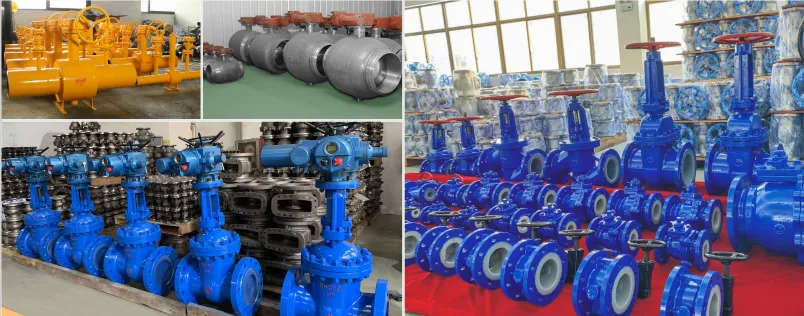
Need Check Valves Fast? Browse Our In-Stock Inventory of Swing & Tilting Disc Valves for Immediate Shipping.
FAQ
Do swing check valves need to be installed horizontally?
Swing check valves are always installed with the HINGE PIN placed horizontally, and above the pipe centerline (as shown in the pictures at the end of this section). Incorrect installation may result in binding, high head loss, and/or sticking in the open position.
Does it matter if a check valve is vertical or horizontal?
If installed vertically, the disc may not open fully or may slam shut abruptly. Spring or Inline Check Valves: Can typically be installed horizontally or vertically, but vertical installations usually require upward flow. Always confirm orientation in the manufacturer's documentation.
What are the benefits of swing check valves?
The primary function of a swing check valve is to ensure the smooth and uninterrupted flow of fluids in one direction while preventing any reverse flow. With a hinged disc that swings open and closes with the direction of flow, swing check valves provide efficient and reliable shut-off capabilities.
What is a tilting check valve?
Tilting check valves are designed to prevent flow reversal in a piping system. These valves are activated by the flowing material in the pipeline. The pressure of the fluid passing through the system causes the valve to open, while any reversal of flow will close the valve.