

Sanitary butterfly valves belong to the sanitary valve series, with specifications ranging from DN15 to DN150 and 1" to 6". They are made of stainless steel such as SUS304 and SUS316L, and comply with international standards such as ISO, DIN, and GB/T, as well as GMP and FDA certification requirements.
The valve body is precision-machined on a CNC lathe and electropolished, resulting in a smooth surface free of media residue. The equal-diameter design with the pipe inner diameter reduces fluid resistance, making them suitable for fluid control in industries such as food, pharmaceuticals, biotechnology, cosmetics, and beverages.
GNEE Group is a leading manufacturer of industrial valves, providing valve solutions and customization services to customers worldwide. Valve Compliance Certificates – Download Here!
Sanitary butterfly valve Technical parameters
Nominal Diameter: DN25~DN200
Seat Seal: Butadiene rubber, PTFE
Nominal Pressure: 1.0Mpa~1.6Mpa
Connection Methods: Clamp quick-connect, external thread, welding, flange
Applicable Temperature: -20ºC~+80ºC-150ºC
Actuation Method: Manual, pneumatic, electric
Valve Body Material: Stainless steel
Manufacturing Standards: GB (Chinese National Standard), DIN (German Standard), API (American Standard), ANSI (American Standard)
Applicable Media: Water, oil, gas, liquids
Wide Applications: Petroleum, chemical, power, environmental protection, water conservancy, heating, water supply and drainage, industrial, machinery
Sanitary butterfly valve Structural Features
No Dead Angles Design
Smooth Flow Channel: The valve body cavity is polished to a roughness Ra≤0.8μm (some high-end models can reach Ra≤0.4μm), avoiding media stagnation and microbial growth.
Grooveless structure: The contact surface between the valve disc and the valve seat is flat, without gaps or grooves, to prevent the accumulation of residues.
Detachable design: The valve body, valve disc, seals and other components can be quickly disassembled and assembled, making it easy to clean and maintain.
Excellent sealing performance
Soft seal: Made of food-grade silicone, EPDM or PTFE and other sealing materials, which are high temperature resistant, corrosion resistant and non-toxic, ensuring zero leakage.
Hard seal: Suitable for high temperature and high pressure conditions (such as steam pipelines), but a balance must be struck between sealing and hygiene.
Compact and lightweight
Small size: Compared to gate valves, ball valves, etc., butterfly valves have a more compact structure, occupy less space, and are easier to lay out in pipelines.
Lightweight: Reduces installation and maintenance costs, making it especially suitable for high-rise buildings or mobile devices.
Low flow resistance
The flow channel is straight: the resistance is low when the fluid passes through, the energy consumption is low, and it is suitable for high flow rate conditions.
Sanitary butterfly valve Material Selection
Valve Body Material
304 Stainless Steel: Suitable for general food and beverage industries, with lower cost.
316L Stainless Steel: Stronger corrosion resistance, suitable for high-requirement applications such as pharmaceuticals and biotechnology.
Special Coatings: Such as PTFE coating, which can further improve chemical corrosion resistance.
Sealing Materials
Silicone: Temperature resistance -20℃ to 150℃, good elasticity, but poor oil resistance.
EPDM: Temperature resistance -40℃ to 150℃, resistant to acids, alkalis, and ozone, suitable for neutral media.
PTFE (Polytetrafluoroethylene): Temperature resistance -200℃ to 260℃, extremely strong chemical corrosion resistance, but poor elasticity, requiring the use of a spring.
Valve Disc Material
Usually the same material as the valve body, but more wear-resistant materials (such as hard alloy coating) can be selected to extend service life.
Sanitary butterfly valve Application Scenarios
Food Industry
Dairy Products: Raw milk conveying, CIP cleaning fluid switching, fermentation tank inlet/outlet control.
Beer: Wort delivery, fermentation tank cooling water control, and beer distribution in the bottling line.
Beverages: Syrup delivery, carbonation process control, and filling valves.
Pharmaceutical Industry:
Pharmaceutical Liquid Delivery: Control of high-purity media such as antibiotics and vaccines.
Sterile Air: Gas regulation in fermentation tank ventilation ducts.
Distilled Water: Distribution and circulation of purified water systems.
Biotechnology:
Cell Culture: Culture medium delivery and reactor feed control.
Fermentation Process: pH adjustment and feed control.
Cosmetics Industry:
Ointment Formulation: Precise mixing of lotions and creams.
Bottling Control: Preventing cross-contamination and ensuring product consistency.
Chemical Industry:
Corrosive Media: Such as hydrochloric acid and sodium hydroxide, requiring corrosion-resistant materials (e.g., 316L + PTFE coating).
High-Temperature Steam: Hard-seal sanitary butterfly valves are suitable for steam pipelines.
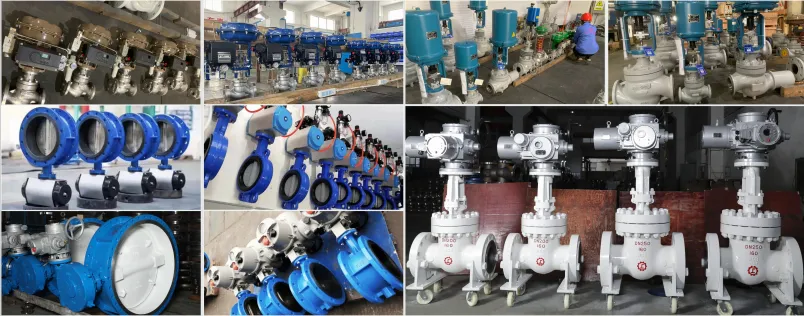
Sanitary butterfly valve factory
Reduce Downtime – Replace Old Valves Today!