

Valve selection actuator (electric, pneumatic, hydraulic, etc.), need to take into account the characteristics of the valve, process requirements, environmental conditions and safety regulations and other factors. The following is a systematic selection considerations and detailed instructions:
The valve body factors
1. Valve type and movement
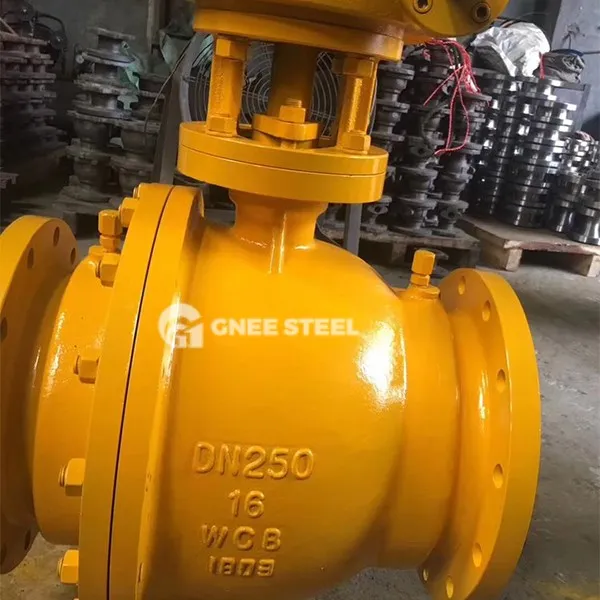
Rotary valves (ball valves, butterfly valves, plug valves): Selection of angular travel actuator (90 °, 180 ° or 360 ° rotation).
Straight stroke valve (gate valve, globe valve, regulating valve): Select linear thrust type actuator (multi-turn or direct push type).
2. Valve calibre and torque/thrust requirements
a. Torque calculation (rotary valve): Need to overcome the stem axial force, packing friction and medium unbalance force. Basic formula T = K * D³ * ΔP (D is the calibre, ΔP is the differential pressure, K is the medium coefficient)
b. Calculation of thrust (straight stroke valve): sealing friction needs to be considered (soft sealing is 30%~50% higher than hard sealing torque). Safety factor: usually take 1.5 ~ 2 times (high differential pressure or high viscosity media to take higher).
3. Valve connection standards
GB/T24923-2010 standard
4.Valve operation frequency
High-frequency operation (>1000 times / day): choose maintenance-free actuator (such as brushless motor + solid-state limit switch). Low-frequency operation: economic brush motor can be selected.
The process parameters factors
Media characteristics corrosive media: actuator shell needs stainless steel (316L) or nickel alloy coating. High viscosity / particulate media: need to increase the torque and anti-stallation design (such as with vibration function). High-temperature media (>200 ℃): actuators need to be heat shield or remote installation. Pressure and differential pressure high differential pressure conditions (such as pressure reducing valves): the actuator needs to have the ability to resist water hammer (slow opening and closing function). Vacuum valves: focus on sealing to avoid actuator leakage affecting the vacuum level. Flow control requirements switching control: select ON/OFF type actuator, with mechanical limit. Regulating control: select high-precision servo actuator (positioning accuracy ≤ 0.5%).

The actuator technical factors
Drive mode selection
Electric:
Pneumatic:
Liquid-actuated:
1. Key performance parameters
Speed: Angle stroke usually 5~60 seconds/90°, straight stroke 5~50mm/s.
Positioning accuracy: ≤1% required for regulating valves, switching valves can be relaxed to ±5%.
Protection level: IP67 (short-term immersion), IP68 (long-term underwater). NEMA 4X (corrosion and splash-proof).
Explosion-proof certification: gas explosion-proof: ATEX II 2G Ex d IIC T6. dust explosion-proof: ATEX II 1D Ex tD A21.
2. Control and communication
a.Signal type:
Analogue: 4-20mA, 0-10V (regulating valve).
Digital: Modbus RTU, PROFIBUS DP, FF bus.
b.Intelligent function:
Fault diagnosis (overload, overheat alarm).
Adaptive control (e.g. PID parameter self-tuning).
Environmental and Safety Factors
Environmental conditions
a.Temperature:
Low temperature (<-20℃): need heater or low temperature grease.
High temperature (>60℃): Select heat-resistant motor (Class H insulation).
b.Humidity/Salt spray: 316L stainless steel + IP68 is required for marine environment.
c. Vibration: Oil pipeline and other scenes need anti-vibration design (such as spring damping base).
2. Safety requirements
a.Safety certification:
SIL2/SIL3 (Safety Integrity Level for ESD valves).
Fire certification (API 607/6FA).
b. Failure modes:
FC (Failure Open), FO (Failure Off), FL (Failure Hold).
Economic and Maintenance Factors
Cost trade-offs
Initial cost: electric > pneumatic > hydraulic.
Long-term cost: electric maintenance-free, pneumatic air pressure system maintenance.
Maintenance Convenience
Modular design: quick replacement of motor or control module.
Lubrication cycle: maintenance-free (lifetime lubrication) or regular greasing.
Spare parts versatility
Priority is given to actuators that meet ISO standards for easy replacement at a later stage.
Common errors and avoidance
Error 1: Neglecting the medium crystallisation leads to stuck valve → Select the actuator with self-cleaning function.
Error 2: Failure to consider pipeline vibration → add anti-vibration bracket.
Error 3: Signal interference leads to control failure → shielded cable + grounding