


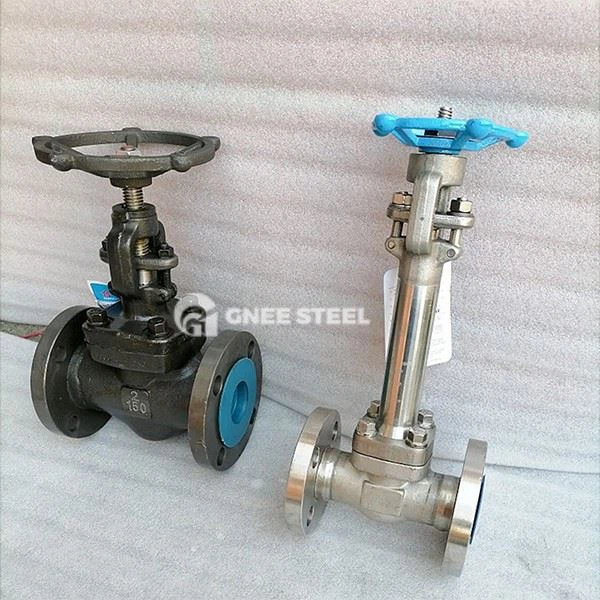
ASTM A105N Ball Valve Description
ASTM A105N ball valves are forged carbon steel isolation valves widely used in industrial piping systems for oil & gas, petrochemical, power generation, water treatment, and general process industries.
They are manufactured from ASTM A105/A105M carbon steel forgings in the normalized condition ("N"), which improves microstructure uniformity and mechanical consistency under pressure and cyclic loading conditions.
Compared with cast steel valves, forged ASTM A105N ball valves provide a denser grain structure and reduced likelihood of internal discontinuities such as porosity or shrinkage-related defects, making them suitable for high-pressure and critical isolation applications.
These valves are commonly used in ASME Class 150 to Class 2500 piping systems, depending on design conditions, end connections, and valve configuration.
What Is ASTM A105N
ASTM A105N is a forged carbon steel material specified under ASTM A105/A105M, with mandatory normalization heat treatment.
"A105" refers to carbon steel forging grade
"N" indicates normalized heat treatment condition
Normalization improves:
Grain structure uniformity
Toughness consistency
Mechanical stability
Performance under cyclic loading conditions
Key Engineering Note
ASTM A105 and ASTM A105N share the same chemical composition requirements. The difference lies only in heat treatment condition, and selection is typically determined by project specifications and applicable piping codes rather than inherent material superiority.
Typical Chemical Composition (Reference)
| Element | Content (%) |
|---|---|
| Carbon (C) | ≤0.35 |
| Manganese (Mn) | 0.60–1.05 |
| Silicon (Si) | 0.10–0.35 |
| Phosphorus (P) | ≤0.035 |
| Sulfur (S) | ≤0.040 |
Mechanical Properties (Typical Reference Values)
| Property | Value |
|---|---|
| Tensile Strength | ≥485 MPa |
| Yield Strength | ≥250 MPa |
| Elongation | ≥22% |
Actual properties depend on heat treatment, design specification, and manufacturer certification.
ASTM A105 vs ASTM A105N
ASTM A105 and ASTM A105N are frequently used interchangeably in discussions, but their selection depends on engineering requirements.
| Item | ASTM A105 | ASTM A105N |
|---|---|---|
| Heat Treatment | Optional | Normalized |
| Toughness Consistency | Standard | Improved |
| Typical Usage | General piping systems | Specified for improved toughness requirements |
| Interchangeability | Project dependent | Project dependent |
Procurement Guidance
In global EPC projects, selection is typically governed by:
Piping class specifications
Impact toughness requirements
Project engineering standards
Client-approved material lists
Why Use Forged ASTM A105N Ball Valves?
Forged ASTM A105N ball valves are preferred in many industrial applications due to their structural integrity and reliability under pressure.
Engineering Advantages
High strength under pressure loading
Improved resistance to fatigue and cyclic stress
Compact valve body design
Reduced probability of casting-type internal discontinuities
Suitable for high-integrity isolation service
Forged vs Cast Steel Ball Valves
| Item | Forged A105N | Cast WCB |
|---|---|---|
| Manufacturing Process | Forging | Casting |
| Internal Structure | Dense grain flow | Possible porosity |
| Pressure Capability | Higher (design dependent) | Medium to high |
| Typical Size Range | Small to medium bore | Medium to large bore |
| Cost Level | Higher | Lower |
| Application Focus | High-integrity systems | General industrial service |
ASTM A105N Ball Valve Types
ASTM A105N is a body material, not a valve design. Different configurations are available depending on application requirements.
One-Piece Forged Ball Valve
Compact structure
Minimal leakage paths
Suitable for small bore service
Typical applications:
Instrument lines
Utility piping
Low-flow isolation points
Two-Piece Forged Ball Valve
Bolted or threaded body construction
Easy installation and maintenance
Widely used in industrial systems
Typical applications:
Oil & gas pipelines
Petrochemical plants
Process piping systems
Three-Piece Forged Ball Valve
Center body removable
Inline maintenance capability
Reduced downtime during servicing
Typical applications:
Continuous process industries
Chemical plants
Systems requiring frequent maintenance
Floating vs Trunnion Ball Valves
Floating Ball Valve
Ball is supported by seats
Line pressure assists sealing
Suitable for small to medium sizes
Trunnion Mounted Ball Valve
Ball mechanically supported
Lower operating torque
Suitable for high pressure and larger pipelines
Selection Overview
| Condition | Recommended Type |
|---|---|
| Small diameter | Floating |
| Medium pressure | Floating |
| High pressure | Trunnion |
| Large pipeline | Trunnion |
| Automated system | Trunnion |
Soft Seat vs Metal Seat Selection
Soft Seated Ball Valve
PTFE / RPTFE / PEEK seats
Bubble-tight shut-off performance
Low operating torque
Typical use:
Clean fluids
Water, oil, gas
Moderate temperature systems
Metal Seated Ball Valve
Metal-to-metal sealing surfaces
Suitable for severe service conditions
Typical use:
High temperature service
Abrasive media
Steam systems
Thermal oil and slurry service
Selection Summary
| Type | Strength | Limitation |
|---|---|---|
| Soft Seat | Excellent sealing | Temperature limitation |
| Metal Seat | High durability | Higher torque requirement |
Technical Overview
| Item | Specification Range |
|---|---|
| Size | NPS 1/2" – 4" (forged typical range) |
| Pressure Class | ASME Class 150 – 2500 (design dependent) |
| End Connections | SW / BW / NPT / RF / RTJ |
| Operation | Manual / Gear / Pneumatic / Electric |
| Bore Type | Full Bore / Reduced Bore |
| Design Standards | API 6D / API 608 / ASME B16.34 |
| Testing Standards | API 598 / ISO 5208 |
Manufacturing & Quality Control
Manufacturing Process
Forging
Normalization heat treatment
CNC machining
Assembly
Pressure testing
Final inspection
Quality Inspection Includes
Material certification review (EN 10204 3.1)
PMI verification
Dimensional inspection
Hydrostatic shell test
Seat leakage test
Functional operation test
Optional requirements (project dependent):
NACE MR0175 / ISO 15156 compliance
API 607 fire-safe test
ISO 15848 fugitive emission performance
NDT (UT / MT / PT)

International Standards
Design Standards
API 6D
API 608
ASME B16.34
Dimension Standards
ASME B16.10
ASME B16.5
ASME B16.11
Testing Standards
API 598
ISO 5208
Application Industries
Oil & Gas
Transmission pipelines
Refinery units
Wellhead systems
Petrochemical
Process isolation
Hydrocarbon handling
Storage systems
Power Generation
Steam systems
Feedwater systems
Water & Utility
Water treatment
Industrial utilities
General Industry
Compressed air
Process piping systems
ASTM A105N vs Other Materials
| Material | Typical Use |
|---|---|
| A105N | High-pressure carbon steel service |
| WCB | General industrial applications |
| LF2 | Low temperature service |
| F11 | Moderate high temperature service |
| F316 | Corrosive media service |
Selection Guidance (Engineering Perspective)
Selection should be based on combined evaluation of:
Pressure class
Temperature range
Process media
Corrosion requirements
End connection type
Operation method
Applicable project specifications
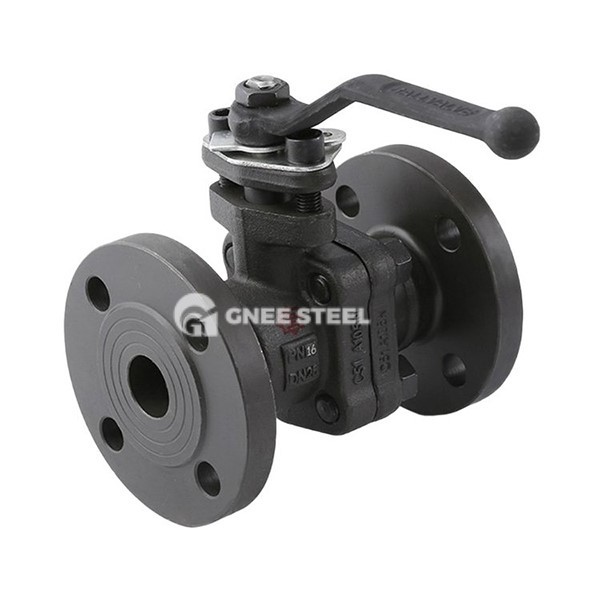
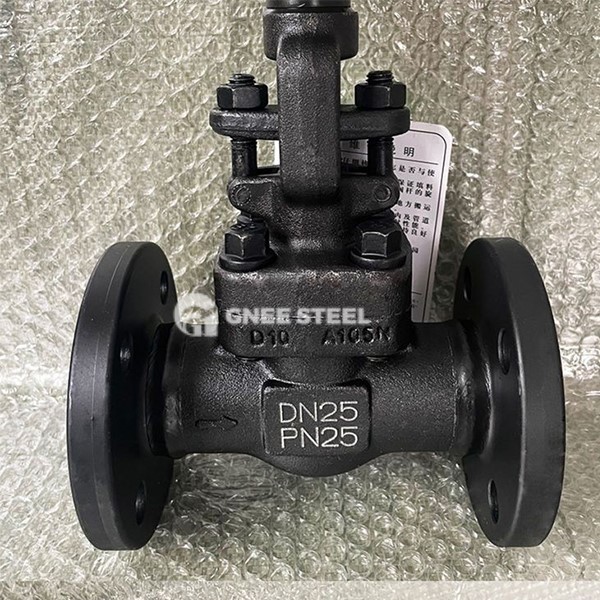
ASTM A105N Ball Valve in stock
Frequently Asked Questions (FAQ)
Q1: Is ASTM A105N better than ASTM A105?
Not necessarily. A105N is selected when normalized heat treatment is required by project specifications.
Q2: Can ASTM A105N be used for sour service?
Only when compliant with NACE MR0175 / ISO 15156 requirements and project specifications.
Q3: What is the main advantage of forged ball valves?
Higher structural integrity and reduced probability of internal discontinuities compared with cast valves.
Q4: What pressure classes are available?
Typically ASME Class 150 to Class 2500 depending on design and configuration.
Q5: What is the difference between floating and trunnion designs?
Floating relies on seat sealing force, while trunnion uses mechanical support and reduces operating torque.
Q6: Are fire-safe designs available?
Yes, depending on API 607 or API 6FA requirements.
Hot Tags: astm a105n ball valve, China astm a105n ball valve manufacturers, suppliers, factory, ball valve knobs, ball valve stock, Forged Ball Valve, ball valve full turn valves, ball valve maintenance, cryo ball valve