

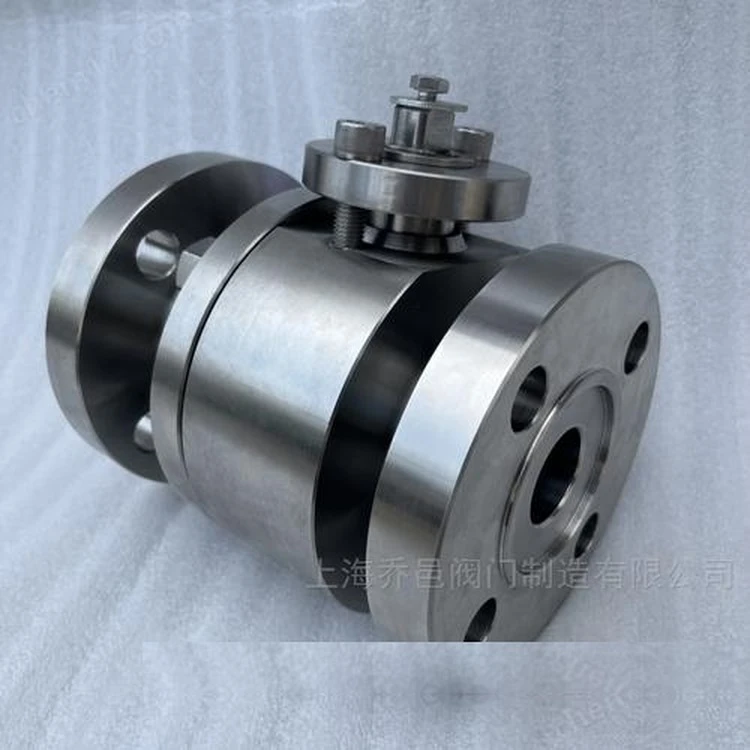


A 2-piece forged steel floating soft seated ball valve is a quarter-turn isolation valve whose body is machined from a solid forging and whose floating ball closes bubble-tight against a resilient seat. It suits high-pressure, cyclic and sour-service lines where casting defects are not acceptable. Submit your specification to confirm body material, pressure class, end connection and inspection requirements.
Design Standards
| Item | Standard |
|---|---|
| Basic Design | API 608/ASME B16.34/ISO 17292/API 6D |
| Face to Face/End to End | ASME B16.10 |
| Flange End | ASME B16.5 |
| Buttwelding End | ASME B16.25 |
| Pressure-temperature Rating | ASME B16.34 |
| Inspection and Test | API 598 |
| Firesafe Design | API 607/API 6FA |
desgin features
1. Double sealing system of packing, and firesafe design
2.Stem with emergency grease injection
3. Integral anti-blowout design structure of the stem
4. Optional locking device
5. Independent limit structure design
6. Anti-static function
7. Low torque design
8.Solid ball design
9. Unique self-relief design of the seat
General Assembly Drawing
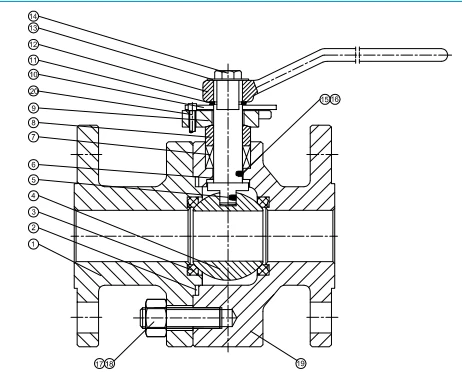
Material of Construction
| Part No. | Part Name | Carbon Steel | Stainless Steel | Low Temperature |
|---|---|---|---|---|
| 1 | End Connector | ASTM A105N | ASTM A182 F316 | ASTM A350 LF2 |
| 2 | Gasket | SS304+Graphite | SS304+Graphite | SS304+Graphite |
| 3 | Seat | PTFE/NYLON/PEEK | PTFE/NYLON/PEEK | PTFE/NYLON/PEEK |
| 4 | Ball | ASTM A105N+ENP | ASTM A182 F316 | ASTM A350 LF2+ENP |
| 5 | Stem | ASTM A182 F6a | ASTM A182 F316 | ASTM A350 LF2+ENP |
| 6 | Thrust Washer | PTFE | PTFE | PTFE |
| 7 | Packing | Graphite | Graphite | Graphite |
| 8 | Gland | ASTM A276 410 | ASTM A276 316 | ASTM A276 304 |
| 9 | Gland Flange | ASTM A216 WCB | ASTM A351 CF8 | ASTM A352 LCB |
| 10 | Position Piece | Carbon Steel | ASTM A240 304 | ASTM A240 304 |
| 11 | Washer | Carbon Steel | ASTM A240 304 | ASTM A240 304 |
| 12 | Handle | Carbon Steel | Carbon Steel | Carbon Steel |
| 13 | Washer | Carbon Steel | ASTM A240 304 | ASTM A240 304 |
| 14 | Nut | Carbon Steel | Stainless Steel | Carbon Steel |
| 15 | Anti-static Spring | Stainless Steel | Stainless Steel | Stainless Steel |
| 16 | Steel Ball | Stainless Steel | Stainless Steel | Stainless Steel |
| 17 | Body Stud | ASTM A193 B7 | ASTM A193 B8 | ASTM A193 L7 |
| 18 | Body Nut | ASTM A194 2H | ASTM A194 8 | ASTM A194 4 |
| 19 | Body | ASTM A105N | ASTM A182 F316 | ASTM A350 LF2 |
| 20 | Stop Pin | ASTM A193 B7 | ASTM A193 B8 | ASTM A193 L7 |
Note: Materials listed in the table are general. When ordering, please contact GNEE sales or technical team to confirm the details.
Dimension & Weight
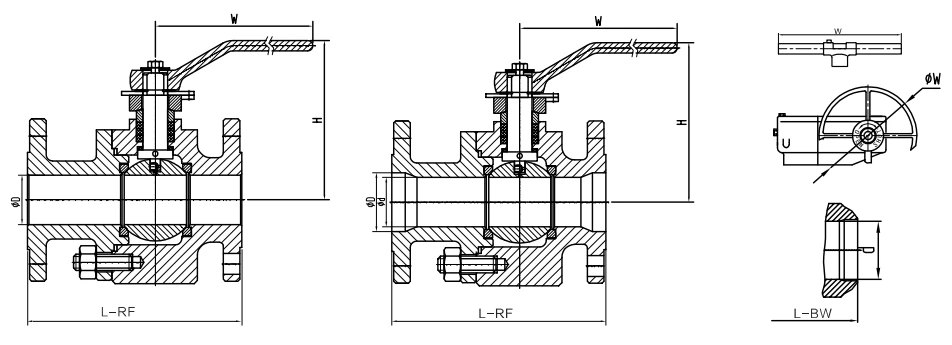
CLASS 150 Full Bore
| Size | D | L-RF | L-BW | H | W | Approx Weight | |||||||
|---|---|---|---|---|---|---|---|---|---|---|---|---|---|
| NPS | DN | in | mm | in | mm | in | mm | in | mm | in | mm | lb | kg |
| 1/2 | 15 | 0.51 | 13 | 4.25 | 108 | 5.51 | 140 | 3.35 | 85 | 6.30 | 160 | 6 | 3 |
| 3/4 | 20 | 0.75 | 19 | 4.61 | 117 | 5.98 | 152 | 3.66 | 93 | 6.30 | 160 | 8 | 4 |
| 1 | 25 | 0.98 | 25 | 5.00 | 127 | 6.50 | 165 | 4.41 | 112 | 7.09 | 180 | 12 | 5 |
| 1½ | 40 | 1.50 | 38 | 6.50 | 165 | 7.48 | 190 | 4.92 | 125 | 9.45 | 240 | 18 | 8 |
| 2 | 50 | 1.93 | 49 | 7.01 | 178 | 8.50 | 216 | 4.96 | 126 | 13.78 | 350 | 25 | 11 |
| 3 | 80 | 2.91 | 74 | 7.99 | 203 | 11.14 | 283 | 6.46 | 164 | 15.75 | 400 | 51 | 23 |
| 4 | 100 | 3.94 | 100 | 9.02 | 229 | 12.01 | 305 | 7.28 | 185 | 17.72 | 450 | 87 | 39 |
| 6 | 150 | 5.91 | 150 | 15.51 | 394 | 17.99 | 457 | 10.63 | 270 | 11.81 | #300 | 198 | 90 |
| 8 | 200 | 7.91 | 201 | 17.99 | 457 | 20.51 | 521 | 14.17 | 360 | 15.75 | #400 | 309 | 140 |
| 10 | 250 | 9.92 | 252 | 20.98 | 533 | 22.01 | 559 | 16.14 | 410 | 15.75 | #400 | 507 | 230 |
CLASS 150 Reduced Bore
| Size | d | D | L-RF | L-BW | H | W | Approx Weight | ||||||||
|---|---|---|---|---|---|---|---|---|---|---|---|---|---|---|---|
| NPS | DN | in | mm | in | mm | in | mm | in | mm | in | mm | in | mm | lb | kg |
| 3/4x1/2 | 20x15 | 0.51 | 13 | 0.75 | 19 | 4.61 | 117 | 5.98 | 152 | 2.56 | 65 | 5.91 | 150 | 8 | 4 |
| 1x3/4 | 25x20 | 0.75 | 19 | 0.98 | 25 | 5.00 | 127 | 6.50 | 165 | 2.76 | 70 | 6.30 | 160 | 11 | 5 |
| 1½x1 | 40x25 | 0.98 | 25 | 1.50 | 38 | 6.50 | 165 | 7.52 | 191 | 3.15 | 80 | 7.09 | 180 | 17 | 8 |
| 2x1½ | 50x40 | 1.50 | 38 | 1.93 | 49 | 7.01 | 178 | 8.50 | 216 | 3.62 | 92 | 9.45 | 240 | 22 | 10 |
| 3x2 | 80x50 | 1.93 | 49 | 2.91 | 74 | 7.99 | 203 | 11.14 | 283 | 5.59 | 142 | 13.78 | 350 | 46 | 21 |
| 4x3 | 100x80 | 2.91 | 74 | 3.94 | 100 | 9.02 | 229 | 12.01 | 305 | 5.98 | 152 | 15.75 | 400 | 77 | 35 |
| 6x4 | 150x100 | 3.94 | 100 | 5.91 | 150 | 15.51 | 394 | 17.99 | 457 | 7.09 | 180 | 17.72 | 450 | 161 | 73 |
| 8x6 | 200x150 | 5.91 | 150 | 7.91 | 201 | 17.99 | 457 | 20.51 | 521 | 11.42 | 290 | 11.81 | #300 | 265 | 120 |
| 10x8 | 250x200 | 7.91 | 201 | 9.92 | 252 | 20.99 | 533 | 22.01 | 559 | 11.46 | 291 | 15.75 | #400 | 441 | 200 |
CLASS 300 Full Bore
| Size | D | L-RF | L-BW | H | W | Approx Weight | |||||||
|---|---|---|---|---|---|---|---|---|---|---|---|---|---|
| NPS | DN | in | mm | in | mm | in | mm | in | mm | in | mm | lb | kg |
| 1/2 | 15 | 0.51 | 13 | 5.51 | 140 | 5.51 | 140 | 3.35 | 85 | 6.30 | 160 | 7 | 3 |
| 3/4 | 20 | 0.75 | 19 | 5.98 | 152 | 5.98 | 152 | 3.66 | 93 | 6.30 | 160 | 9 | 4 |
| 1 | 25 | 0.98 | 25 | 6.50 | 165 | 6.50 | 165 | 4.41 | 112 | 7.09 | 180 | 15 | 7 |
| 1½ | 40 | 1.50 | 38 | 7.48 | 190 | 7.48 | 190 | 4.92 | 125 | 9.45 | 240 | 28 | 13 |
| 2 | 50 | 1.93 | 49 | 8.50 | 216 | 8.50 | 216 | 4.96 | 126 | 15.75 | 400 | 42 | 19 |
| 3 | 80 | 2.91 | 74 | 11.14 | 283 | 11.14 | 283 | 6.46 | 164 | 17.72 | 450 | 86 | 39 |
| 4 | 100 | 3.94 | 100 | 12.01 | 305 | 12.01 | 305 | 7.28 | 185 | 21.65 | 550 | 132 | 60 |
| 6 | 150 | 5.91 | 150 | 15.87 | 403 | 17.99 | 457 | 10.63 | 270 | 11.81 | #300 | 287 | 130 |
| 8 | 200 | 7.91 | 201 | 19.76 | 502 | 20.51 | 521 | 14.17 | 360 | 15.75 | #400 | 430 | 195 |
| 10 | 250 | 9.92 | 252 | 22.36 | 568 | 22.01 | 559 | 16.14 | 410 | 15.75 | #400 | 639 | 290 |
CLASS 300 Reduced Bore
| Size | d | D | L-RF | L-BW | H | W | Approx Weight | ||||||||
|---|---|---|---|---|---|---|---|---|---|---|---|---|---|---|---|
| NPS | DN | in | mm | in | mm | in | mm | in | mm | in | mm | in | mm | lb | kg |
| 3/4x1/2 | 20x15 | 0.51 | 13 | 0.75 | 19 | 5.98 | 152 | 5.98 | 152 | 3.35 | 85 | 6.30 | 160 | 8 | 4 |
| 1x3/4 | 25x20 | 0.75 | 19 | 0.98 | 25 | 6.50 | 165 | 6.50 | 165 | 3.66 | 93 | 6.30 | 160 | 13 | 6 |
| 1½x1 | 40x25 | 0.98 | 25 | 1.50 | 38 | 7.48 | 190 | 7.52 | 191 | 4.41 | 112 | 7.09 | 180 | 23 | 11 |
| 2x1½ | 50x40 | 1.50 | 38 | 1.93 | 49 | 8.50 | 216 | 8.50 | 216 | 4.92 | 125 | 9.45 | 240 | 35 | 16 |
| 3x2 | 80x50 | 1.93 | 49 | 2.91 | 74 | 11.14 | 283 | 11.14 | 283 | 4.96 | 126 | 15.75 | 400 | 77 | 35 |
| 4x3 | 100x80 | 2.91 | 74 | 3.94 | 100 | 12.01 | 305 | 12.01 | 305 | 6.46 | 164 | 17.72 | 450 | 117 | 53 |
| 6x4 | 150x100 | 3.94 | 100 | 5.91 | 150 | 15.87 | 403 | 17.99 | 457 | 7.28 | 185 | 21.65 | 550 | 220 | 100 |
| 8x6 | 200x150 | 5.91 | 150 | 7.91 | 201 | 19.76 | 502 | 20.51 | 521 | 10.63 | 270 | 11.81 | #300 | 375 | 170 |
| 10x8 | 250x200 | 7.91 | 201 | 9.92 | 252 | 22.36 | 568 | 22.01 | 559 | 14.17 | 360 | 15.75 | #400 | 551 | 250 |
CLASS 600 Full Bore
| Size | D | L-RF | L-BW | H | W | Approx Weight | |||||||
|---|---|---|---|---|---|---|---|---|---|---|---|---|---|
| NPS | DN | in | mm | in | mm | in | mm | in | mm | in | mm | lb | kg |
| 1/2 | 15 | 0.51 | 13 | 6.50 | 165 | 6.50 | 165 | 3.35 | 85 | 6.30 | 160 | 9 | 4 |
| 3/4 | 20 | 0.75 | 19 | 7.48 | 190 | 7.48 | 190 | 3.66 | 93 | 7.09 | 180 | 11 | 5 |
| 1 | 25 | 0.98 | 25 | 8.50 | 216 | 8.50 | 216 | 4.41 | 112 | 9.45 | 240 | 18 | 8 |
| 1½ | 40 | 1.50 | 38 | 9.49 | 241 | 9.49 | 241 | 4.92 | 125 | 13.78 | 350 | 33 | 15 |
| 2 | 50 | 1.93 | 49 | 11.50 | 292 | 11.50 | 292 | 5.12 | 130 | 15.75 | 400 | 51 | 23 |
| 3 | 80 | 2.91 | 74 | 14.02 | 356 | 14.02 | 356 | 7.01 | 178 | 19.69 | 500 | 106 | 48 |
| 4 | 100 | 3.94 | 100 | 17.01 | 432 | 17.01 | 432 | 7.48 | 190 | 12.01 | #305 | 176 | 80 |
CLASS 600 Reduced Bore
| Size | d | D | L-RF | L-BW | H | W | Approx Weight | ||||||||
|---|---|---|---|---|---|---|---|---|---|---|---|---|---|---|---|
| NPS | DN | in | mm | in | mm | in | mm | in | mm | in | mm | in | mm | lb | kg |
| 3/4x1/2 | 20x15 | 0.51 | 13 | 0.75 | 19 | 7.48 | 190 | 7.48 | 190 | 3.35 | 85 | 6.30 | 160 | 9 | 4 |
| 1x3/4 | 25x20 | 0.75 | 19 | 0.98 | 25 | 8.50 | 216 | 8.50 | 216 | 3.66 | 93 | 7.09 | 180 | 12 | 6 |
| 1½x1 | 40x25 | 0.98 | 25 | 1.50 | 38 | 9.49 | 241 | 9.49 | 241 | 4.41 | 112 | 9.45 | 240 | 23 | 11 |
| 2x1½ | 50x40 | 1.50 | 38 | 1.93 | 49 | 11.50 | 292 | 11.50 | 292 | 4.92 | 125 | 13.78 | 350 | 44 | 20 |
| 3x2 | 80x50 | 1.93 | 49 | 2.91 | 74 | 14.02 | 356 | 14.02 | 356 | 5.12 | 130 | 15.75 | 400 | 64 | 29 |
| 4x3 | 100x80 | 2.91 | 74 | 3.94 | 100 | 17.01 | 432 | 17.01 | 432 | 7.01 | 178 | 19.69 | 500 | 130 | 59 |
| 6x4 | 150x100 | 3.94 | 100 | 5.91 | 150 | 22.01 | 559 | 22.01 | 559 | 7.48 | 190 | 12.00 | #305 | 209 | 95 |
Forged vs. Cast Steel Body
The choice between forged and cast steel is the primary selection driver for this product. Forging shapes the body from a solid billet under pressure, producing a refined, aligned grain structure; casting pours molten steel into a mould, which can leave internal discontinuities. The table below summarizes the engineering consequences.
| Attribute | Forged steel body | Cast steel body |
|---|---|---|
| Manufacturing | Hot forging from solid billet, then machined | Molten steel poured into mould, then machined |
| Grain structure | Refined, aligned, continuous flow | Random, less uniform |
| Internal defects | Porosity, inclusions, shrinkage essentially eliminated | Porosity/inclusion risk requires NDE control |
| Pressure / cyclic duty | Higher resistance to surge, vibration, thermal shock | Adequate for general-purpose duty |
| Sour (H2S) service | Sound basis under NACE MR0175 with hardness control | Acceptable only with verified quality and NDE |
| Typical size / pressure | Compact; Class 800 common, up to Class 1500 | Broader size range; Class 150-600 typical |
| Cost | Higher material and machining cost | Lower cost, economical for larger sizes |
This table is a design summary. The actual acceptance basis is the purchase order, the material specification and the applicable standard edition. Forged and cast bodies are not interchangeable without re-qualification.
Safety Features
Fire-safe: secondary metal sealing per API 607 / API 6FA maintains shutoff if the soft insert is destroyed in a fire.
Anti-static: a path between ball, stem and body (per API 608) prevents static discharge in flammable service.
Blow-out-proof stem: a shoulder retained by the body prevents stem ejection under internal pressure.
Locking and ISO 5211 pad: lockable handle or gearbox and a standard actuator mounting flange.
Fugitive emission: low-emission packing per ISO 15848 available on request.
Inspection, Testing and Documentation
Each valve is tested for shell and seat integrity. Shell test is typically 1.5 times the rated pressure and seat test 1.1 times the rated pressure, with seat leakage accepted to ISO 5208 Rate A for soft seats. Testing follows API 598, ISO 5208 or EN 12266-1 as specified.
Material traceability is documented by a Material Test Certificate to EN 10204 (3.1 as standard, 3.2 with third-party involvement on request), covering chemistry, mechanical properties, heat number and, where applicable, hardness and NACE compliance. Third-party inspection (e.g. SGS, BV, TUV) is supported when required by the contract.
Applications
The forged floating soft seated ball valve is selected where compact, high-integrity isolation is needed:
High-pressure oil, gas and steam lines
Skid-mounted and modular process units with space limits
Cyclic-duty and thermal-shock-prone services
Sour (H2S) environments per NACE MR0175 / ISO 15156 (confirmed per conditions)
Chemical and petrochemical isolation with corrosive media (stainless bodies)
Suitability depends on line pressure, temperature, medium compatibility, seat material and project specification. A soft seat is not a universal rating for all media or temperatures; state the service conditions at quotation.
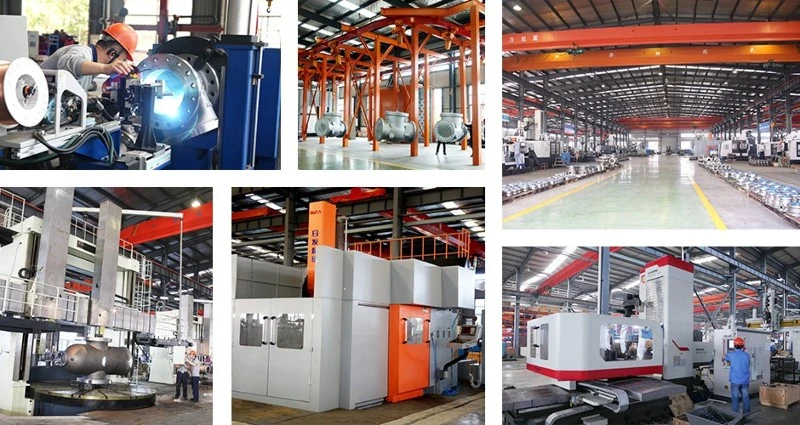
Valve factory
Provide the following to receive a quotation: nominal size and pressure class, body material (for example A105 or F316), end connection (NPT, socket weld, butt weld, or flanged), seat material, required standards (API 608, ASME B16.34), any sour-service or fire-safe requirement, quantity, and destination. A line list or data sheet shortens the confirmation.
FAQ
What is a 2-piece forged steel floating soft seated ball valve?
It is a quarter-turn on/off valve with a two-piece forged steel body, a floating ball, and a soft seat (typically PTFE or RPTFE) that closes bubble-tight. The forged body is machined from a solid forging such as ASTM A105 or A182 F304/F316, giving a uniform grain structure free of casting defects.
Why choose a forged steel body instead of a cast steel body?
Forging refines and aligns the grain flow and eliminates porosity, sand inclusions, and shrinkage associated with castings. This gives higher material density, better resistance to pressure surges, vibration, and thermal shock, and a sounder basis for sour (H2S) service under NACE MR0175. Forged valves are typically more compact and rated for higher pressures, at a higher material cost.
Which forged steel materials are used for the valve body?
Common body forgings are ASTM A105 carbon steel for ambient and high-temperature service, ASTM A350 LF2 for low-temperature service, and ASTM A182 F304/F316 austenitic stainless for corrosive service. Alloy grades such as A182 F11/F22 are used for elevated-temperature steam and hydrogen service.
What does "floating" mean, and how does the soft seat seal?
Floating means the ball is not fixed to trunnions; line pressure pushes it slightly downstream against the seat to energize the seal. With a soft seat, the ball compresses the resilient insert and closes bubble-tight in the line flow direction. Standard floating designs seal in one direction unless a second upstream seat is fitted.
What leakage rate does the soft seat provide, and to which standard?
A soft seat gives bubble-tight shutoff, classified as ISO 5208 Rate A when tested to API 598, ISO 5208, or EN 12266-1. The acceptance criterion is no visible leakage (bubble-tight) on the seat test. Metal seats, when specified, are rated to ISO 5208 Rate D.
What pressure classes and sizes are typical for forged steel floating ball valves?
Typical forged floating ball valves cover NPS 1/2 to 2 (DN 15 to 50), with pressure classes from Class 150 through Class 1500 (PN 16 to PN 250). Class 800 is common for socket-weld and threaded end valves. Larger sizes or higher classes are evaluated per inquiry, and trunnion mounting is usually selected above NPS 10 or Class 1500.
Are these valves suitable for sour (H2S) service?
Forged bodies with verified chemistry and hardness control can be supplied for sour service in accordance with NACE MR0175 / ISO 15156, subject to material grade and heat-treatment confirmation. Suitability depends on H2S partial pressure, chloride, and hardness limits, so the service conditions must be stated at quotation.
What details are needed to request a quotation?
Provide the nominal size and pressure class, body material (for example A105 or F316), end connection (NPT, socket weld, butt weld, or flanged), seat material, required standards (API 608, ASME B16.34), any sour-service or fire-safe requirement, quantity, and destination. A line list or data sheet shortens the confirmation.
Hot Tags: 2-pc forged steel soft seated floating ball valve, China 2-pc forged steel soft seated floating ball valve manufacturers, suppliers, factory, api 6d, API 6D Ball Valve, ball valve regulating valves, ball valve replacement, ball valve servo valves, Top Entry Ball Valve