

The core difference between swing check valves and tilting disc check valves lies in their closing method and water hammer control capability: Swing check valves open and close by rotating a valve disc around an axis, resulting in low flow resistance but a tendency to cause impact and water hammer during closure; tilting disc check valves employ a double eccentric structure to achieve impact-free closure, providing a more reliable seal, lower flow resistance, and effectively preventing water hammer.
The valve disc of a swing check valve is disc-shaped and opens or closes by rotating around a pin via a hinge mechanism. During forward flow, the medium pushes the valve disc to rotate and open the passage; when the medium flows backward or the pump stops, the valve disc quickly falls back to the valve seat under its own weight and reverse pressure, completing the closing action.
Due to the relatively long valve disc stroke, especially in large-diameter pipelines, a large impact force is generated at the moment of closure, which can easily cause water hammer, potentially leading to valve seat wear or pipeline damage over long-term operation.
The tilting disc check valve (also known as a tilting disc impact-free check valve) employs a double eccentric valve disc and a micro-elastic metal valve seat design. During closure, the valve disc gradually contacts the sealing surface along an oblique path, achieving "progressive contact" and avoiding hard impact.
Its closing force is only 1/5 to 1/8 that of a swing valve, enabling zero-leakage operation, and the closing process is smooth and noiseless. This structure is particularly suitable for systems sensitive to water hammer, such as high-rise building water supply, fire protection networks, and precision industrial processes.
Need Industrial Swing Check or Precision Tilting Disc Valves? Get a Quote in 1 Hour!
Mechanism & Design Comparison
| Comparison Item | Swing Check Valve | Tilting Disc Check Valve |
| Pivot Point | Top-mounted hinge pin | Offset / Central pivot pin (Aerofoil design) |
| Disc Movement | Large arc swing (90° movement) | Short arc tilt (usually 45°–60°) |
| Closing Mechanism | Gravity and backflow driven | Aerodynamic/Hydrodynamic forces + Gravity |
| Water Hammer | High Risk (Disc slams when flow reverses) | Non-Slam Design (Disc closes as flow decelerates) |
| Sealing Surface | Usually flat or conical | Conical / Spherical (Tight sealing) |
| Complexity | Simple (Body, disc, pin, bonnet) | Advanced (Aerofoil disc, precision pivot) |
Technical Specifications & Performance
| Parameter Category | Swing Check Valve | Tilting Disc Check Valve |
| Flow Resistance / ΔP | Extremely Low (Full bore path) | Low to Moderate (Disc stays in the flow path) |
| Closing Speed | Slow (Must travel a long distance) | Very Fast (Short travel distance to seat) |
| Tightness | Good; prone to seat damage from slamming | Excellent; stable seating without impact |
| Wear & Tear | High wear on hinge pin and seats | Low wear due to balanced disc design |
| Installation | Mainly Horizontal (Limited in vertical) | Universal (Horizontal and Vertical-up) |
| Face-to-Face | Standard (ASME B16.10) | Often Shorter/Compact |
| Cavitation Risk | Moderate | Low (Stable flow around aerofoil disc) |
Application & Environment Comparison
| Item | Swing Check Valve | Tilting Disc Check Valve |
| Typical Media | Clean Water, Oil, Sewage | Steam, Gas, High-velocity Water |
| Primary Advantage | Maximum flow capacity | Silent operation & No water hammer |
| Maintenance | Easy (In-line repairable via bonnet) | Moderate (Usually requires removal) |
| Pressure Rating | Low to Medium pressure | Medium to Very High pressure |
| Industry Usage | Drainage, traditional chemical plants | Power plants, High-pressure steam, Pumping |
| Cost (CAPEX) | Economical (Simple casting) | Premium (Precision machining & engineering) |
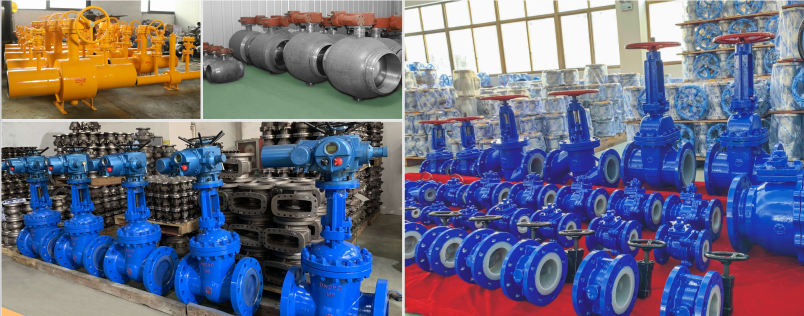
GNEE Check valve factory
FAQ
What are the benefits of swing check valves?
The primary function of a swing check valve is to ensure the smooth and uninterrupted flow of fluids in one direction while preventing any reverse flow. With a hinged disc that swings open and closes with the direction of flow, swing check valves provide efficient and reliable shut-off capabilities.
Can swing check valves be used vertically?
Only swing check valves can be installed on vertical pipelines, and the flow direction can only be bottom-up at this time. When the standpipe flows from top to bottom, there is no need to install a wafer check valve on the standpipe.
What is a tilting check valve?
Tilting check valves are designed to prevent flow reversal in a piping system. These valves are activated by the flowing material in the pipeline. The pressure of the fluid passing through the system causes the valve to open, while any reversal of flow will close the valve.