

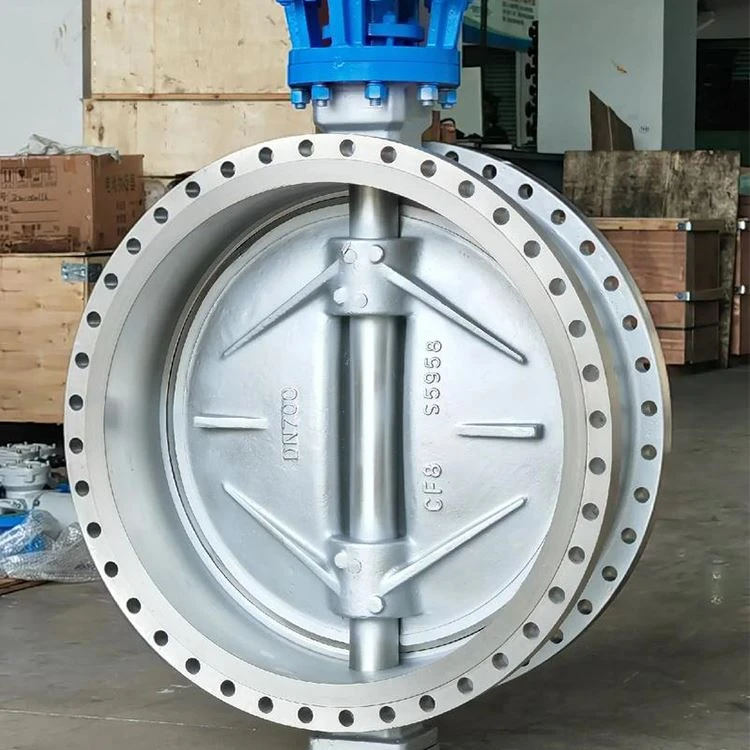

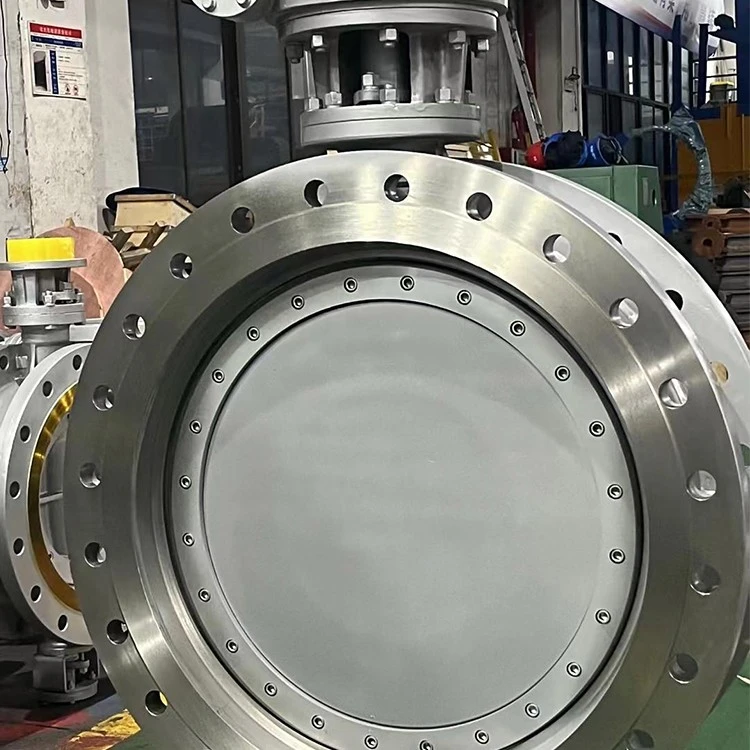
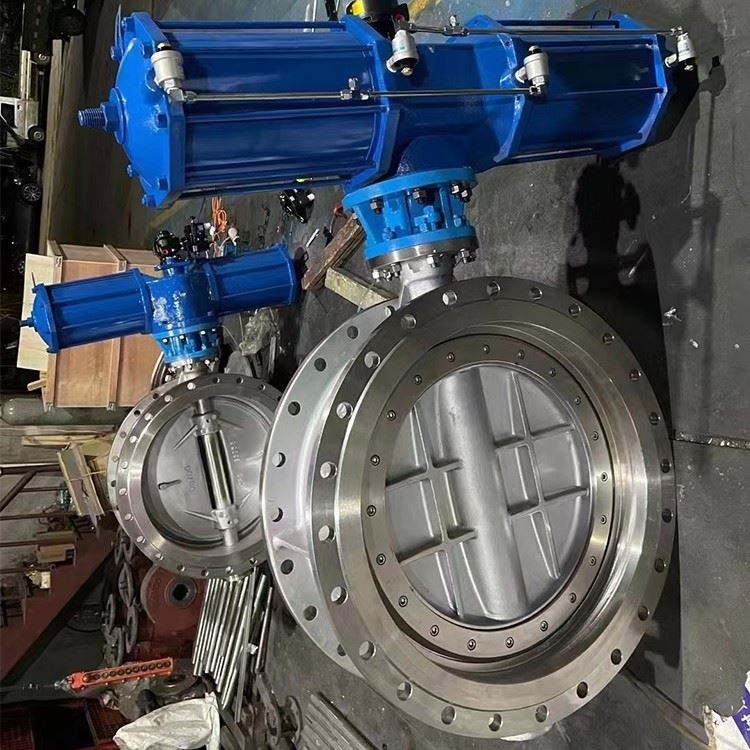
Metal to Metal Butterfly Valve: Complete Technical Guide for Industrial Applications
A metal to metal butterfly valve (also called a metal-seated butterfly valve) is a rotary flow control device that uses all-metal sealing pairs (disc and seat) to achieve tight shutoff. Unlike soft-seated butterfly valves that rely on non-metallic materials such as rubber or PTFE for sealing, metal-to-metal designs deliver exceptional performance under extreme temperatures, high pressures, corrosive media, and abrasive operating conditions.
These valves are manufactured in compliance with global industrial standards, making them a reliable solution for critical service lines where soft-seal designs would degrade or fail rapidly. They are widely available in wafer, lug, double flanged, and butt-weld end connections to fit various piping systems, with size ranges typically covering DN50 (NPS 2) to DN2000 (NPS 80) for most industrial projects.
Specification
Size Range: 2″ – 72″ (DN50 – DN1800)
Pressure Range: Class 150-600 | API 609 1500 PSI
Design Standards: API 609, ISO 10631, BS 5155, MSS SP-67
Material Range: Cast Iron, Ductile Iron, Carbon Steel, Stainless Steel (304/316), Duplex
End Connections: Flanged (FF, RF, RTJ), Lug, Wafer, Butt Weld (BW)
Body Structures: Wafer Type, Lug Type, Double Flanged
Body Types: Resilient Seated, Metal Seated
Body & Bonnet Connection: Bolted Bonnet, Integral Stem (Anti-blowout)
Send Your Project Requirements Today And Receive A Technical Proposal Within 24 Hours.
Core Design & Working Principle
Like all butterfly valves, metal-to-metal models regulate or stop fluid flow by rotating a disc-shaped closure member 90 degrees around a central shaft. When open, the disc aligns with the flow direction to create a streamlined, low-resistance flow path. When closed, the disc seats against the valve body seat to block flow completely.

Triple Offset Geometry: The Foundation of Zero-Friction Performance
Most high-performance metal-to-metal butterfly valves adopt a triple offset (triple eccentric) design, which eliminates sliding friction between the disc and seat during operation. The three offsets work in combination as follows:
- First offset (radial offset): The valve shaft is positioned behind the sealing surface of the disc, so the disc seal does not scrape across the seat face during rotational movement.
- Second offset (axial offset): The shaft axis is offset from the centerline of the valve bore, allowing the disc to fully disengage from the seat immediately after opening.
- Third offset (conical/elliptical offset): The seat sealing face is machined into an inclined elliptical cone geometry, ensuring the disc makes full contact with the seat only at the final degree of closure.
This cam-like motion ensures zero rubbing wear throughout the valve stroke, extending service life dramatically and maintaining leak-tight performance even after tens of thousands of operating cycles. The uniform sealing contact also enables bidirectional pressure-tight shutoff at full rated differential pressure.
Common Types of Metal-to-Metal Butterfly Valves
Metal-seated butterfly valves are categorized by their eccentric structure, each suited to different pressure-temperature ratings and operating demands:
- Double offset (double eccentric) butterfly valves: Feature two shaft offsets to reduce seal friction compared to concentric designs. They offer good durability for medium-pressure and medium-temperature services, with a lower total cost than triple offset configurations.
- Triple offset (triple eccentric) butterfly valves: The most widely used high-performance metal-seated design, delivering zero-friction operation, bidirectional zero leakage, and compatibility with high-temperature, high-pressure, and corrosive media. They are the industry standard choice for critical process lines.
Key Performance Features & Benefits
- Extreme temperature resistance: typically up to 538–600°C depending on body material, seat design, and pressure class. Special alloy grades can extend this range for cryogenic services down to -196°C (-321°F) and ultra-high temperature services above 800°C. This makes them irreplaceable for superheated steam and high-temperature process fluids where soft seals degrade rapidly.
- Superior corrosion resistance: Available in a wide range of corrosion-resistant alloys including 316 stainless steel, duplex stainless steel, nickel alloys (Monel, Hastelloy), and titanium, enabling reliable operation with acidic, alkaline, saline, and chemically aggressive media.
- Long service life & low maintenance: The zero-friction triple offset design minimizes seal wear, typically provides significantly longer service life than soft-seated butterfly valves in high-temperature and frequent-cycling applications. There are no non-metallic seal parts to replace periodically, reducing downtime and total lifecycle costs.
- Bidirectional tight shutoff: Precision-machined metal seats provide uniform sealing force in both flow directions, meeting ISO 5208 Rate A or API 598 bubble-tight leakage requirements under specified test conditions. This eliminates the need for directional installation restrictions and provides reliable shutoff for reverse flow or backpressure conditions.
- Fire-safe design: All-metal construction maintains structural integrity and sealing performance during fire events, complying with API 607 fire-safe specifications. This is a mandatory requirement for oil, gas, and petrochemical facilities.
- Low pressure drop: The streamlined disc profile creates minimal flow resistance, reducing pumping energy consumption by 8–10% in large-flow systems compared to gate valves or globe valves.
Industry Applications & Typical Use Cases
Metal-to-metal butterfly valves are deployed across industries where harsh operating conditions demand robust, leak-free flow control:
- Power Generation: Controls superheated steam, feedwater, and cooling water in boiler systems, turbine bypass lines, and heat exchangers in thermal and nuclear power plants.
- Oil & Gas: Used in onshore refineries, offshore platforms, FPSOs, and LNG carriers for hydrocarbon processing, storage, and distribution. High-alloy versions handle sour crude and corrosive natural gas.
- Petrochemical & Chemical Processing: Regulates hot hydrocarbons, molten sulfur, nitric acid, acetic acid, and other corrosive process fluids in refineries and chemical plants.
- Metallurgy: Manages high-temperature flue gases, cooling water, and process fluids in steel mills and smelting furnaces, withstanding thermal cycling and abrasive particulate media.
- Marine & Shipbuilding: Installed in seawater cooling systems, ballast systems, and exhaust gas desulfurization systems, where corrosion resistance and fire safety are critical.
- District Heating & Industrial Thermal Systems: Controls thermal oil and high-temperature hot water in district heating networks, ensuring efficient energy transfer with zero leakage.
- Water & Wastewater Treatment: Used in high-pressure sludge lines and industrial wastewater systems with abrasive or corrosive effluent.
Standard Material Configurations
| Configuration No. | Body Material | Disc Material | Shaft Material | Seat & Seal Face | Typical Applications |
|---|---|---|---|---|---|
| 1 | WCB Carbon Steel | WCB Carbon Steel | SS420 | F304 base typically hardfaced with Stellite 6, Stellite 12, or equivalent wear-resistant alloys. | General high-temperature steam, oil and gas, standard industrial services |
| 2 | CF8 / CF8M Stainless Steel | CF8 / CF8M Stainless Steel | 17-4PH | F304 / F316 typically hardfaced with Stellite 6, Stellite 12, or equivalent wear-resistant alloys. | Moderate corrosive media, chemical processing, general industrial services |
| 3 | Duplex Stainless Steel (4A/5A) | Duplex Stainless Steel (4A/5A) | F51 / F53 Duplex | Duplex stainless steel typically hardfaced with Stellite 6, Stellite 12, or equivalent wear-resistant alloys. | Seawater, brackish water, highly corrosive chemical services |
| 4 | Aluminum Bronze C95800 | Aluminum Bronze C95800 | C63000 Aluminum Bronze | C95800 typically hardfaced with Stellite 6, Stellite 12, or equivalent wear-resistant alloys. | Marine seawater systems, shipboard piping, desalination |
| 5 | Monel M35-1 / K500 | Monel 400 | Monel K500 | Monel 400 typically hardfaced with Stellite 6, Stellite 12, or equivalent wear-resistant alloys. | Hydrofluoric acid, seawater, high-purity chemical processing |
| 6 | Hastelloy C-276 | Hastelloy C-276 | Hastelloy C-276 | Hastelloy C-276 typically hardfaced with Stellite 6, Stellite 12, or equivalent wear-resistant alloys. | Strong oxidizing acids, highly corrosive extreme chemical services |
| 7 | Titanium Grade 2 | Titanium Grade 2 | Titanium Grade 2 | Titanium Grade 2 typically hardfaced with Stellite 6, Stellite 12, or equivalent wear-resistant alloys. | Chloride-rich media, seawater, high-purity pharmaceutical processes |
Design & Testing Standards
Metal-to-metal butterfly valves are designed, manufactured, and tested in accordance with globally recognized industry standards to ensure interchangeability, safety, and consistent performance:
- Design standards: API 609 latest edition (Butterfly Valves: Double Flanged, Lug, and Wafer Type), ISO 10631:2013 (Metallic butterfly valves for general purposes), EN 593 (Industrial butterfly valves), MSS SP-67, BS 5155, and ASME B16.34 for pressure-temperature rating calculations.
- Testing standards: API 598:2016 (Valve Inspection and Testing) and ISO 5208 (Industrial valves - Pressure testing of metallic valves). Standard leakage acceptance for high-performance metal-seated valves follows ISO 5208 Rate A (zero detectable bubble leakage).
- Additional certifications: Fire-safe testing per API 607, fugitive emission certifications, and NACE MR0175/ISO 15156 compliance for sour service oil and gas applications.
Recommended Pressure Class By Service Condition
| Service Condition | Recommended Pressure Class |
|---|---|
| Industrial Water Distribution | Class 150 |
| Seawater Cooling Systems | Class 150–300 |
| District Heating Networks | Class 150–300 |
| Thermal Oil Systems | Class 300–600 |
| Refinery Process Units | Class 300–900 |
| Superheated Steam Systems | Class 600–1500 |
| LNG Facilities | Class 300–900 |
| Offshore Platforms & FPSOs | Class 600–1500 |
| Hydrogen Service | Class 600–1500 (subject to project requirements) |
| High-Pressure Natural Gas Transmission | Class 900–2500 |
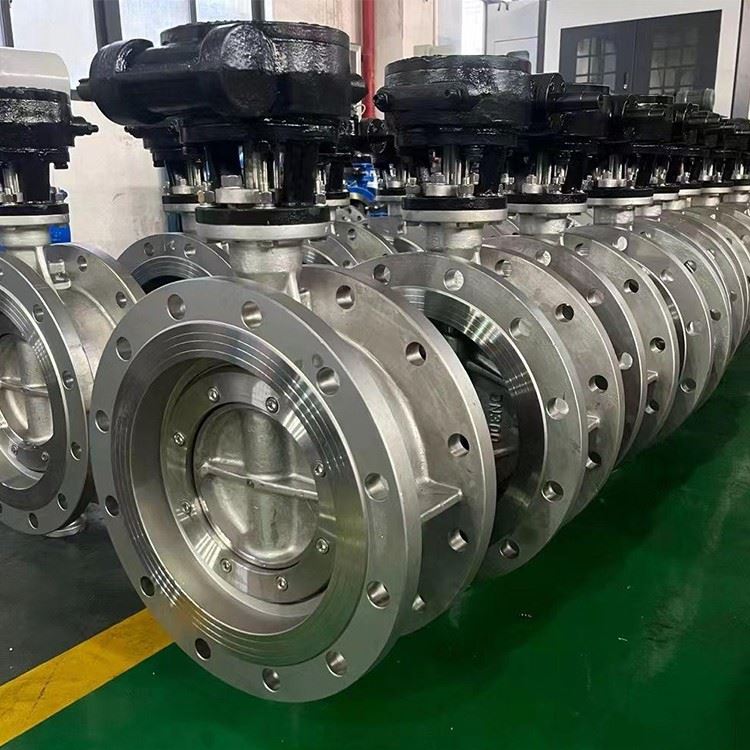
Metal to metal butterfly valve workshop

Request Product Datasheets And Certification Packages Today.
FAQ
Q: What is the difference between metal-to-metal and soft-seated butterfly valves?
A: Soft-seated butterfly valves use rubber, PTFE, or other non-metallic seals to achieve tight shutoff. They are low-cost and provide excellent zero-leakage performance at ambient temperatures, but degrade rapidly above 200°C and cannot withstand abrasive or highly corrosive media. Metal-to-metal butterfly valves use all-metal sealing pairs, operating reliably across extreme temperature ranges (-196°C to 600°C+), high pressures, and harsh media, with far longer service life in demanding applications.
Q: What is the maximum pressure and temperature rating for metal-to-metal butterfly valves?
A: Standard production ranges cover pressure classes from Class 150 up to Class 2500, with nominal sizes from NPS 2 (DN50) up to NPS 80 (DN2000). Standard carbon steel and stainless steel designs support continuous operating temperatures up to 600°C (1112°F). Special high-temperature alloys can extend performance to 800°C and above, while cryogenic designs are rated for service down to -196°C (-321°F) for LNG applications.
Q: Can metal-to-metal butterfly valves seal bidirectionally?
A: Yes. Many triple offset designs provide bidirectional shutoff capability, although pressure ratings may vary depending on manufacturer and seat configuration. The precision-machined elliptical seat geometry creates uniform sealing contact regardless of flow direction, meeting ISO 5208 Rate A leakage standards. This eliminates directional installation requirements and provides reliable shutoff for reverse flow or backpressure conditions.
Q: How long does a metal-to-metal butterfly valve last?
A: Service life depends on operating severity, but properly sized triple offset metal-seated valves commonly achieve tens of thousands of operating cycles, depending on operating conditions and maintenance practices, and many installations remain in service for 15–25 years with minimal preventive maintenance. Lifespan is significantly longer than soft-seated valves in high-temperature, high-cycle, or abrasive services.
Q: Are metal-to-metal butterfly valves fire-safe?
A: Yes. All-metal construction maintains structural integrity and sealing capability even when exposed to fire conditions, as there are no non-metallic seal components to melt or burn. Most industrial metal-to-metal butterfly valves are designed and tested to comply with API 607 fire-safe standards, making them mandatory for oil, gas, petrochemical, and offshore facilities.
Q: How do I select the right metal-to-metal butterfly valve for my application?
A: Key selection criteria include: 1) operating pressure and temperature to match the valve class rating; 2) fluid media properties to select compatible body and trim materials; 3) required leakage rate to confirm seat performance; 4) pipe connection type (wafer, lug, flanged, butt weld) to match existing piping; 5) actuation method (manual, electric, pneumatic, hydraulic) based on operation requirements. For critical services, triple offset designs are the preferred choice for long-term reliability and lowest lifecycle cost.
Hot Tags: metal to metal butterfly valve, China metal to metal butterfly valve manufacturers, suppliers, factory, export butterfly valves, flanged butterfly valve, pressure resistant butterfly valve, reliable butterfly valve, Triple Eccentric Butterfly Valve, triple offset butterfly valve