

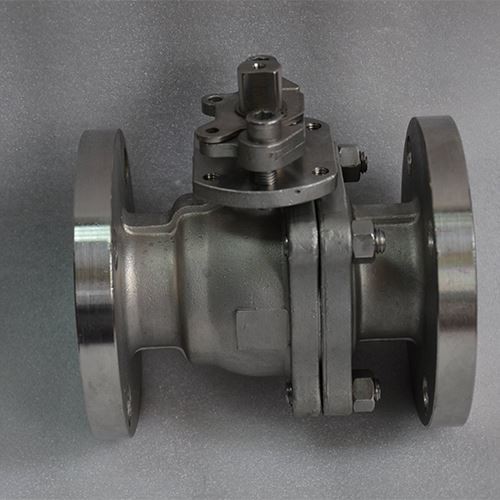

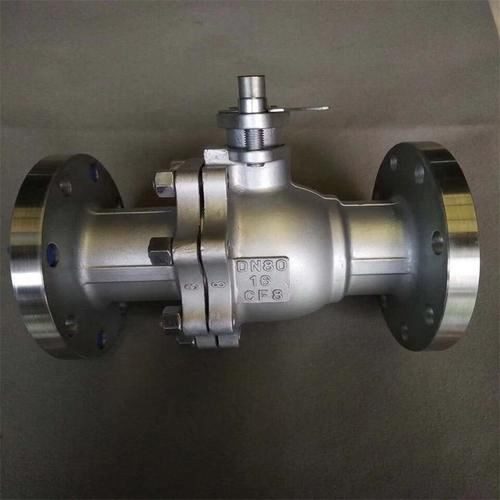
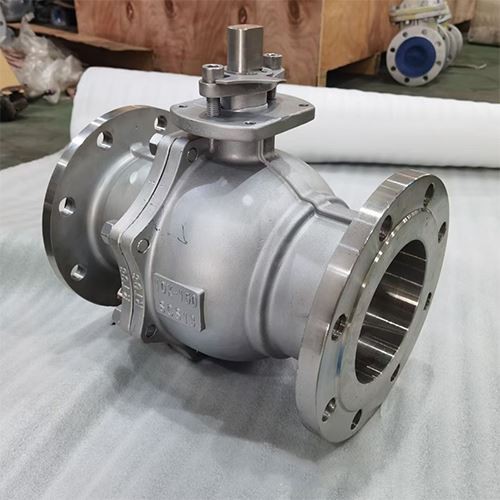
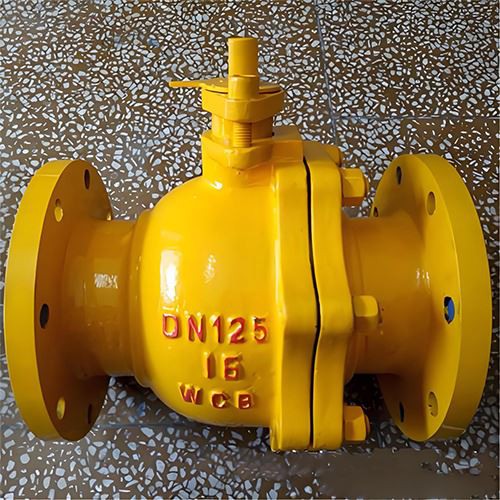
What is an API 6D Reduced Bore Floating Ball Valve?
An API 6D Reduced Bore (RB) Floating Ball Valve is a precision-engineered valve designed according to the American Petroleum Institute's specifications for pipeline service.
Reduced Bore: The internal port diameter is one size smaller than the pipe diameter (e.g., a 4" valve with a 3" internal opening). This design reduces the valve's size, weight, and torque requirements.
Floating Ball: Unlike trunnion valves, the ball in this design is not fixed. It "floats" between two seats. When the valve is closed, upstream pressure pushes the ball firmly against the downstream seat, creating a tight, bubble-tight seal.
API 6D Certified: This ensures the valve meets rigorous standards for pressure testing, material traceability, and fire safety.
Full API 6D compliance guaranteed. Click here to download our API certificates and sample Mill Test Certificates (MTC).
Technical Specifications
| Feature | Details |
| Design Standard | API 6D, ASME B16.34, ISO 17292 |
| Size Range | 1/2" to 10" (Typical for Floating design) |
| Pressure Class | Class 150, 300, 600 |
| Port Type | Reduced Bore (RB) |
| Body Materials | WCB, LCC, CF8M, A105, LF2, F316 |
| Seat Materials | PTFE, RPTFE, Devlon, PEEK |
| Fire Safety | API 607 / API 6FA |
| End Connections | Flanged (RF, RTJ), BW, NPT |
Features of API 6D Floating Ball Valves
Pressure-Assisted Sealing: The floating ball design utilizes the line pressure to enhance the seal, ensuring reliability even in low-pressure conditions.
Anti-Blowout Stem: Designed with an internal shoulder to prevent the stem from being ejected under high pressure.
Anti-Static Device: Ensures electrical continuity between the ball, stem, and body to prevent sparks in explosive environments.
NACE MR0175 Compliance: Available for "sour service" involving hydrogen sulfide (H2S).
Emergency Sealant Injection: Available on larger sizes to restore sealing in case of seat damage.
advantages of API 6D Floating Ball Valves
Cost Efficiency: Because the ball and body are smaller, RB valves use less material, making them significantly more affordable than full-bore versions.
Lower Torque: Smaller balls experience less friction, requiring smaller and less expensive actuators (pneumatic or electric).
Weight Reduction: Ideal for offshore platforms or skid-mounted systems where every kilogram matters.
Optimized Flow: In systems where a slight pressure drop is acceptable, RB valves provide excellent flow control without the bulk of a full-port valve.
Applications
The API 6D Reduced Bore Floating Ball Valve is widely utilized across:
Natural Gas Pipelines: Reliable shut-off for distribution lines.
Petrochemical Plants: Handling refined products and chemicals.
Oil Refineries: Used in secondary processing lines where pigging is not required.
Water Treatment: High-pressure industrial water systems.
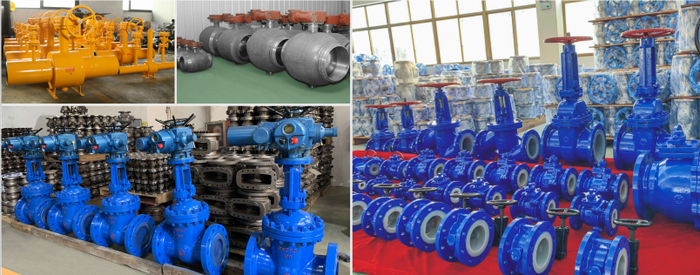
GNEE Hard Seal Trunnion Mounted Ball valve Workshop
FAQ
What is the difference between API 600 and API 6D?
The main difference lies in their scope and application: API 600 is a specific design standard for refinery gate valves, while API 6D is the general standard for all valves used in long-distance pipelines.
| Feature | API 600 | API 6D |
| Primary Industry | Refineries / Downstream | Pipelines / Midstream |
| Valve Types | Gate Valves only | Ball, Gate, Check, Plug |
| Wall Thickness | Extra thick (for corrosion) | Per ASME B16.34 |
| Key Requirement | Long service life | DBB and "Piggable" designs |
| Testing | Standard (API 598) | More rigorous (API 6D) |
What is the difference between full bore and reduced bore valves?
The main difference is the size of the hole (port) inside the valve ball compared to the diameter of the pipe.
Full Bore (Full Port)
The Hole: The hole in the ball is the same size as the inside of the pipe.
Pros: No flow restriction and zero pressure drop. It allows "pigging" (sending cleaning tools through the pipe).
Cons: The valve is larger, much heavier, and more expensive.
Reduced Bore (Reduced Port)
The Hole: The hole in the ball is smaller than the pipe diameter (usually by one pipe size).
Pros: It is cheaper, lighter, and more compact. It requires less force (torque) to turn, so it can use smaller actuators.
Cons: It causes a slight pressure drop and cannot be pigged because the opening is too narrow for cleaning tools.
Hot Tags: api 6d reduced bore floating ball valve, China api 6d reduced bore floating ball valve manufacturers, suppliers, factory, chemical ball valve, Integral Double Block and Bleed Valve, ball valve electrical couplings, ball valve quarter turn valves, fisher v ball valve, ball valve flow rate