


Gnee steel group is a supply chain integrated enterprise including steel plate, coil, profile, outdoor landscape design and processing. Founded in 2008, with 5 million RMB registered capital, Gnee has made impressive progress and development in steel market with Gnee People more than 15 years hard fighting. At present, the total investment amount reaches 30 million RMB, workshop area more than 35000㎡, with over 200 employees. Gnee is becoming the most professional international steel supply chain company in China central plains with explicit strategic framework, integrated governance structure, firm management foundation, abundant fund and human power.
Why Choose Us?
Our products
GNEE Group specializing in the manufacture and distribution of high quality valves and fittings for a wide range of industrial applications including water supply, sewage systems, oil and gas, and marine treatment.
Sales market
GNEE valves have been exported to more than 150 countries around the world, and every year more than 50 customers visit the GNEE Group and order more than 30,000 pieces of valves.
Our team
Established in 2008 with a registered capital of RMB 5 million, GNEE Group At present, the company has a total investment of 30 million yuan, a plant area of more than 35,000 square meters and more than 200 employees.
Customer service
GNEE Group always puts product quality and customer needs first, and strives to provide better services to each of our customers. We follow the latest standards and focus on management, technology and process innovation. With a mature sales service system, GNEE Group insists on providing one-stop service to every customer.

Forged Steel Y Type Globe Valve
Size: 2"~ 48" / DN50~DN200
Pressure class: PN10 ~PN40
Temperature: -29° C ~ 425° C

Pressure Seal Bonnet Globe Valves
Size: 2" to 24"(DN 50 to DN 600)
Pressure Rating: ASME 150#,300#,600#,900#,1500#, 2500#
End Connection: Flanged FF, RF, RTJ, BW Ends
Operator : Hand wheel / Gear Operated

API 600 Pressure Seal Globe Valves
Size: DN50~DN600
Working Pressure: 1.0~10Mpa
Connection Ends: Flange
Working Temp: -29ºC~230ºC

Size: DN50-DN600
Nominal Pressure: PN10/PN16
Working Temperature: -10°C~120°C

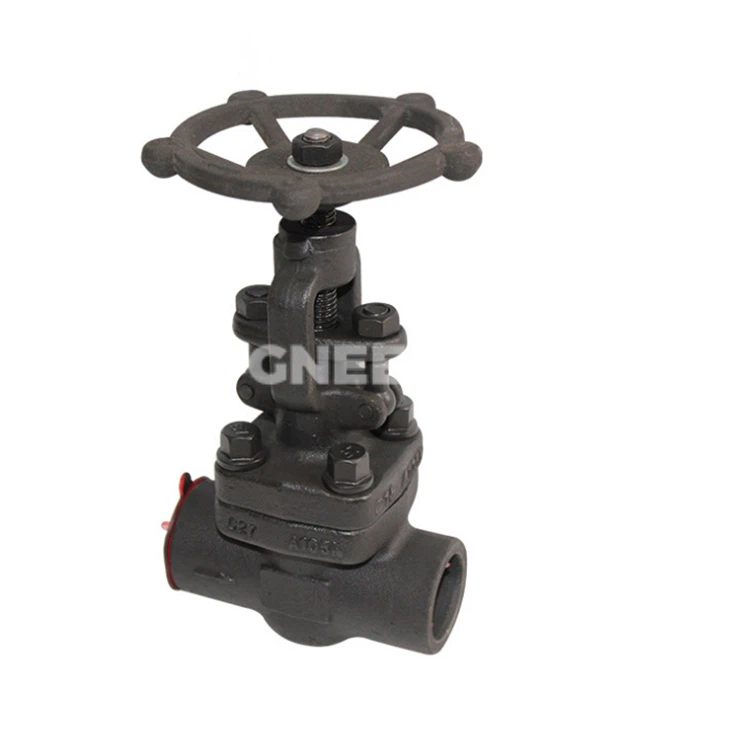
API 602 Forged Steel Globe Valve
Nominal size: 1/2"~2"
Nominal pressure: Class150~2500
Standard: ASME B16.34, API 602
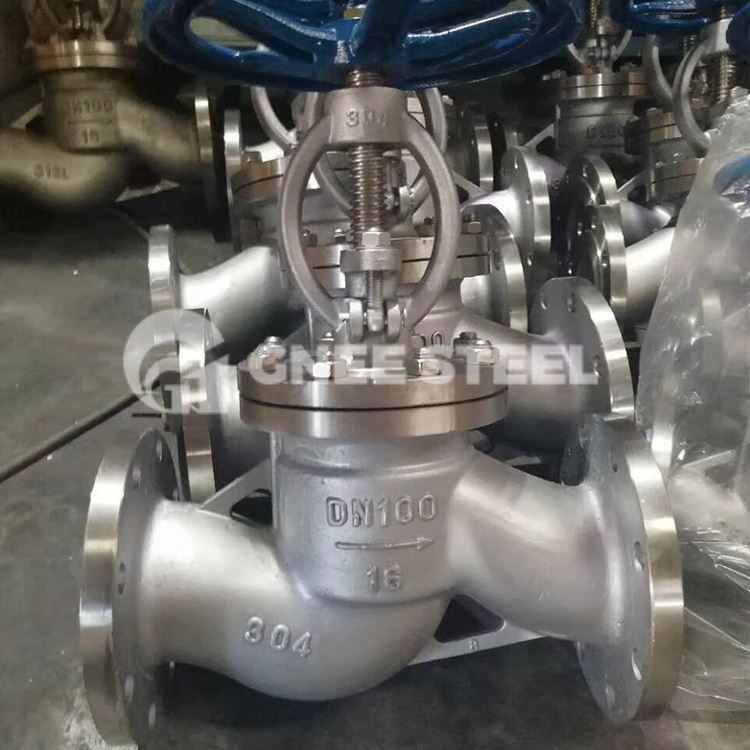
Size: DN25-DN2000
Face to Face: API609, BS5155, DIN3202, ISO5752, JIS F7480, API594 and so on
Connection Flange: PN6/PN10/PN16/PN25/JIS5K/10K/16K/150LB/AS2129 Table D/E

Nominal size: 2"~24"(DN50~DN600)
Nominal pressure: Class 900~Class 4500(PN160~PN420)
Standard: ASME B16.34

Stainless Steel Flanged Globe Valve
Size: DN25-DN2000
Face to Face: API609, BS5155, DIN3202, ISO5752, JIS F7480, API594 and so on
Connection Flange: PN6/PN10/PN16/PN25/JIS5K/10K/16K/150LB/AS2129 Table D/E
What is Rising Stem Globe Valve?
Rising stem globe valve is a type of gate valve which is able to follow the opening/closing position by moving the stem up & down movement, is able to follow electronically the movement by adding a monitoring key, and full open position does not disrupt the flow.
Compared with the gate valve, the globe valve structure is simpler, usually only one sealing surface on the valve body and valve flap, small sealing area, saving valuable materials, low cost, and therefore better manufacturing process, easy maintenance.
The seal surface wear and abrasion are light, good sealing. No relative sliding between the valve flap and body sealing surface when opening and closing (except for the conical sealing surface), so the wear and abrasion are not serious, good sealing performance, and long service life.
Opening height is small, generally only 1/4 of the diameter of the valve seat channel, compact structure, saving installation space.
Precise flow control: Globe valves are particularly useful for applications that require precise control of fluid flow. They can be adjusted to provide a wide range of flow rates, making them suitable for a variety of industrial applications.
High-pressure rating: Globe valves can handle high-pressure applications because of their unique design. This makes them ideal for use in piping systems where pressure is a critical factor.
Good shutoff capability: Globe valves have a good shutoff capability, which is particularly useful in applications where tight shut-off is required. This helps ensure that the valve prevents the flow of fluids in both directions.
Versatility: Globe valves can be used with a wide range of fluids, including gases, liquids, and slurries. This makes them useful in a variety of industries, including petrochemical, manufacturing, refining, and water treatment.
Long lifespan: Globe valves are durable and can last for many years with proper maintenance, which can save money over the long term. They are also less prone to leakage, which can prevent damage to equipment or surrounding areas.
Application of Rising Stem Globe Valve
Generally, gate valves serve to start or stop flow, rather than regulate it. As a result, the valve disc is completely removed from the flow path when in the open position, which minimizes pressure drop. But when in a completely closed position, there is no flow and no pressure drop.
This feature makes it the go-to option in isolation applications, especially in large-diameter and high-pressure lines. The rising stem gate valve has its thread external to the valve body. So, when the handwheel is rotated, it drives the nut within the bonnet, leading to the raising or lowering of the stem.
Thus, identifying the position of the valve is made easy as the rising stem is always up when open and down when closed. As such, a larger installation height is required for this valve design relative to the non-rising design. Another advantage of this design is the ease of lubrication because the threading is exposed.
Certainly! Here's more information about rising stem gate valves:
Rising stem gate valves are a type of valve that is widely used for on/off isolation applications, particularly in large-diameter and high-pressure pipelines. They are designed to start or stop the flow of fluid by lifting or lowering a gate or wedge-shaped disc that moves perpendicular to the flow path.
Disc
The most common disc designs of rising stem globe valve are: ball disc, combination disc and plug disc. The ball and disc design is mainly used in low pressure and low temperature systems. It can throttle, but in principle it is used to stop and start the flow.
The combination disc design uses a hard non-metallic insert ring on the disc to ensure a tighter closure.
The plug design provides better throttling than the ball or combination design. They have many different designs, and they are all long and tapered.


Valve Seat
The rising stem globe valve seat is integrated or screwed into the valve body. Many rising stem globe valves have back seats in the valve cover. The back seat provides a seal between the valve stem and the valve cover and prevents system pressure from affecting the valve filling when the valve is fully opened. The back seat is often used for rising stem globe valve.
Stem
Rising stem globe valve uses two methods to connect the disc and the stem: T-slot and disc nut structure. In the T-slot design, the disc slides on the stem, while in the disc nut design, the disc is screwed into the stem.
How to Maintain Rising Stem Globe Valve
Regular Inspection
Set up a regular inspection timetable for your valve systems. How often you do this depends on the type of fluid that the valve is regulating, how much pressure is on the valve, and how often the valve is cycled during daily operation.
When performing regular inspections, check the outside of the valve for signs of wear. If the valve doesn't operate on a regular basis, cycle the valve at the time of inspection. This keeps the guide from becoming stuck in the seat.
Then dismantle the valve so you can check interior parts. Note, before you dismantle, make sure to turn the pressure off and let it cool before you handle it.
External Globe Valve Maintenance
Check the motion of the stem, which is often the threaded piece exposed to the elements and can easily become dirty or gritty. Lubricate it often to ensure smooth function of the valve.
If any of the external hardware (nuts, washers, bolts) show signs of wear, replace them. Tighten the hardware during regular maintenance. Those components tend to loosen with frequent use of the valve.
Clean the outer surfaces with a cleaning solution and scrape away any buildup. Ensure that there's no grease on the handwheel to prevent it from slipping when turned.
Internal Globe Valve Maintenance
Disassemble the valve according to the manufacturer instructions. Then check all of the internal parts for wear and tear.
Inspect the interior of the valve body and bonnet and remove any scale or residue buildup. Then check the plug and the seat.
Sand down small scratches using an abrasive compound. Or use machine tools to lap down larger scratches.
When the valve is shut, it puts pressure on the gland packing, compressing it. Over time, it can become hard and lose its ability to hold pressure. Replace the gland packing if this happens.
When you reassemble the valve, use new o-rings and gaskets to ensure a tight seal.
Rising Stem vs Non-rising Stem Valve
| Parameter | Rising Stem Valves | Non-rising Stem Valves |
| Appearance | From a distance, it is easy to know if the valve is in the open or closed position. This can be important for operators of complex piping facilities. | Its appearance does not tell if it is in an open or close position. So, an indicator is used to verify this. |
| Position of stem nut and threading | The stem nut, which rotates to achieve lifting or falling of the stem, is located within the bonnet or bracket. Same with the stem threading. Because they are external, it makes it easy for maintenance. | The stem nut here is concealed within the valve body, so it is in contact with the fluid. As a result, it is subject to corrosion, erosion, etc. |
| Mode of transmission | When the handwheel rotates, the stem nut also rotates in place as the stem rises or falls. | The handwheel and the stem are connected so there is no relative motion between them. |
| Installation space | Because of the stem extension, this requires more space for installation. As a result, its application may be limited. | Can easily be installed in tight spaces when there is no room for the extension of the stem. Thus, giving this design a wider range of applications. |
Structurally
When the installation space is limited, you should pay attention to the selection:
The gate valve can be tightly closed with the sealing surface by the medium pressure and tightly closed to achieve a non-leakage effect. During valve opening and closing, the sealing surface of the valve plug and the valve seat always contact and rub against each other, so the sealing surface is easy to wear, and when the gate valve is close to close, the pressure difference between the front and the rear of the pipeline is large, and the sealing surface wear is more serious.
The structure of the gate valve is more complicated than that of the globe valve. From the aspect of the shape, the gate valve is higher than the globe valve in the same diameter, and the globe valve is longer than the gate valve. In addition, the gate valve has a rising stem or non-rising stem, which the globe valve does not have.
Working Principle
When a globe valve is opened and closed, it is a rising stem type. That is to say, turning the hand wheel, the hand wheel will rotate and lift together with the valve stem. Whereas, for gate valves, hand wheel is rotated in order that the valve stem can rise and fall, and the position of the hand wheel itself is unchanged.
Flow rates vary, gate valves are required to be fully open or fully closed, while globe valves are not required. For globe valves, there are specified inlet and outlet directions, and the gate valve has no requirements for inlet and outlet.
In addition, the gate valve has only two states of full opening or full closing, the stroke of the shutter opening and closing is large, and the opening and closing time is long. The valve plate movement stroke of the globe valve is much smaller, and the valve plate of the globe valve can be stopped at a certain position during the movement for flow regulation. The gate valve can only be used for cutting off and has no other functions.
Performance Difference
The globe valve can be used for both cut-off and flow regulation. The fluid resistance of the globe valve is relatively large, and it is laborious to open and close. However, since the distance between the valve plate and the sealing surface is short, the opening and closing stroke is short.
Because the gate valve can only be fully open and fully closed, when it is fully open, the medium flow resistance in the valve body passage is almost zero, so the opening and closing of the gate valve will be very labor-saving, but the disc is far away from the sealing surface, and the opening and closing time is long.
Installation And Flow Direction
The effect of the gate valve flowing in both directions is the same. There is no requirement for the direction of the inlet and outlet, and the medium can flow in both directions. The globe valve needs to be installed in strict accordance with the direction marked by the arrow of the valve body. There is also a clear provision for the direction of the inlet and outlet of the globe valve. The flow direction of the globe valve specified by the "three-way" of the valve in China is always from top to bottom.
In globe valve applications, the pipeline is clearly not on a horizontal line viewed from the outside. The gate valve flow path is on a horizontal line. The stroke of the gate valve is larger than that of the globe valve.
From the point of view of the flow resistance, the flow resistance of the gate valve is small at full opening, while the flow resistance of the globe valve is large. The flow resistance coefficient of the ordinary gate valve is about 0.08~0.12, the opening and closing force is small, and the medium can flow in two directions. The flow resistance of a common globe valve is 3-5 times that of a gate valve. When opening and closing, it is necessary to close by force to achieve good sealing performance. The spool of the globe valve only contacts the sealing surface when it is completely closed, so the wear of the sealing surface is small. For globe valves needing a actuator equipped because of the large flow resistance, we should pay attention to the adjustment of the torque control mechanism.
There are two ways to install the globe valve. One is that the medium can enter from the bottom of the valve core. The advantage is that the packing is not under pressure when the valve is closed, the life of the packing can be extended.
Moreover, the work of replacing the packing can be carried out under the condition that the pipe in front of the valve is under pressure; the disadvantage is that the driving torque of the valve is large, about 1 times of the upward flow, the axial force of the valve stem is large, and the valve stem is easy to bend.
Therefore, this method is generally only applicable to small-diameter globe valves (below DN50), and the globe valves above DN200 use the medium to flow in from above. (For an electric globe valve, the medium generally flows in from above) The disadvantage of the medium entering the way from the top is exactly the opposite of the way of entering below.
Seal
The sealing surface of the globe valve is a small trapezoidal side of the valve core (specifically, the shape of the valve core). Once the valve core is detached, it is equivalent to the valve closing (if the pressure difference is large, of course, the sealing performance is not good, but the anti-reverse effect is not bad). The gate valve is sealed by the side of the valve core, and the sealing effect is not as good as that of the globe valve. For a gate valve, the valve core falling off is not equivalent to the valve closing like a globe valve.
Our Factory
Group has 5 subsidiary corporations, located in Anyang, Tianjin, Hongkong and Singapore countries and districts. Headquarters is in hometown of oracle in Henan province, location of world cultural heritage "Yin Ruin", Anyang city, one of eight ancient capitals of China.


Our Certificate


FAQ
Hot Tags: rising stem globe valve, China rising stem globe valve manufacturers, suppliers, factory, globe valve for iridium oxide manufacturing, globe valve for magnesium oxide manufacturing, globe valve for thermoplastic materials, globe valve for water treatment, globe valve for thermosetting materials, globe valve for compressed air