


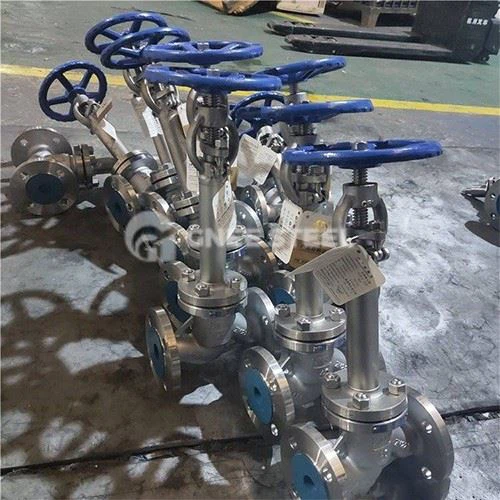
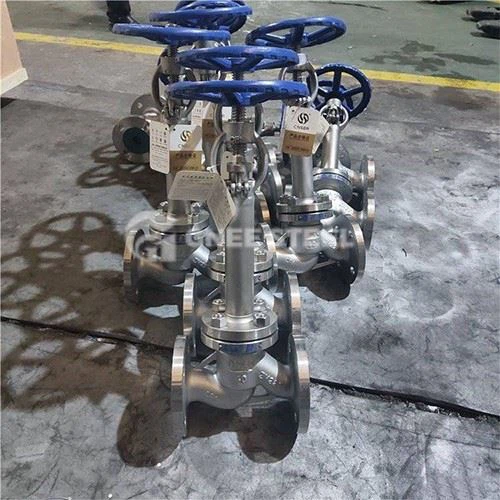
LCB low-temperature globe valve Description
In simple terms, a LCB low-temperature globe valve is a specialized switching valve designed for cryogenic environments, primarily used in extremely cold applications such as LNG storage tanks, liquid oxygen transport equipment, or industrial cold storage systems. Unlike ordinary valves, its key advantage lies in effectively addressing challenges posed by low temperatures, including material embrittlement due to contraction, frozen components causing jamming, and seal failure leading to leaks.
One of its most distinctive features is the elongated neck-the valve stem is intentionally extended significantly. This design ensures that the handwheel, transmission mechanism, and packing seal area remain as far as possible from the supercooled medium. It's like adding an extra layer of insulation to protect vulnerable parts from freezing, greatly reducing the risk of operational failure. Many low-temperature globe valves also incorporate a double-seal system in the valve bonnet: an outer layer of cryogenic-resistant metal and an inner layer of flexible specialized material. This construction allows the elastic inner material to automatically compensate for gaps caused by thermal contraction, maintaining a reliable seal even in extreme cold.
Structural Features
Extended Neck Bonnet: The connection between the bonnet and valve body is elongated (length ≥250mm), forming a thermal barrier to minimize heat conduction from the external environment to the valve stem packing chamber. This prevents packing material failure due to temperature rise.
Double Sealing System:
Inner Seal: The valve disc and seat employ either metal hard sealing (e.g., Stellite alloy overlay) or soft sealing (PTFE/metal-clad gaskets) to ensure sealing surface contact at cryogenic temperatures.
Outer Seal: The valve stem packing chamber uses cryogenic graphite or PTFE V-ring packing, supplemented by bellows sealing (in select models), to prevent medium leakage.
Anti-Static Design: Conductive springs are installed between the valve disc and body to dissipate static electricity generated by cryogenic fluid flow (e.g., LNG applications), eliminating spark hazards.
Products Specification
Globe valve, BS1873
Steel valve, ASME B16.34
Face to face ASME B16.10
End Flanges ASME B16.5/ASME B16.47
Butt welding ends ASME B16.25
Inspection and test API 598
Material: LCB
Size Range: 2"~24"
Pressure Rating: ASME CL, 150,300,600,900,1500,2500
Temperature Range: -50°C~425°C
Cryogenic LCB Globe Valve for sale


Contact us for Cryogenic LCB Globe Valve:sale@gneetube.com
Hot Tags: cryogenic lcb globe valve, China cryogenic lcb globe valve manufacturers, suppliers, factory, globe valve working principle, globe valve for corrosive fluids, globe valve in plumbing, Stainless Steel Globe Valve, globe valve for high pressure, globe valve with manual operation