

As a supplier of V Port Ball Valves, I often encounter inquiries from customers about the vibration resistance of these valves. Vibration resistance is a crucial factor in the performance and reliability of valves, especially in industrial applications where vibrations are common. In this blog post, I will delve into the concept of vibration resistance in V Port Ball Valves, exploring what it means, why it matters, and how our valves are designed to withstand vibrations effectively.
Understanding Vibration Resistance
Vibration resistance refers to the ability of a valve to maintain its structural integrity, performance, and functionality in the presence of vibrations. Vibrations can occur due to various factors, such as fluid flow, machinery operation, or external sources. In industrial settings, valves are often exposed to continuous or intermittent vibrations, which can have detrimental effects if not properly addressed.
When a valve is subjected to vibrations, several issues can arise. First, the internal components of the valve, such as the ball, stem, and seat, may experience excessive wear and tear. This can lead to leaks, reduced flow control accuracy, and ultimately, valve failure. Second, vibrations can cause loose connections, such as bolts and nuts, to loosen further, compromising the overall stability of the valve. Third, prolonged exposure to vibrations can induce fatigue in the valve material, leading to cracks and fractures over time.
Why Vibration Resistance Matters in V Port Ball Valves
V Port Ball Valves are widely used in industries such as oil and gas, chemical processing, power generation, and water treatment. These industries often involve harsh operating conditions, including high pressures, high temperatures, and aggressive fluids. In such environments, vibrations can be particularly challenging for valves, and ensuring their vibration resistance is essential for several reasons.
Reliability and Safety
Reliability is paramount in industrial applications. A valve failure due to vibration can result in costly downtime, production losses, and even safety hazards. For example, in a chemical processing plant, a leaking valve can release hazardous chemicals into the environment, posing a risk to workers and the surrounding community. By using V Port Ball Valves with high vibration resistance, companies can minimize the risk of valve failure and ensure the safe and continuous operation of their processes.
Flow Control Accuracy
V Port Ball Valves are designed to provide precise flow control in various applications. However, vibrations can disrupt the smooth movement of the ball and stem, affecting the valve's ability to regulate the flow accurately. This can lead to inconsistent process performance, reduced product quality, and increased energy consumption. By maintaining their vibration resistance, V Port Ball Valves can ensure stable and accurate flow control, even in the presence of vibrations.
Longevity and Cost-Effectiveness
Investing in V Port Ball Valves with good vibration resistance can result in long-term cost savings. Valves that are more resistant to vibrations are less likely to require frequent maintenance and replacement, reducing the overall cost of ownership. Additionally, by preventing valve failures and minimizing downtime, companies can avoid the associated costs of lost production and emergency repairs.
Design Features for Vibration Resistance in Our V Port Ball Valves
At our company, we understand the importance of vibration resistance in V Port Ball Valves. That's why we have incorporated several design features into our valves to ensure their ability to withstand vibrations effectively.
Robust Construction
Our V Port Ball Valves are constructed using high-quality materials, such as stainless steel, carbon steel, and alloy steel. These materials offer excellent strength, durability, and corrosion resistance, making them suitable for use in harsh industrial environments. The valves are also designed with a thick-walled body and a sturdy stem, which provides additional support and stability, reducing the risk of damage from vibrations.
Precise Machining
To ensure smooth operation and minimize wear and tear, our V Port Ball Valves are precision-machined to tight tolerances. The ball and seat are carefully ground and lapped to provide a perfect seal, even under high pressures and vibrations. This helps to prevent leaks and ensures the long-term reliability of the valve.
Anti-Vibration Mounting
In addition to the internal design features, we also offer anti-vibration mounting options for our V Port Ball Valves. These mounting systems are designed to isolate the valve from external vibrations, reducing the transfer of energy to the valve components. By using anti-vibration mounts, we can further enhance the vibration resistance of our valves and improve their overall performance.

Quality Testing
Before leaving our factory, all of our V Port Ball Valves undergo rigorous quality testing to ensure their vibration resistance. We use advanced testing equipment and techniques to simulate real-world operating conditions and evaluate the valve's performance under vibrations. This allows us to identify any potential issues and make necessary adjustments to ensure that our valves meet the highest standards of quality and reliability.
Comparing V Port Ball Valves with Other Types of Ball Valves
When it comes to vibration resistance, V Port Ball Valves have several advantages over other types of ball valves, such as Trunnion Mounted Ball Valves, Vacuum Ball Valve, and Electrically Operated Ball Valve.
Trunnion Mounted Ball Valves
Trunnion Mounted Ball Valves are designed for high-pressure applications. While they offer good stability and reliability, they may not be as effective in resisting vibrations as V Port Ball Valves. The trunnion design can limit the movement of the ball, making it more susceptible to damage from vibrations. In contrast, V Port Ball Valves have a more flexible design, allowing them to adapt to vibrations more effectively.
Vacuum Ball Valve
Vacuum Ball Valves are used in applications where a vacuum is required. These valves are typically designed to operate under low pressures and may not have the same level of vibration resistance as V Port Ball Valves. The vacuum environment can also introduce additional challenges, such as the risk of leakage due to pressure differentials. V Port Ball Valves, on the other hand, are designed to handle a wide range of pressures and can provide better vibration resistance in various operating conditions.
Electrically Operated Ball Valve
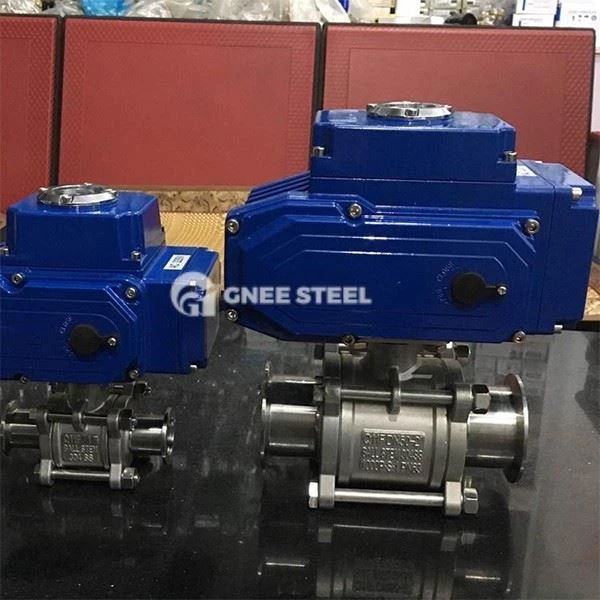
Electrically Operated Ball Valves are controlled by an electric actuator, which can be sensitive to vibrations. Vibrations can cause the actuator to malfunction or lose its accuracy, affecting the valve's performance. V Port Ball Valves, however, can be operated manually or with a pneumatic actuator, which are generally more resistant to vibrations. This makes V Port Ball Valves a better choice for applications where vibrations are a concern.
Conclusion
In conclusion, vibration resistance is a critical factor in the performance and reliability of V Port Ball Valves. By understanding the concept of vibration resistance, its importance in industrial applications, and the design features that contribute to it, you can make an informed decision when choosing a V Port Ball Valve for your specific needs.
As a leading supplier of V Port Ball Valves, we are committed to providing our customers with high-quality valves that offer excellent vibration resistance. Our valves are designed and manufactured using the latest technology and materials, and they undergo rigorous testing to ensure their performance and reliability. If you are looking for a V Port Ball Valve that can withstand vibrations and provide long-term service, we invite you to contact us for more information and to discuss your specific requirements. Our team of experts will be happy to assist you in finding the right valve for your application and to provide you with the support and service you need.
References
- Valve Handbook, 4th Edition, by Thomas A. Schweitzer
- Industrial Valves: Design and Application, by Robert W. Miller
- Handbook of Valves, by Bela Liptak